
 Worksheets
Byzantine Empire Quest Review
Total questions: 26
Worksheet time: 16mins
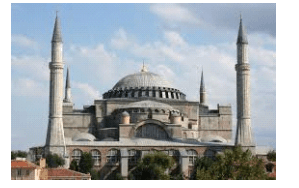
Which of the following issues divided the Western and Eastern Churches?
practices of animal sacrifices
practices such as scalping
authority of the pope
belief in Jesus
What church was found in the Byzantine Empire?
Eastern Orthodox
Roman Catholic
Lutheran
Methodist

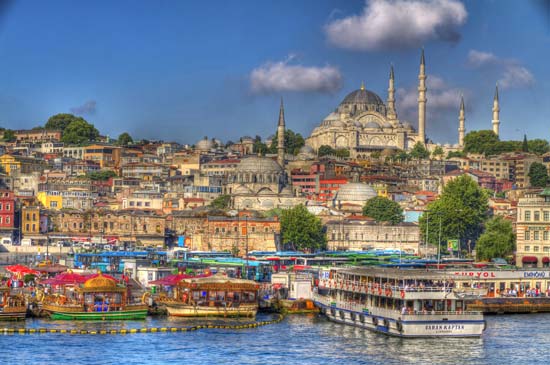

One economic advantage of naming Constantinople as the capital of the Eastern Roman Empire was that it __________
was surrounded by protective walls.
was a center of religious power.
had shrunk in size.
was located near trade routes between Europe and Asia.
Emperor Justinian revised the Roman laws which then became known as?
Justinian's Code
Hammurani's Code
The Da Vinci Code
Chaussard's Code
Under the rule Justinian, the Byzantine Empire
expanded to its greatest extent (size)
was reduced in size
replaced Roman law with Muslim law
A form of art made from small pieces of stone, glass and/or title is better known as
Mosaic
Mural
Portrait
Sculpture
What was Justinian's main goal?
He wanted to restore the Old Roman Empire
He wanted to restore Alexander the Great's Empire
He wanted to spear Islam
He wanted to clear Bosporus
What is the Hagia Sophia?
A church
A castle
A towering statue
Shrine to Sophia I
The form of Christianity that developed in the Byzantine Empire became known as ___________.
Eastern Orthodox
Roman Catholic
Western Church
Judaism
The Byzantine capital was strategically located
where Europe meets Asia
on the Rhine River
South of the Might Tuna
between the Baltic Sea and the Black Sea
In 1054, a schism, or complete break, separated
the Eastern and Western Churches
The South Slaves
Greeks and Byzantines
Browns with Cleveland
Justinian had a code of ________ made.
rulers
law
conduct
faith
The city of _____________ was the capital of the Eastern Byzantine Empire.
Alexandria
Rome
Istanbul
Constantinople

What type of art is the picture?
montage
mural
mosaic
oil portrait

Justinain was known for building the __________.
Ankor Wat
Hagia Sophia
Colosseum
Parthenon
Constantinople is now known as ?
Alexandria
Istanbul
Rome
Venice

