
 Worksheets
U4L2 - Nerve Impulse Steps
Total questions: 22
Worksheet time: 22mins
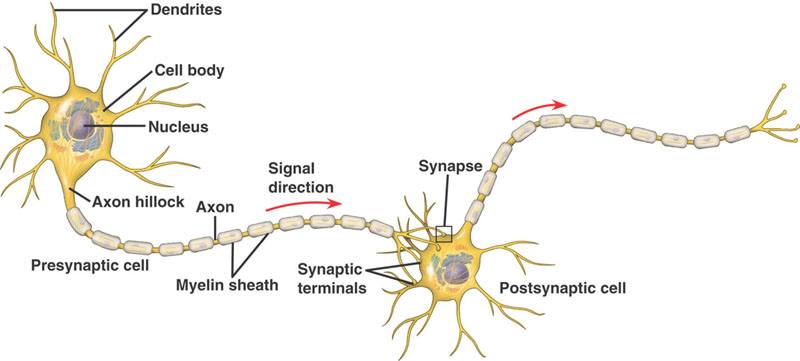
When a neuron is at REST,
the inside of the neuron is negatively charged compared to the outside.
the inside of the neuron is positively charged compared to the outside.
there is no charge difference established
none of these is true
Depolarization occurs when
sodium channels open
potassium channels open
sodium channels close
potassium channels close

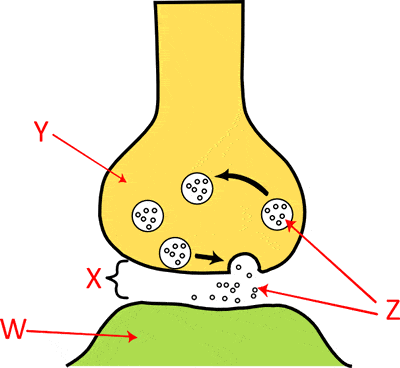

calcium is responsible for
signaling the release of the neurotransmitter
signaling Na to be released into the membrane
signaling the release of K out of the membrane
serving as the neurotransmitter
When is the potassium channel open?
during rest only
during repolarization only
during depolarization only
all the time
Action potentials run along the ______ from ______ to ________.
axon, dendrites, axon terminals
axon, axon terminals, dendrites
dendrites, axon, axon terminals
axon terminals, axon, dendrites
An action potential is __________ in nature, with the inside of the neuron being more ________.
chemical, negative
electrical, negative
chemical, positive
electrical, positive
As the neuron fires, there's a reversal in _____ as the axon undergoes ________.
direction, depolarization
charge, depolarization
direction, repolarization
charge, repolarization
Occurs when sodium voltage-gated channels open and sodium rushes into the axon changing the membrane potential from -55mV to +40mV.
Depolarization
Hyperpolarization
Repolarization
Summation
Resting-State
Occurs when sodium voltage-gated channels close and potassium voltage-gated channels open. Potassium rushes out of the axon changing the membrane potential from +40mV to -70mV.
Depolarization
Hyperpolarization
Repolarization
Summation
Resting-State
Occurs when both voltage-gated channels remain closed and the sodium-potassium pump moves 3Na out and 2K in maintaining a membrane potential of -70mV.
Depolarization
Hyperpolarization
Repolarization
Summation
Resting-State

What maintains the resting membrane potential in a neuron?
sodium-potassium pumps
sodium channels
potassium channels
gravity

