
 Worksheets
Earth and space
Total questions: 55
Worksheet time: 43mins

The name of a person that studies rocks and the earth.
veterinarian
geologist
podiatrist
teacher

Geologists have classified rocks into three major groups of rocks which are:
inorganic, organic and chemical rocks
igneous, sedimentary and metamorphic rocks
metamorphic, chemical and non chemical rocks
sedimentary, inorganic and igneous rocks


This rock is formed in layers.
Sedimentary
Igneous
Metamorphic

Fossils are often found in this rock.
Sedimentary
Igneous
Metamorphic

What kind of rock is "Granite"?
Sedimentary
Igneous
Metamorphic

What kind of rock is "Marble"?
Sedimentary
Igneous
Metamorphic

What kind of rock is "Limestone"?
Sedimentary
Igneous
Metamorphic

What kind of rock is "Sandstone"?
Sedimentary
Igneous
Metamorphic
Which processes form sedimentary rocks?
Lava cools and hardens to form a rock.
Weathering, Erosion, Deposition, Compaction, Cementation
Extreme heat and pressure from inside the Earth turn rocks into new rocks.
Magma trapped under the Earth's surface cools and solidifies.
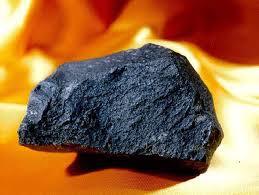
This rock was found near the mouth of a volcano. What type of rock is this?
Sedimentary
Igneous
Metamorphic

When sediments are pressed together tightly, this is called ____________.
Compaction
Cementation
Weathering
Erosion
The process in which sediment are fused or glued together.
compaction
deposition
organic rock
cementation
In which location would you most likely find an igneous rock?


Compaction and cementation are two common processes associated with:
Extrusive igneous rocks
Intrusive igneous rocks
Sedimentary rocks
Metamorphic rocks


Some rocks are permeable because....
The rock dissolves in water
Water can get into gaps between the grains
Animals have dug burrows in the rock
The rock is made of interlocking crystals
Which statement is not true?
Ice can transport large boulders
Wind can transport larger particles than water
The faster water is moving, the larger the particles it can carry
Water can transport larger particles than wind
A ____ is a huge system of gas, dust, stars, and objects orbiting stars that is held together by the force of gravity.
galaxy
comet
meteor
gas giant
Which planet is an inner planet?
Uranus
Venus
Saturn
Neptune
Which planet is the solar system's largest rocky planet?
Mars
Earth
Mercury
Jupiter
Which choice best describes the parts of the Milky Way?
Earth, its moon, the sun, and Jupiter
Gas, dust, stars, and objects that orbit stars
Asteroids, comets, objects that orbit stars, and the stars
The inner planets, the outer planets, gas, and dust
Which is an object in the solar system that is a frozen mass of ice and dust?
an asteroid
a comet
a moon
a planet
Diego sent a map of constellations visible in Florida to his cousin in the Southern Hemisphere. His cousin said he could not use the map. Why couldn’t he?
The stars on the map can only be seen in Florida.
The stars on the map can only be seen in the Northern Hemisphere.
There are no constellations visible from the Southern Hemisphere.
The constellations change shape as you move from north to south.
How were constellations originally named and identified?
by their brightness
by their distance from the Earth
Longitude and latitude
By the patterns they form in the sky
What is the name of a person who observes stars is called an ___?
artist
astronomer
constellation
The star constellation Orion appears during the winter or summer?
winter
summer
fall
We see different stars in the sky depending on the season.
True
False

A lunar eclipse occurs at which moon phase?
quarter moon
new moon
crescent moon
full moon
During a lunar eclipse
Earth's shadow covers the moon
the sun's shadow covers the moon
the moon covers the sun
Earth's shadow covers the sun
The position of the Earth, moon and Sun during a lunar eclipse is
sun--moon--Earth
Earth--sun--moon
sun--Earth--moon
moon--sun--Earth


What holds Earth and all other planets together?
Heat and Light
Magnetisim
Gravitational Pull
Electricity
Which of the following correctly places these in order from LARGEST to SMALLEST?
galaxy -- local group/cluster -- planet -- solar system -- universe
universe -- local group/cluster -- galaxy -- solar system -- planet
planet -- solar system -- galaxy -- local group/cluster -- universe
universe -- galaxy -- solar system -- local group/cluster -- planet

