wayground logo

Free Printable Worksheets

Font size

S
M
L
XL
Worksheets

Matter and Energy in Ecosystems

Total questions: 45

Worksheet time: 38mins

Name
Class
Date
1.
A consumer gets energy by
a)
absorbing sunlight.
b)
breaking down dead organisms.
c)
soaking it up from the ground.
d)
feeding on other organisms.
2.
A consumer gets energy by
a)
absorbing sunlight.
b)
breaking down dead organisms.
c)
soaking it up from the ground.
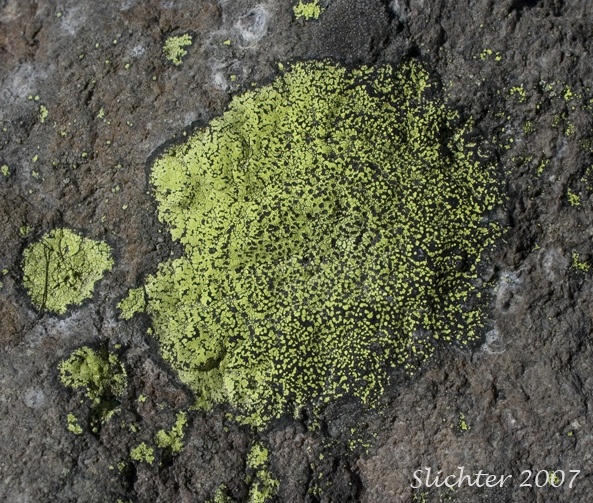
d)
feeding on other organisms.
3.

What is an ecosystem?

a)

The area of land where animals live

b)

A community of insects that work together

c)

A community of organisms together with its environment

d)

The section of a terrarium where plants grow

4.

Plants make their own food

a)

True

b)

False

5.

All the energy that organisms get from food matter originally comes from sunlight

a)

True

b)

False

6.
Temperature, light, air, water, and soil are all  _____  parts of the environment
a)
alive
b)
biotic 
c)
abiotic
d)
living
7.
Is a deer an abiotic or biotic factor? 
a)
abiotic
b)
biotic
8.
A living or once-living organisms in an ecosystem is a
a)
population
b)
biotic factor
c)
abiotic factor
d)
community
9.
A nonliving element in an ecosystem is an 
a)
animal
b)
abiotic factor
c)
biotic factor
d)
organism
10.
Temperature, light, air, water, and soil are all  _____  parts of the environment
a)
alive
b)
biotic 
c)
abiotic
d)
living
11.
Temperature, light, air, water, and soil are all  _____  parts of the environment
a)
alive
b)
biotic 
c)
abiotic
d)
living
12.

A group of different populations of organisms

a)

biotic

b)

community

c)

bacteria

13.

A single living thing

a)

organism

b)

consumer

c)

abiotic

14.

Very small living thing; often one celled, too small to be seen without a microscope

a)

ecosystem

b)

microorganism

c)

population

15.
Why are plants called producers?
a)
They make carbon dioxide
b)
They decompose
c)
They make their own food
d)
They are omnivores
16.
What is the process in which plants use sunlight to create energy?
a)
Photography
b)
Pennsylvania
c)
Cholorophyll
d)
Photosynthesis
17.
All animals are...
a)
producers
b)
consumers
c)
carnivores
d)
omnivores
18.
Living things that eat other living things are called...
a)
Consumers
b)
Carnivores
c)
Omnivores
d)
Animals
19.
What do herbivores eat?
a)
Only plants
b)
plants and animals
c)
only other animals
d)
dead organisms
20.
What do carnivores eat?
a)
only plants
b)
plants and animals
c)
only other animals
d)
dead organisms
21.
What do omnivores eat?
a)
only plants
b)
plants and animals
c)
only other animals
d)
dead organisms
22.
What do decomposers eat?
a)
only plants
b)
plants and animals
c)
only other animals
d)
dead organisms
23.
True or false? The amount of food available in any ecosystem is limited.
a)
true
b)
false
24.
What is a food web?
a)
a bunch of food chains
b)
one path of what eats what in an ecosystem
c)
what spiders eat
d)
how plants turn sunlight into sugar 
25.
Which best describes what a food chain shows you?
a)
Energy flow through an ecosystem
b)
Food flowing through an ecosystem
c)
Consumers going into other consumers
d)
Who eats who
26.
What are plants called in a food chain?
a)
Producers
b)
Consumers
c)
Decomposers
d)
Scavengers
27.
What are animals called in a food chain?
a)
Producers
b)
Consumers
c)
Decomposers
d)
Plants
28.
A diagram that shows how food chains are connected
a)
Producer
b)
Limiting Factor
c)
Consumer
d)
Food Web
29.

What is succession?

a)

The first species to populate an area.

b)

Is the same of intereaction

c)

Is Disruption to the physical or biological components.

d)

The series of predictable changes that occur in a community over time.

30.
Plant life starting to grow on a volcano
a)
primary succession
b)
secondary succession
c)
tertiary succession
d)
variable succession
31.
What is the order of succession shown in this figure?
a)
A, B, C, D
b)
B, A, D, C
c)
C, D, A, B
d)
D, A, B, C
32.
What is the first species you will see after a primary succession? (in picture)
a)
lichens
b)
grasses
c)
small plants
33.
A pioneer species is...
a)
a large organism
b)
the first organisms to adapt to a new environment 
c)
The best organism 
d)
Abiotic organisms 
34.
Which is the correct order in primary succession?
a)
Rocks, Lichens & Mosses, Bushes & Shrubs, Trees
b)
Lichens & Mosses, Rocks, Trees, Bushes & Shrubs 
c)
Trees, Bushes and Shrubs, Lichens & Mosses, Lichens & Mosses
d)
Rocks, Grass, Trees, Bushes & Shrubs
35.

When an ecological community has undergone succession and has become stable, no longer changing.

a)

ecological succession

b)

Climax community

c)

pioneer species

d)

eutrophication

36.

What do 'plants' do with the carbon they receive?

a)

They turn it into water

b)

They don't need carbon

c)

They turn it into food by photosynthesis

d)

They keep it forever

37.

How do animals get carbon?

a)

Photosynthesis

b)

They absorb it from the atmosphere

c)

The sun

d)

They eat other plants and animals

38.

How is carbon recycled?

a)

The carbon cycle

b)

At the recycle plant

c)

It can't be recycled

d)

Through water

39.

Which choice correctly shows the gases that enter and exit plants during photosynthesis?

a)

Enter: Oxygen

Exit: Carbon Dioxide

b)

Enter: Carbon Dioxide

Exit: Oxygen

c)

Enter: Water Vapor

Exit: Glucose

d)

Enter: Light

Exit: Water Vapor

40.

What gas do plants give off after conducting photosynthesis that humans/animals need in order to live?

a)

Oxygen

b)

Carbon

c)

Nitrogen

d)

Hydrogen

41.

Plants take in ________from the air as one key ingredient for photosynthesis.

a)

oxygen

b)

soil

c)

sugar

d)

carbon dioxide

42.

The main source of energy for all life comes from _____.

a)

the Earth

b)

the sun

c)

the moon

d)

the food we eat/make

43.

Which of the following examples go through the process of photosynthesis?

a)

bees

b)

humans

c)

algae

d)

mushrooms

44.

When humans EXHALE, we release __________________.

a)

Oxygen

b)

Carbon Dioxide

c)

Nitrogen

d)

Water

45.

Where do plants get their energy for photosynthesis?

a)

coal

b)

sun

c)

water

d)

carbon dixide