
NEW
Font size
 Worksheets
Ionic & Covalent Bonds
Total questions: 27
Worksheet time: 15mins
When two nonmetals do not share electrons evenly, the resulting covalent bond will be
nonpolar
polar
ionic
metallic
Which category of elements usually form negative ions?
metals
nonmetals
metalloids
noble gases
What is a valence electron?
an electron that is found in the outermost shell of an atom.
an electron found in the innermost shell of an atom.
an electron found in the middle shell.


This atom in a water molecule has more of a negative charge
hydrogen
oxygen

The positive ions tend to _____________ electrons.
lose
gain
The negative ions tend to _____________ electrons.
lose
gain
When an atom loses an electron, it becomes a
positive ion
negative ion
neutral ion
neutral atom
Why do all bonds form?
so the number of protons equals the number of electrons
so an atom can become unstable
to fill the outermost energy level
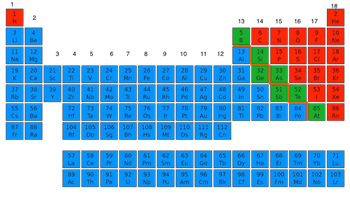
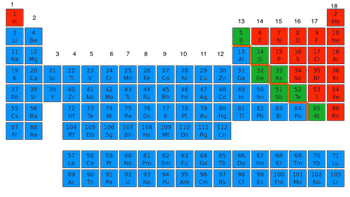

What type of elements form cations?
metals
nonmetals
metalloids?
How does calcium become an calcium ion?
it loses 2 electrons
it gains 2 electrons
Cations
Gain electrons, has an overall positive charge
Lose electrons, has an overall positive charge
Lose electrons, has an overall negative charge
Gain electrons, has an overall negative charge
How does magnesium become an magnesium ion?
it loses 2 electrons
it gains 2 electrons
How does oxygen become an oxide ion?
it loses 2 electrons
it gains 2 electrons

How many Aluminum atoms are in Al2O3?
3
5
2
1
What two types of atoms make a covalent bond?
2 nonmetals
2 metals
1 metal and 1 nonmetal`
How many valence electrons does Boron have?
1
2
3
4
Group numbers on the periodic table help us determine
number of valence electrons
state of the element (solid, liquid, gas)
Water is an example of what?
molecular compound (covalent compound)
ionic compound
Salt is an example of what?
ionic compound
covalent compound

