
NEW
Font size
 Worksheets
Physics Quiz / Term 2
Total questions: 25
Worksheet time: 16mins
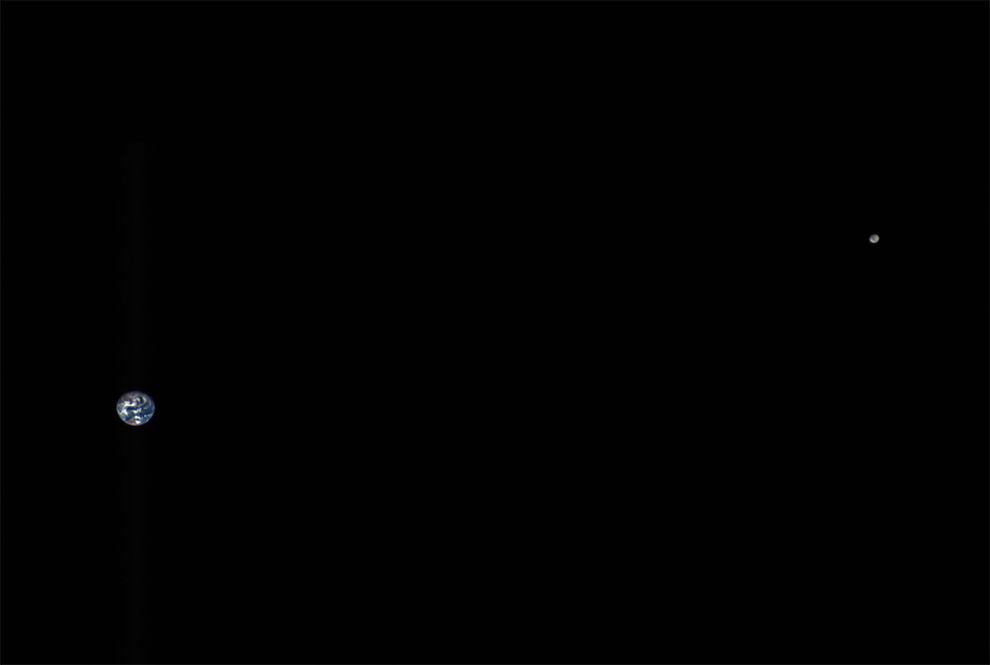
According to Newton's law of gravitation, the Earth and the Moon are gravitationally attracted to each other. The more massive Earth attracts the Moon with...
a stronger force than the Moon attracts the Earth.
a weaker force than the Moon attracts the Earth.
the same force as the Moon attracts the Earth.
a force that is sometimes stronger and other times weaker than the Moon attracts the Earth.
which are the following is Newton’s Law of gravitation ?
W=rGMm
F =r2GMm
V =rGM
g=− rGM

Newton said that any two masses will...
combine into a larger mass.
attract each other.
create gravitational fields.
push each other apart.
If mass of Neil Armstrong was recorded as 60kg on Earth, what would it have been on Moon ?
10kg
360 kg
60kg
6kg
If the weight of Neil Armstrong was recorded on the moon as 15N, what would it be on earth ?
2.5N
90N
15N
120N
Gravitational forces are:
always attractive
always repulsive
sometimes attractive and sometimes repulsive
None of these
Which of the following is the evidence to show that there must be a force acting on earth and directed towards the sun:
deviation of the falling bodies towards east
revolution of earth around the sun
phenomena of day and night
apparent motion of sun round the earth
The mass of the moon is about 1.2% of the mass of the earth. Compared to the gravitational force the earth exerts on the moon, the gravitational force the moon exerts on earth:
Is the same
Is smaller
Is greater
Varies with its phase
Where will it be profitable to purchase 1 kg sugar (by spring balance)
At poles
At equator
At 45° latitude
At 60°latitude
The acceleration due to gravity at pole and equator can be related as:
gp < ge
gp = ge = g
gp < ge = g
gp > ge
What will happen to the gravitational acceleration of an object if the object is moving from surface of the planets to the outer space?
increases
decreases
unchanged
increase, then decrease

There is a car moving on a circular path. Which of the following can explain the above situation?
A force acts in opposite direction with car's weight.
A force acts as centripetal force towards the centre of circle.
A force acts in the direction of movement.
A force acts away from the centre of circle.
A student turns on flashlight. What is the energy conservation that happen there?
chemical - light - electrical
electrical - chemical - light
chemical - electrical - light
light - chemical - electrical
A car has speed 5 m/s and the mass of the car 1000 kg. What is the kinetic energy of the car?
12500 J
25000 J
5000 J
2500 J
Energy can only be created or destroyed, not converted from one form to another.

1 kWh is equal to ______
3600000W
3600000J
360000J
360000W
Energy and Work are measured in....
meters
grams
joules
time

