
 Worksheets
Geography Mock exam AQA Geography GCSE
Total questions: 50
Worksheet time: 25mins
In what type of climate will Tropical Rainforests thrive?
Very hot
Warm and wet
Warm and dry
Very hot and dry
Which of the following is not a reason for deforestation in tropical rainforests?
Logging
Road building
Tourism
Commercial farming
What are the impacts of deforestation? (Choose all that apply)
Soil erosion
Loss of biodiversity
Contribution to climate change
Loss of jobs
How can tropical rainforests be managed sustainably? (Choose all that apply)
Selective logging and replanting
Commercial ranching
Conservation and education
Mineral extraction
Which of the following is an economic gain from deforestation in the tropical rainforest?
Hydro-electric power providing cheap electricity
Shopping centers creating jobs
Plants bringing medicinal benefit
Ecotourism
Where does a river start?
Mouth
Source
Confluence
Tributary
What are the characteristics of the upper course of a river?
Wide, deep channel
Shallow, narrow channel
Widest, deepest channel
All of the above
Identify the characteristics of the middle course of a river.
Medium gradient, gently sloping valley sides with a wider, deeper channel.
Gentle gradient, very wide, almost flat valley, very wide and deep river channel.
Steep gradient, v-shaped valley, steep sides and narrow, shallow channel.
Where is vertical erosion the most dominant along the long profile of a river?
Upper course
Middle course
Lower course
When soluble particles are dissolved into the river it is called:
Hydraulic Action
Abrasion
Saltation
Solution
Which process involves large boulders and rocks being rolled along the river bed?
Saltation
Traction
Suspension
Solution
Which Process involves small pebbles and stones being bounced along the river bed?
Solution
Traction
Saltation
none of the above
Tiny particles such as silt are usually transported:
in solution
in suspension
by saltation
by traction
How many ways is the load transported in the river?
3
4
2
1
What is the edge of the river basin called?
waterside
waterway
watershed
water
________________ are streams that flow together to make a river.
source
tributaries
mouth
drainage basin
The area of land DRAINED by a river system is called the _____________
drainage basin
mouth
tributaries
source
What river landforms are found in the upper course?
Gorge
Meander
Delta
Interlocking spurs
How do waterfalls form?
A layer of soft rock lies on top of a layer of hard rock
A layer of hard rock lies on top of a layer of hard rock
Abrasion erodes away a plunge pool at the bottom of the waterfall
Solution and traction creates a plunge pool at the bottom of the river
What type of erosion is prominent in the middle course?
Vertical erosion
Saltation
Solution
Lateral erosion
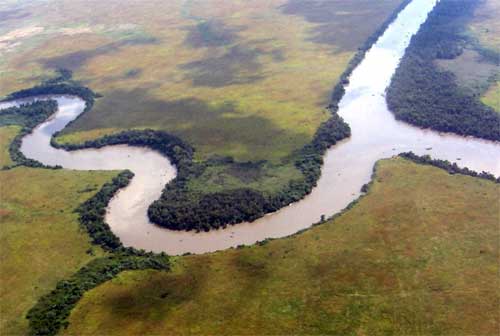
The point where a smaller river joins a larger river is called a ...
Tributary
Congruence
Confluence
Convergence
Strategies used be people to prevent coastal erosion and flooding are known as:
coastal management
hard Engineering
soft Engineering
Why are beaches important?
Beaches are not important.
They attract visitors, and therefor bring economic opportunities to an area.
They can protect the coastline from erosion by forming a barrier.
They can protect the area next to the beach form flooding.
What can be the consequence of building groynes further along the coast? Tick all that apply
Beaches further along the coast will increase in size
The rate of erosion can increase.
Beach sediment is cut off so beaches further along the coast shrink.
There are no consequences further along the coast.
Identify the sea wall
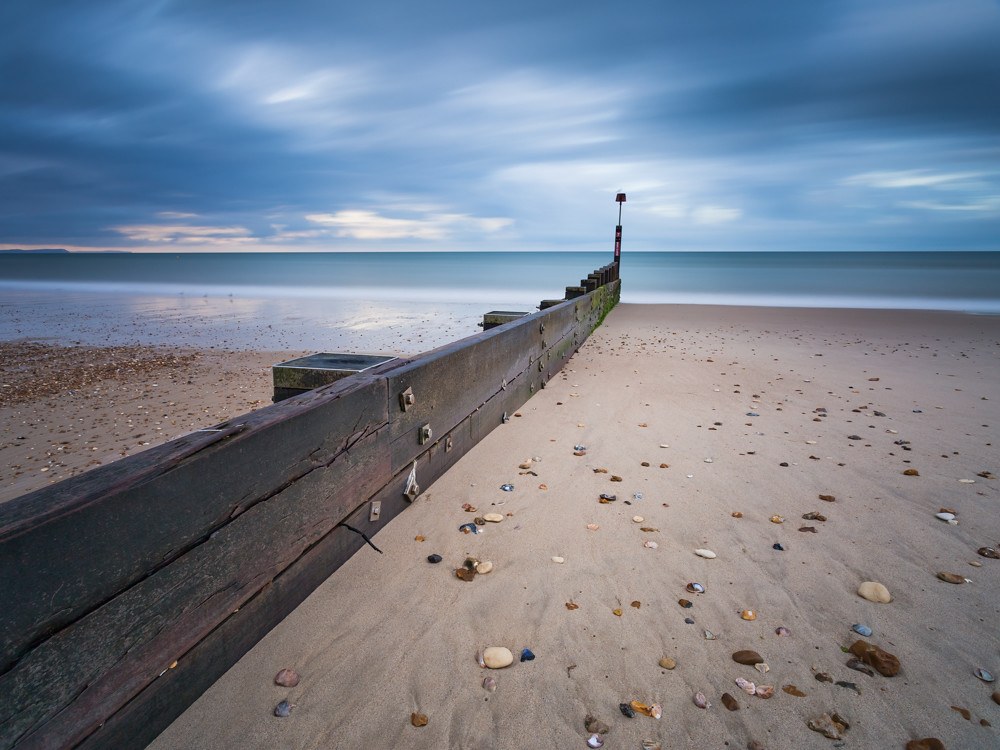
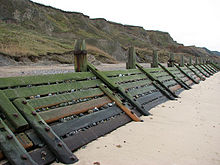
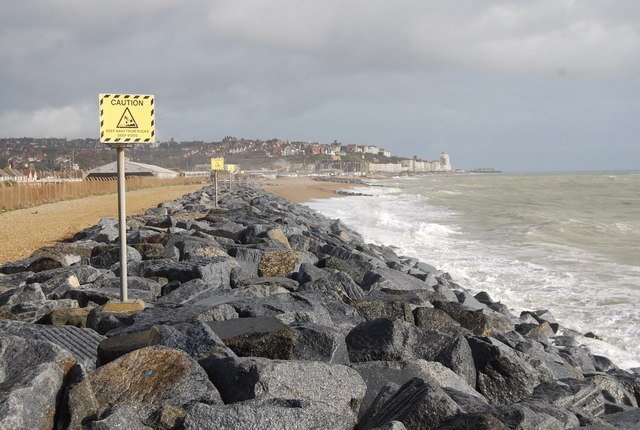
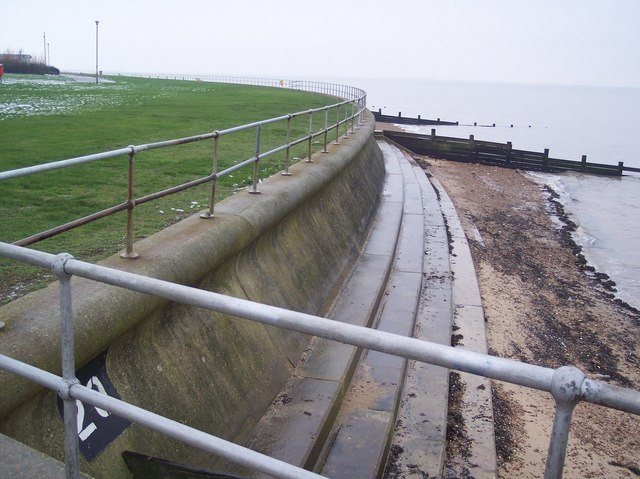
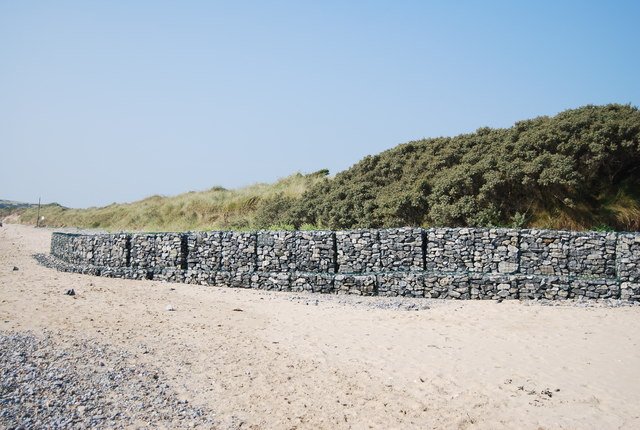
Identify the groyne
Identify the revetment
Identify the gabions
Identify the rock armour
Select all that apply. Sea Walls:
are places at the foot of cliffs or at the top of beaches.
are build across the beach sticking out from the coastline.
are often curved or stepped.
cost up to £1,000,000 per 100m
are usually constructed of wood
Select all that apply. Groynes:
are places at the foot of cliffs or at the top of beaches.
are build across the beach sticking out from the coastline.
are often curved or stepped.
cost around £150,000 each.
are usually constructed of wood
Select all that apply: Rock armour
consists of large boulders placed at the base of the cliff or in front of a sea wall.
usually consists of resistant rocks like granite.
costs around £200,000 per 100m.
is often made from local stone.
is sometimes used alongside concrete tetrapods.
Select all that apply: Gabions
consists of large boulders placed at the base of the cliff or in front of a sea wall.
consist of metal cages filled with rocks
cost around £50,000 per 100m.
are used to stabilise cliffs
can break open because of the metal cage rusting.
Select all that apply: A revetment
is a sloping wooden structure built along the beach parallel to the cliffs.
breaks incoming waves and traps sediment.
cost around £200,000 per 100m.
helps accessibility to the beach
require a lot of maintenance.
How has a cactus adapted to desert life?
Has spines instead of leaves
Long reaching roots to seek out water
Store water in their roots and stems
Wear sunscreen to avoid being sunburnt
How have camels adapted to desert life?
Long eyelashes to shelter eyes from sun and sand
Long legs to keep body away from hot ground
Use spitting as a defence against snakes and scorpions
Store water and fat in a hump on their back
What is Desertification?
Land that suffers from short term drought
Land that is cared for and managed
Land used for farming using sustainable practises
Land is gradually turned into a desert usually on the edge of an existing desert.
Which of these is NOT away of reducing Desertification
Water and Soil Management
Tree planting
'Magic Stones' in Burkina Faso
Using watering cans

Having access to safe, affordable and nutritious food to maintain a healthy lifestyle. What is this the definition of?
Food production
Food consumption
Food supply
Food security
Food insecurity can result in the following...
Lowering of food prices
Social Unrest
Famine
Soil erosion
Why does the UK import so much food?
UK climate is unsuitable for some food
There is a demand for seasonal produce
People don't like choice and variety
Food can be cheaper from abroad
Which two statements apply to an agribusiness?
Intensive farming
Minimum amount of food produced
Uses lots of pesticides and fertilisers
Low levels of investment
Which two characteristics apply to organic farming?
Use pesticides
Decreasingly popular
Expensive
Often local and seasonal
Low income countries use most water on which of the following?
Industry
Agriculture
Domestic use
From statistics that show UK water use, which category uses most water?
Leakage
Manufacturing
Services
Household
Water transfer schemes in the UK aim to move water from ...
Areas of surplus to deficit
Areas of deficit to surplus
Which of the following is an economic concern about Fracking?
Could create job opportunities
Could cause earthquakes
Could pollute underground water sources
Could be expensive to extract
Which two statements fit the UK's current energy mix for generating electricity?
Almost 40% nuclear energy
Almost 40% natural gas
Almost 40% coal
Almost 40% renewable energy
Why are coal, oil, and natural gas classified as nonrenewable resources?
They are limitless
They exist in many places on Earth.
They are originally from once-living things.
They take millions of years to form.

