wayground logo

Free Printable Worksheets

NEW

Font size

S
M
L
XL
Worksheets

Piaget vs. Vygotsky

Total questions: 28

Worksheet time: 58mins

Name
Class
Date
1.
Cindy understands her world primarily by grasping and sucking easily available objects. Cindy is clearly in Piaget's ________ stage
a)
preoperational
b)
concrete operational
c)
sensorimotor
d)
formal operational
2.
According to Piaget, during the formal operational stage people begin to:
a)
reason abstractly
b)
adhere to social norms
c)
distinguish between good and bad behaviors
d)
become aware of the positive and negative consequences of their own behaviors
3.
According to Piaget, children come to understand that the volume of a substance remains constant despite changes in its shape during the ________ stage.
a)
sensorimotor
b)
preoperational
c)
concrete operational
d)
formal operational
4.
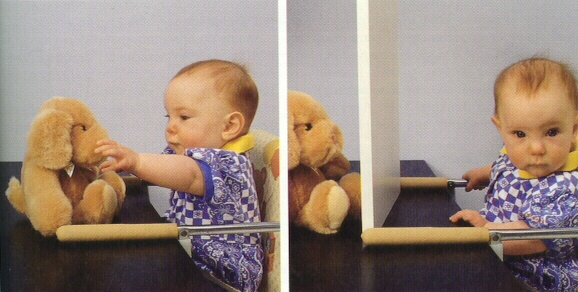
An infant who has developed object permanence...
a)
is attached to specific objects, such as a blanket.
b)
will see all objects as being the same.
c)
knows that an object, such as a rattle, exists even if it is not in view.
d)
cries when a wanted object is taken away.
5.
Four-year-old Jennifer mistakenly believes that her mother would like to receive a toy doll as a Christmas present. This best illustrates Piaget's concept of:
a)
accommodation
b)
attachment
c)
object permanence
d)
egocentricism
6.
The cognitive ability to be able to recognize that quantities remain the same when two glasses of water are sitting beside each other, and one is poured into a taller glass.
a)
Irreversibility
b)
Centration
c)
Conservation
d)
Object Permanence 
7.
The inability of young children to see the world through someone else's view is termed:
a)
Centration
b)
Irreversibility
c)
Conservation
d)
Egocentrism
8.
In which of the following stages will children learn the concept of conservation?
a)
preoperational
b)
concrete operational
c)
sensorimotor
d)
formal operational
9.
Peek-a-boo works on children in what stage?
a)
Sensorimotor
b)
Preoperational
c)
Concrete Operational
d)
Formal Operational
10.
The ability to use deductive logic, think abstractly and systematically solve problems emerges during the:
a)
Concrete Operational Stage
b)
Sensorimotor Stage
c)
Formal Operational Stage 
d)
Preoperational State 
11.
Bobby believes that the sky is blue because someone painted it that color.  This is an example of . . .
a)
artificialism
b)
animism
c)
egocentrism
d)
conservation
12.
During the preoperational stage children a very _________
a)
independent
b)
loud
c)
egocentric
d)
self centered
13.
The first stage of development is the _____ stage.
a)
adaptation
b)
assimilation
c)
accommodation
d)
sensorimotor
14.
Jane's mother has two crackers, both of equal size. She breaks one of the crackers up into four pieces. Jane says she wants the one with the most and immediately chooses the four pieces, even though the two amounts are equal. Jane's choice illustrates Piaget's concept of:
a)
Accommodation
b)
Egocentrism
c)
False belief
d)
Conservation
15.

In Piaget's theory, the stage in which infants are only aware of what is immediately in front of them (from birth to about 2 years of age).

a)

Formal Operational Stage

b)

Preoperational Stage

c)

Sensorimotor Stage

d)

Concrete Operational Stage

16.
Which option is key while incorporating Vygotsky's theories in your classroom?
a)
Scaffolding
b)
Hands-on activities
c)
Learning Styles
d)
Discovery Learning
17.
The zone of proximal development is:
a)
The most a child can learn in a given day
b)
The gap between what the child can do on their own and what they cannot do without assistance
c)
What the child already knows
d)
The intelligence level the child is projected to be at given point
18.

The ZPD is between

a)

anxiety and boredom

b)

anxiety and frustration

c)

stress and calm

d)

learning and relearning

19.

The ZPD is between

a)

What the learner can do with help and what the learner cannot do

b)

What the learner can do on their own and what they can do with help

c)

What the learner can do on their own and what the learner will be able to do on their own

20.

To help in the ZPD the teacher must use

a)

inependent practice

b)

scaffolding

c)

student goal setting

d)

continuos help

21.

___________ believed the stages of development must be met before learning can occur.

a)

Piaget

b)

Vygotsky

22.

______________ believed the learning was a collaboration between the teacher and student.

a)

Piaget

b)

Vygotsky

23.

Who is this theorist?

a)

Lev Vygotsky

b)

Jean Piaget

c)

Sigmund Freud

d)

Erik Erikson

24.

Who is NOT a child developmental theorist?

a)

Sigmund Freud

b)

Erik Erikson

c)

John B Watson

d)

Vincent Van Gogh

25.
Vygotsky believed that language and thought are interconnected from birth.
a)
True
b)
False
26.
Vygosky’s theory emphasized which contexts of learning and that knowledge is mutually built and constructed? 
a)
developmental
b)
social
c)
theoretical
d)
conditioned
27.
According to Vygotsky,  why is language important in development?
a)
Language is the main means by which adults transmit info to children.
b)
Language is a powerful tool of intellectual adaptation.
c)
Language is an accelerator to thinking and understanding.
d)
All of the above.
28.
According to Vygotsky, which of the following is not true?
a)
Children construct knowledge.
b)
Cognitive development occurs in distinct stages.
c)
Development cannot be separated from its social context.
d)
Language plays a central role in mental development.