wayground logo

Free Printable Worksheets

Font size

S
M
L
XL
Worksheets

Diffussion

Total questions: 15

Worksheet time: 15mins

Name
Class
Date
1.
Permeable means
a)
things can pass through
b)
the concentration levels are different
c)
it is permanent
d)
things are stuck
2.
Diffusion is the movement of molecules from an area of _____ concentration to an ______ concentration
a)
High, low
b)
Low, high
c)
Low, low,
d)
High, high
3.
What does “high concentration area” mean?
a)
Spread out
b)
Tightly packed together
c)
Uncrowded
d)
Spacious
4.
Where is there a low concentration of dye?
a)
at the bottom of cup
b)
in the color
c)
at the top of cup 
d)
no concenteraion gradient
5.
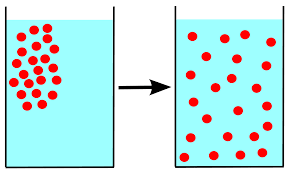
The picture below is an example of _________________.
a)
osmosis
b)
isotonic
c)
diffusion
d)
active transport
6.
When particles move from areas of high concentration to areas less concentrated, this has taken place.
a)
diffusion
b)
mitosis
c)
endocytosis
d)
photosynthesis
7.
Which diagram best shows the end result of diffusion?
a)
F
b)
G
c)
H
d)
J
8.
The picture  is an example of _________________.
a)
isotonic
b)
diffusion
c)
osmosis
d)
active transport
9.

What is DIFFUSION?

a)
b)
c)
d)
10.

What is a solute?

a)

A substance dissolved in another substance

b)

the substance doing the dissolving

11.

What is a solvent

a)

The one doing the dissolving

b)

The substance dissoved in another substance

12.

What happens to the concentration of carbon dioxide in you cells when you exercise

a)

Increase

b)

Decrease

c)

Remain constant

13.

How does the body remove carbon dioxide from the cells?

a)

The body cells converts carbon dioxide into carbon monoxide

b)

The body cells don't expel the waste, they store them for future use

c)

The body cells expel the carbon dioxide through the use of the nucleus

d)

The carbon dioide diffuses out of the body cells and into the bloodstream due to differences in the concentration gradient

14.

The movement of particles is __________, resulting in the particles being spread throughout the container

a)

Structured

b)

In a straight line

c)

Random

d)

In curved, way motions

15.

What hapens to the concentration of oxygen in the body cells when you exercise?

a)

Increase

b)

Decrease

c)

Remain constant