
 Worksheets
Some Natural Phenomenon
Total questions: 15
Worksheet time: 8mins
Which of the following is NOT a method to charge an electrically neutral object ?
Charging by Friction
Charging by conduction
Charging by Earthing
Charging by induction
The slow movement inside the earth is known as ____________.
Plate Tectonics
Convection Currents
Tectonic Currents
Tectonic Convections
Which of the following cannot be charged easily by friction?
A plastic scale
A woollen cloth
An inflated balloon
A copper rod
Which of the following produces charge ?
Amber
Lac
Gum
Fructose
Name the scientist who showed that lightning and spark from our clothes are essentially the same phenomenon ?
Thomas Alva Edison
Franklin D Roosevelt
Benjamin franklin
Isaac Newton
The aluminium strips in an electroscope are replaced by plastic strips and a charged body is brought in contact with the metal clip. Will the electroscope work ? Write YES or NO ( In caps to prevent spelling error )
(a)
Where is the lightning rod attached to protect the building from lightning?
In the middle of the building
On the bottom of the building
On the top of the building
All of these
Richter scale is used to express the (a) of an earthquake.
Electroscope is used to
(a) Check presence of charge
(b) Presence of magnetism
(c) Measure the temperature
(d) Measure the conductivity
Which of the following is negatively charged particle?
proton
electron
neutron
all of these
Identify the figure which is not suitable during thunder storms
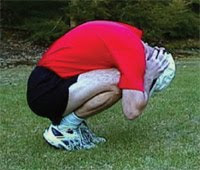
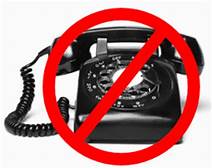

The process of transferring of charge from a charged object to the earth is called —————-
Charging
Uncharging
Earthing
All
Like charges
can repel or attract each other depending on the quantity of charge
can repel or attract each other depending on conditions
always repel each other
always attract each other
When an uncharged body B is brought into contact with a positively charged body A:
A loses its charge
B acquires positive charge
B acquire no charge
B acquires negative charge
The place of origin of an earthquake is called
Focus
epicenter
Disc
None of these

