
Font size
 Worksheets
MYP Cumulative
Total questions: 180
Worksheet time: 3hrs 5mins
María es griega y muy
guapo
guapa
guapos
guapas
Where are you from?
¿Dónde vives?
¿Dónde eres de?
¿De dónde eres?
¿De dónde nacionalidad?
I have two brown rabbits
Tengo dos conejo marrones
Tengo dos conejo marrón
Tengo dos conejos marrones
Tengo dos conejos marron
I have, you have, s/he has, we have, you lot have, they have
tengo, tienes, tiene, tenemos, tenéis, tienen
tieno, tienes, tiene, tenemos, tenéis, tienen
tengo, tienes, tene, tenemos, tenéis, tienen
tengo, tienes, tiene, tenemos, tenéis, tienes
you have (singular formal)
usted tienes
usted tengo
ustedes tienen
usted tiene
i am, you are, s/he is, we are, you lot are, they are
soy, eres, es, somos, sóis, sos
soy, eres, está, somos, sóis, son
soy, eres, es, somos, sóis, son
estoy, eres, es, somos, sóis, son
you are (singular formal)
usted soy
usted es
usted eres
usted son
you lot have (formal)
ustedes tienen
ustedes tengo
ustedes tenéis
ustedes tienes
adjectives that end in 'e' only change into plural
verdadero
falso
adjectives that end in 'e' need to change the ending for an 'o' in masculine singular
true
false
regular adjective endings are 'a', 'o', 'as', 'os'
verdadero
falso


I saw my grandma
Vi a mi abuela
Vi mi abuela
We saw your boyfriend
Vimos a tu novio
Vimos tu novio
I watched the video
Vi el video
Vi a el video
I called Sofia
Llamé a Sofia
Llamé Sofia

A mí ______ gusta bailar y cantar.

A él ______ gusta bailar y cantar.

A Marta ______ gusta bailar y cantar.

A Juan y a Luisa ______ gusta bailar y cantar.

A mi padre ______ gusta bailar y cantar.

A Juan y a mí ______ gusta bailar y cantar.
A nosotras ______ gusta cocinar.

A ella ______ gusta bailar y cantar.

A Ud. ______ gusta bailar y cantar.

A Uds. ______ gusta bailar y cantar.
A ti ______ gustan los libros románticos.
Tener calor
to be hot
to be proud
to be right
to be thirsty
Tener miedo
to be afraid
to be in a hurry
to be lucky
to be sleepy


Mi hermana ___ pintar bien, ¿no?




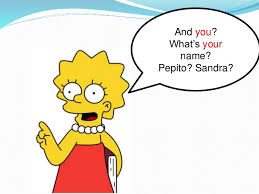
How do you say "what's your name?" in Spanish?
Mi nombre es_______________.
Mal.
¿Cómo estás (tú)?
¿Cómo te llamas (tú)?

How do you say "how are you?" in Spanish?
¿Cómo está usted?
¿Cómo estás? or ¿Qué tal?
¿Cómo están ustedes?
Estoy bien, gracias.



¿Algo más?

¿Cómo se dice How much is it? en español?
¿Cuánto cuesta?
¿Cuándo es?
¿Cuántos hay?
¿Cuántas hay?
¿Cómo se dice a present for you en español?
un regalo para mí
un regalo para ti
un refresco para mí
un refresco para ti
¿Qué significa sé dónde vives?
Where do you live?
I know where you live.
Tell me who you are
I know who you are
Which way is "todo recto"?
⬆ straight ahead ⬆
↪ on the right ➡
↩on the left ⬅
Which way is "a la derecha"?
⬆ straight ahead ⬆
↪ on the right ➡
↩on the left ⬅
What is the Spanish phrase for "the bill please"?
¿El métro, por favor?
¿La cuenta, por favor?
Conjugate: Yo (necesitar)
necesito
necesita
necesitamos
necesitan
Conjugate: Ellos (usar)
usamos
uso
usan
usas
Conjugate: yo (jugar)
juegas
jugamos
juego
juegan
Conjugate: Uds. (mover)
mueve
movemos
muevo
mueven
Conjugate: tú (escribir)
escriben
escribes
escribimos
escriben
Conjugate: yo (salir)
salo
sale
salgo
salio
Conjugate: yo (traducir)
traduce
traduco
traduzco
traduces
Conjugate: ella (querer)
quere
queremos
quiere
quieres
Conjugate: yo (entender)
entendo
entiendo
entiendes
entendemos
Conjugate: ellas (tener)
tenemos
tienes
tenen
tienen
Conjugate: yo (hacer)
haco
hago
hacemos
hace
Conjugate: traer (yo)
traes
traigo
trae
traemos
Decir
Marta ____ que la clase es interesante.
dice
decimos
digo
dicen
Seguir
Elena y yo ________ el guillón (the script).
seguimos
siguimos
siguemos
siguen
Decir/Repetir
La profesora _____ que los estudiantes deben _____ después de ella.
dice, repiten
dicen, repiten
dice, repetir
dice, repite
Servir
Mis abuelos ______ el café.
sirven
serven
sirve
servimos
Pedir
Los deportistas ______ pollo con verduras de plato principal.
pide
pedimos
piden
peden
Decir
Yo (a) "¡buenos días!" a mis estudiantes.
¿Cuánto _______ (costar) la camisa?
cuestan
cuesto
cuesta
costa
Mi amiga (a) (preferir) agua.
El chef (a) (servir) la cena.
Nosotros _____ (poder) ir al cine esta noche
pudemos
pidemos
podemos
puedemos

La madre y la hija ___ _________ en la casa.
se abrazó
nos abrazamos
os abrazáis
se abrazaron

Tu amigo y tú ___ hablan por Snapchat.
te
se
os
nos

Mis amigos y yo ____ abrazamos cuando ____ encontramos.
se
nos
os
les
¡No te peinas con el cepillo de dientes! ¡Qué absurdo!
You do not comb your hair with a toothbrush! How absurd!
She doesn't brush her hair with a toothbrush! How absurd!
They don't brush their hair with a toothbrush! How absurd!
We don't brush our hair with a toothbrush! How absurd!
¿Cómo te sientes?
How do you feel?
Where do you sit?
How do y'all feel?
How do you sit?
¿Dónde te sientas?
Where do you sit?
How do you feel?
How do you sit?
Where do y'all sit?
Me quedo en casa.
I stay at your house.
I stay at home.
I remain at my friend's house.
I remain loyal to my house.
People usually use the usted form when they want to _______.
Address younger people or kids
Show extra friendliness
Be respectful
Talk to younger family members
Tú and usted are both Spanish words for _______.
He/ She
You
They
We
“_______” is the more formal version of “you”.
Ustú
Vos
Tú
Usted
(WASH) la ropa
(a)
(SET) la mesa
(a)
(HELP) a tu madre en la cocina
(a)
(CUT) el césped
(a)
(LISTEN) a la profesora
(a)
GIVE
DA
COME
PERRO
DAR
COOK
CORTA
COME
COCINA
CORRE
Don't speak English.
No hables inglés.
No habla inglés.
No hablar inglés.
No hablas inglés.
Don't run.
No corras.
No corres.
No corre.
No corra.
Don't write it (the information).
No la escribas.
No escribéla.
No la escribe.
No la escribes.
Don't go to the office.
No vayas a la oficina.
No ve a la oficina.
No fuiste a la oficina.
No vas a la oficina.
Don't be sad.
No estés triste.
No estás triste.
No sé triste.
No estar triste.
Don't put your computer on the floor.
No pongas tu computadora en el suelo.
No pon tu computadora en el suelo.
No pones tu computadora en el suelo.
No ponger tu computadora en el suelo.

El coche está sucio. i______!
Lava el coche
Lavar el coche
Lavas el coche
Lavo el coche
Translate this tú command: Eat the vegetables.
Sal los vegetales.
Comes los legumbres.
Bebe las verduras.
Come las verduras.
¡Ten un buen fin de semana!= ???
Have a good weekend!
Have a good week!
Goodbye, see you soon!
Have a good day!
Dudo que (a) (haber) muchas vacas en la ciudad.
Ricardo duda que Mirella (a) (decir) la verdad.
No estoy segura de que ___________ al desierto.
vayan
van
Es improbable que nosotros _________ a la selva este verano.
vayamos
vamos
No estoy segura de que mis padres (a) (saber) la verdad.

¡Deseo que (tú)_ un buen cumpleaños!
tengas
tenga
tengan
tengais
Mateo quiere que tú _____(salir) con él.
sal
saliste
sales
salgas
Mis padres esperan que nosotros _________(poder) ir de vacaciones.
podamos
podemos
pudimos
pudieron
Mis amigos quieren que yo _______(decir) la verdad.
digo
di
dice
diga
he wrote
escribí
escribió
escribo
escribiste
Yo ___ mis libros en mi mochila.
estuvo
estuve
puso
puse
Paco ______ a la clase de español tarde ayer.
fuimos
fui
va
fue
Mis padres ________ una película el domingo.
vi
viste
vieron
vimos
Mi madre ______ a Madrid el año pasado.
Yo ____ en la cafetería con Luisa ayer.
almorzó
almorcé
almorzamos
almorzé
Rewrite in the preterite: Elena pide la bebida.
pidió
pidieron
pedimos
pedí
Yo ... hacer la tirolesa pero es muy dificil.
quise
quiso
queri
qui
A mi ... el viaje mucho.
me gusté
me gustó
me gustaron
me gusto

Todos los sábados mis amigos y yo _________ (ir) al cine.
iba
ibas
íbamos

Paco __________ (comer) muchos dulces.
comías
comía
comían

Cuando era niño/a, ________(ir) a la guardería infantil.
fue
fui
iba

Frecuentemente mis amigos __________(pelear) mucho.
peleaban
pelearon

Siempre mis hermanos y yo________(tener) que portarnos bien en la guardería.
tuvimos
teníamos

Cuando mi hermana _______(ser) niña _______(obecer) a mis padres.
era/obedecía
fue/obedeció

Cuando ______(ser) pequeños nos ______(gustar) leer mucho.
somos/gustar
fuimos/gustó
éramos/gustaba
Yesterday, I ate an apple and went to market.
Preterite
Imperfect
I used to always go to McDonald's on Fridays.
Preterite
Imperfect
Todos los veranos, ellos____________ a un paÍs nuevo.
viajaron
viajaban
Nosotros ___________ a cenar en ese restaurante una vez.
íbamos
fuimos
De repente el teléfono (a) . (sonar)
She will go
ira
iró
irá
irás

¿Nosotros (a) (tener) que citar los recursos que utilizamos en el proyecto?

They will come
Vendrén
Vendrán
Vendremos
Venirán

She will put
Pondre
Podrá
Pondrá
Podre

He would run.
comería
correría
jugaría
corría

They would live.
viviría
vivirían
viviríamos
vivirán

Ana and I would play
jugíamos
jugaron
jugarían
jugaríamos

hacer la maleta, yo
hacería la maleta
haré la maleta
haceré la maleta
haría la maleta
Choose the correct conditional tense form of the verb "to carry/wear" in the sentence: "She would wear the dress if it fit her."
Ella llevaría el vestido si le quedara bien.
Ella lleva el vestido si le quedara bien.
Ella llevará el vestido si le quedara bien.
Ella llevó el vestido si le quedara bien.
Which of the following sentences correctly uses the conditional tense for the verb "to fall" in Spanish?
Él caería si no se agarrara del pasamanos.
Él cae si no se agarrara del pasamanos.
Él caerá si no se agarrara del pasamanos.
Él cayó si no se agarrara del pasamanos.

