
 Worksheets
Matter and Its Interactions
Total questions: 66
Worksheet time: 53mins
Chemical or Physical:
A characteristic of matter that can be observed with your 5 senses is a ____________ property.
Chemical
Physical
Chemical or Physical:
A characteristic of matter that can only be observed when matter is changed into a new kind of matter.
Chemical
Physical
Chemical or Physical:
The words "blue", "large", and "soft" all describe __________ properties.
Chemical
Physical
The ability of matter to change when heated is a _____________.
Chemical
Physical
Chemical or Physical:
Rusting or tarnishing describes matter undergoing a __________ change with gases in the air.
Chemical
Physical
Chemical or Physical:
Color, shape, texture, and luster are all examples of _______________ properties of matter.
Chemical
Physical
Chemical or Physical:
Mass, volume, or density of an object is a _______________ property of that object.
Chemical
Physical
Chemical or Physical:
The ability to cook, burn, rust, tarnish, or explode is an example of a ___________ property.
Chemical
Physical
Chemical or Physical:
______________ properties include how a substance reacts with other substances.
Chemical
Physical
Chemical or Physical:
The ability to burn is a _______________ property of wood, but not a property of silver.
Chemical
Physical
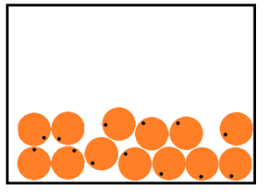
What happens to molecules when heat energy increases?
When molecules move slower, heat energy

What state of matter is pictured?
Solid
Liquid
Gas
Plasma


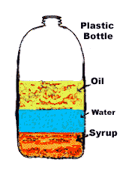


An object has a mass of 2.5 g and a volume of 10 mL. Will th object sink or float in water?
Sink
Float
Suspend
An object has a mass of 125 g and a volume of 100 mL. Will the object sink or float in water?
Sink
Float
Suspend
An object has a density of 1.5 g/mL. If the object is placed in water the object will
Sink
Float
Suspend
Which of the following is a true statement? (There is only one correct choice)
An object with a density of 1.2 g/mL will float in water.
An object with a density of .8 g/mL will float in water.
An object with a density of 1.0 g/mL will sink in water.
A student observes that ice floats in water. The student can conclude
The density of ice is less than the density of water
The density of ice is greater than the density of water
The density of ice is equal to the density of water

What state of matter does the image show?
Solid
liquid
Gas

What state of matter is shown in the image?
solid
liquid
gas

What state of matter is shown in letter D?
solid
liquid
gas
What state of matter is shown in letter A?
solid
liquid
gas
What state of matter is shown in letter G?
solid
liquid
gas
What is occurring at letter E?
condensation
evaporation
freezing
melting
What is occurring at letter B?
condensation
evaporation
freezing
melting
What is occurring at letter F?
condensation
evaporation
freezing
melting
What is occurring at letter C?
condensation
evaporation
freezing
melting


Melting ice
physical change
chemical change

broken glass
physical change
chemical change
Fizzing, foaming, and burning are all examples of
physical change
chemical change

Baking Cookies
Physical Change
Chemical Change
Sodium exploding when placed into water
chemical
physical

