
 Worksheets
Metabolism Review check
Total questions: 20
Worksheet time: 10mins
Where do extra food molecules go when your body doesn’t need them?
Molecules of fatty acids go into fat storage to use for another time when needed.
They are exhaled as CO2 and water.
Molecules are placed in the large intestine till needed.
Complex Carbs go to the muscles for storage.
________ air sacs that take in oxygen and release carbon dioxide. They are found in the lungs
Bronchial Tubes
Alveoli
Villi
Milli Vanilli
What does the body use for energy when glucose isn’t available?
Our body uses energy from our gatorade instead.
Our body uses energy from our bromothyl blue instead.
Our body uses energy from our fat stores instead.
Our body uses energy from our circulatory sytem instead.
Why is our patient losing weight?
She is not working out so she is losig muscle.
She is not eating a balanced diet.
She is exercising to much and it is affecting her heart.
She is not absorbing enough glucose so her body is using her fat storage.
Why do glucose levels in the body decrease faster when exercising then when sitting?
The glucose levels in our bodies decrease faster because they are excreted as waste quickly.
The glucose levels in our bodies decrease faster because the endothermic reaction process speeds up.
The glucose levels in our bodies decrease faster because the exothermic cellular reaction process speeds up.
The glucose levels in our bodies decrease faster because the body doesnt have as much time to digest the complex carbohydrates into glucose.
Which systems carry the carbon dioxide and water out of the body after cellular respiration?
Circulatory and respiratory
Respiratory and digestive
Skeletal and digestive
Circulatory and Muscular
Our Patient's rapid heart beat can be affected by
Her body is lacking nutrients so her heart and lungs work harder to try and get oxygen and nutrion to the cells.
When she does cellular respiration this increases her heart rate.
Because she now weighs less her heart has to work harder.
A metabolic reaction and process that take place in the cells of organisms to convert chemical energy from oxygen molecules or nutrients into
Alveoli
Digestion
Cellular Respiration
Circulation
During cellular respiration the number and type of atoms in the reactants is rearranged to form new products that contain the same number and type of atoms in the products.
True
False- atoms are burned and destroyed in cellular respirations.
Which of the following is NOT a food molecule that moves through the circulatory system?
Amino Acids
Glucose
Fatty Acids
ATP (Energy)
What happens to the glucose levels in the body during prolonged fasting?
Glucose levels remain constant due to stored glycogen.
Glucose levels increase as the body produces more glucose.
Glucose levels decrease as the body uses fat stores for energy.
Glucose levels are unaffected by fasting.
Which process is primarily responsible for breaking down glucose to release energy?
Fermentation
Cellular Respiration
Photosynthesis
Glycolysis
How does the body respond when there is an excess of glucose in the bloodstream?
It stores glucose as glycogen in the liver and muscles.
It converts glucose into amino acids.
It excretes glucose through urine.
It uses glucose to build muscle tissue.
How do large food molcules change to "feed" the body? (Complex Carbs, Proteins, Fats)
Large food molecules are burned in cellular respiration.
Large food molecules are broken down by enzymes in digestion and then absorbed by villi to the blood stream to be used in cells for cellular respiration.
Large food molecules are absorbed by alevoli to the blood stream.
Large food molecules are absorbed by the villi to fuel only muscle cells.
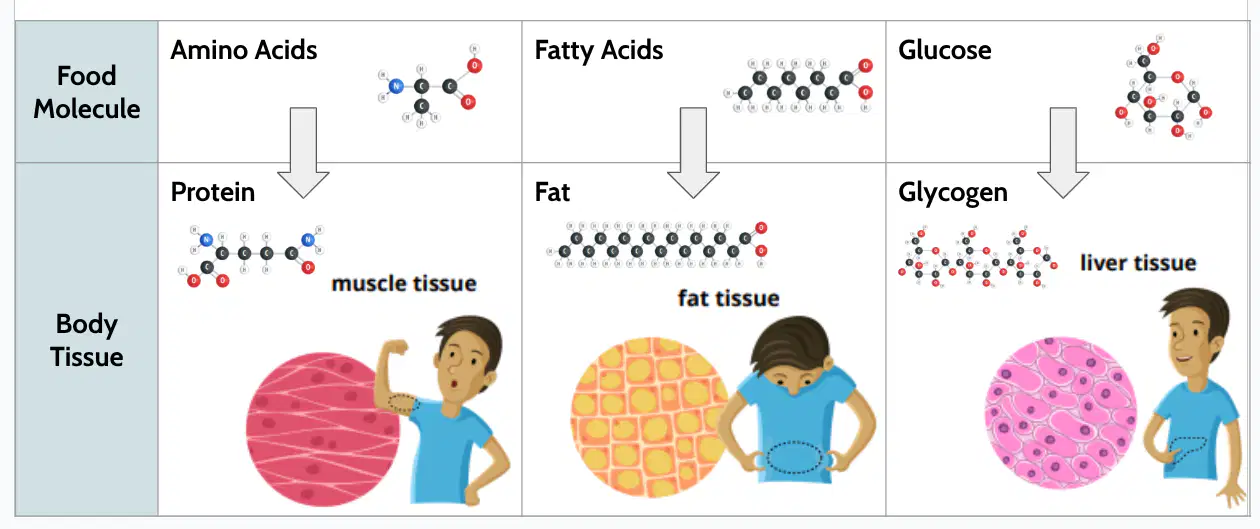
When glycogen stores are depleted which food molecule will the body break down from storage for cellular respiration?
Glucose will be broken down.
Amino Acids will be broken down
Fat molecules will be broken down.
Alveoli will be broken down
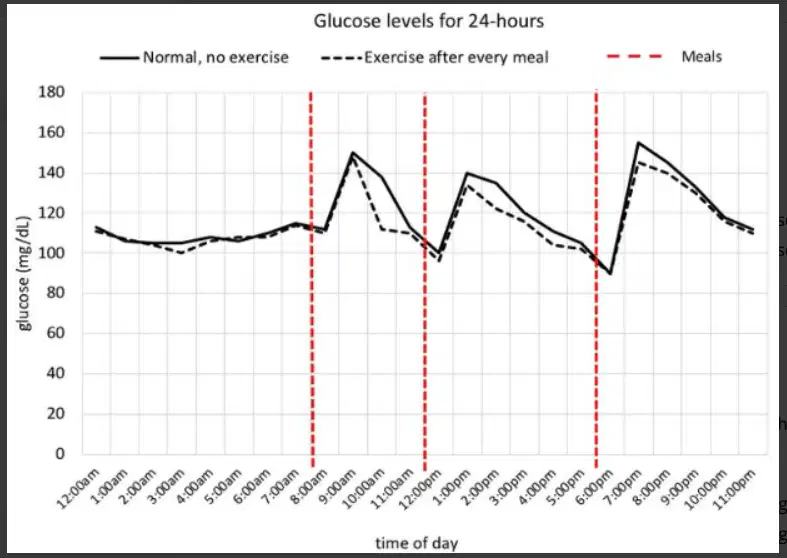
Why do glucose levels increase shortly after meals?
because the body is exercising
because glucose is absorbed after digestion
because the body is using glucose for energy
because energy is being conserved
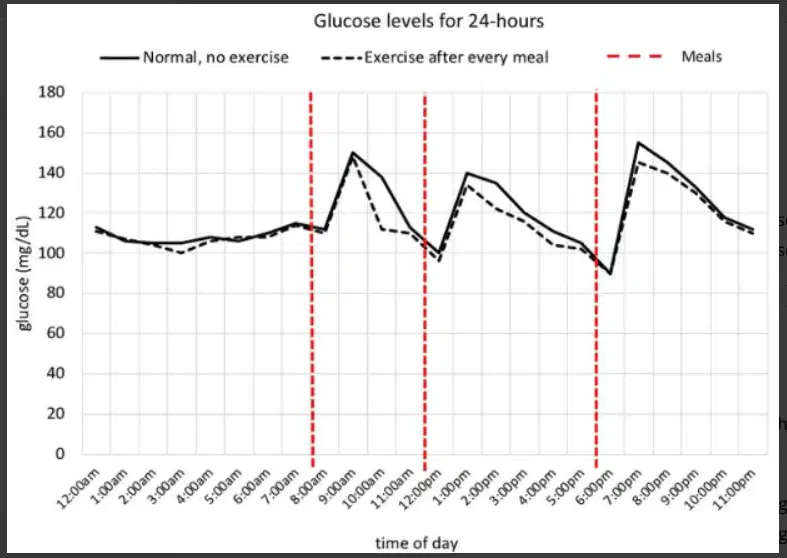
Glucose is used a fuel source in cellular respiration. Which is the best evidence to support this?
blood glucose is lower when exercising vs resting
blood glucose increases within an hour after eating
blood glucose decreases slightly after each meal
blood glucose levels are the same for resting vs exercise
What does your body do with food molecules that are not used?
Changes food molecules into glucose to use immediately.
Stores food molecules for energy later.
Leaves the body as waste (poop).
The circulatory system delivers oxygen and nutrients to the rest of the body through the
bloodstream
stomach
lungs and nose
brain and spinal cord
Which molecule is produced as a waste product during cellular respiration?
Oxygen
Glucose
Carbon dioxide
Glycogen

