
Font size
 Worksheets
Pre-UPS 1
Total questions: 30
Worksheet time: 3600secs

Shown in the diagram is the structure of mefenamic acid. What element is not present in this compound?
Sulphur
Nitrogen
Oxygen
Carbon
Which of the following line formulas has a condensed formula of CH3CHCHCH(CH3)CH2CH3?


What is the condensed formula of this structure?
CH3CH2CH2OH
CH3COCH3
CH3CH2CHO
CH3OCH2CH3

Determine the CORRECT carbon position name
Secondary carbon
Primary carbon
Tertiary carbon
Quarternary carbon

What is the class of carbon that is directly attached to the -OH group in the structure given?
1o
2o
3o
4o

The structure of some hydrocarbon are shown above. The hydrocarbon that classified into saturated compound are ....
F, G, H
F, G, I
G, I, K
F & G
Which one of the following characteristics is not correct for all of the members of the same homologous series?
Same general formula
Similar chemical properties, i.e. undergo the same reactions
Varying physical properties, i.e. change in a predictable way
Different functional group
Which is the correct general formula for the alkanes?
CnH2n+2
CnH2n
CnH2n+1OH
CnH2n+1COOH
What is a functional group?
Atoms or group of atoms that give specific characteristics to a molecule
Group of molecules that make up a group of atoms
Group of molecules that give specific characteristics to an atom
Group of atoms that give specific characteristics to an element

Classify the compound based on the functional group present.
Ketone
Carboxylic acid
Ester
Ether

Classify the compound based on the functional group present.
Ether
Ketone
Ester
Carboxylic acid
Covalent bonds can break through
Homolytic fission
Homolytic fusion
Heterolytic fission
Heterolytic fusion
Which of the following is a unique nature of carbon? (Multiple Selection Question)
Forms 4 strong covalent bonds
It can form only one type of bond
It has the ability to form stable bonds with itself
It can form multiple bonds
Isomers are molecules that have the _________molecular formula (contain the same number of atoms) but ______ structurally (having different arrangement of the atoms in space).
differ, differ
same, differ
same, same
differ, same

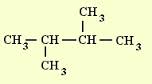
Which structural formula represents an isomer?


Which structural formula represents a molecule that is not an isomer of pentane?



What is the major product of this reaction?


What is the intermediate in this reaction?


Light or heat is required for which step in the halogenation of alkane?
initiation
propagation
termination
When hydrocarbons like the alkanes burn in plenty of air, what type of reaction takes place?
Complete combustion
Incomplete combustion
Thermal decomposition
What is the colour of Bromine after react with alkanes in dichloromethane?
Purple colour remain unchanged
Purple colour decolourised
Reddish brown remain unchanged
Reddish brown decolourised.
Give the name of reaction, when alkanes react with bromine in sunglight.
Hydrogenation
Halogenation
Hydration
Hydrohalogenation
What is the function of sunlight?
To provide colour for homolytic cleavage
To provide energy for homolytic cleavage
To provide colour for heterolytic cleavage
To provide energy for heterolytic cleavage
What happened if alkane reacts with limited oxygen?
Produced carbon dioxide and water
Produced carbon monoxide and water
Produced oxygen and water
Produced soot and water
What happened to bromine when reacts with sunglight in halogenation reaction?
produced electrophiles
produced nucleophiles
produced free radicals
produced all above

What is the name of this step?
Termination Step Chain
Propagation Step Chain
Initiation Step Chain
Cleavage Step Chain
Which of the step TRUE about termination steps chain in halogenation.


What is the type of cleavage when the present of sunlight in initiation step chain
Heterolytic cleavage
Hoholytic clavage
Homoterolytic cleavage
Homolytic clavage

