
 Worksheets
History grade 6
Total questions: 242
Worksheet time: 3hrs 40mins
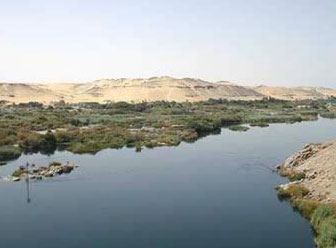
Which of the following best describes how the Nile River affected ancient Egypt?
It destroyed it
It nurtured it
It had no effect on it
It weakened it
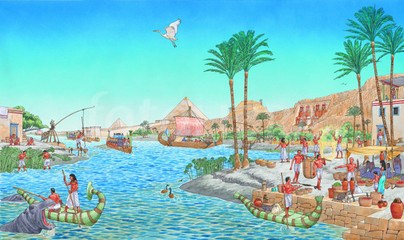
Which of the following statements best describes the Nile?
It flows across Egypt, Libya, and Algeria.
It is the longest river in Africa.
It rarely floods.
It flows from north to south.
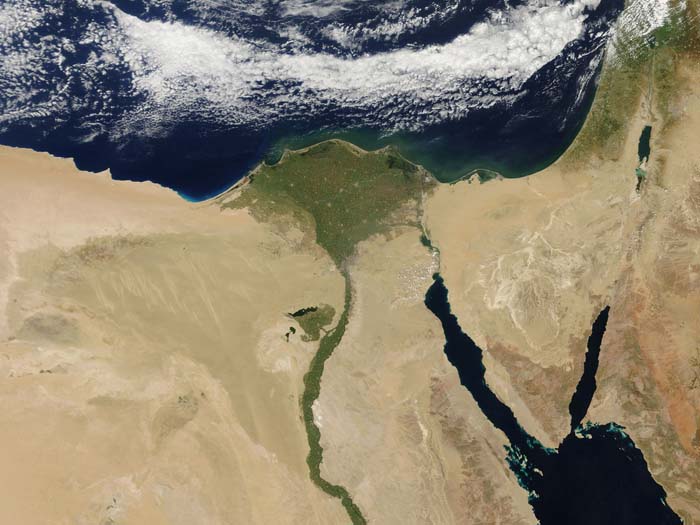
Where does the Nile begin?
In the Mediterranean Sea
In The Ethiopian Highlands near Mount Kilomanjaro
In the mountains of Morocco
In the hilly area by the border of Sudan and Egypt
What stopped the annual flooding of the Nile in 1970?
A serious drought
The construction of the Aswan High Dam
A sudden change in climate
An earthquake changed the course of the river
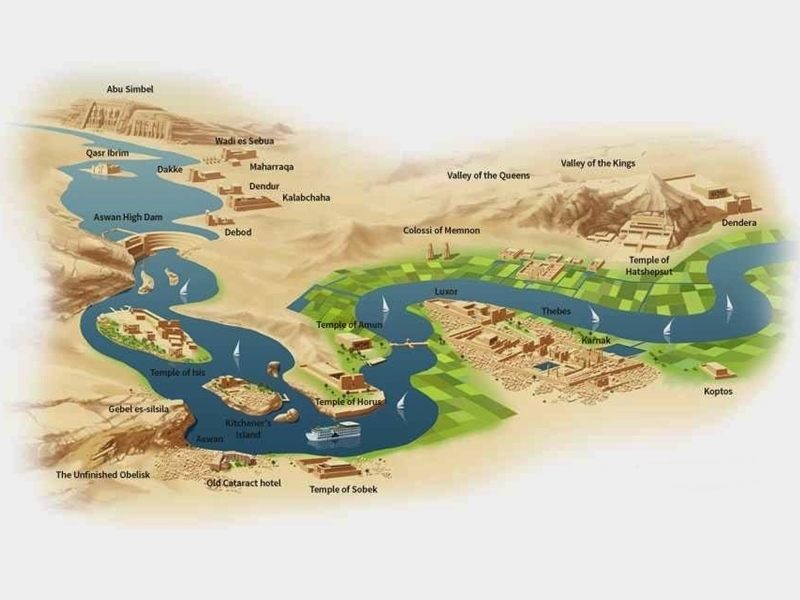
What did the ancient Egyptians call their flood season?
Paret
Aswan
Khufu
Akhet
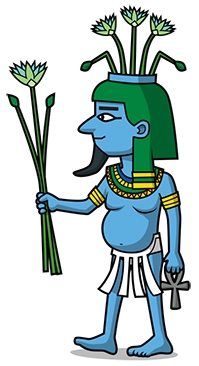
Who was the god the ancient Egyptians thought caused the annual flooding of the Nile?
Osiris
Jolly
Hapi
Isis
Which did the ancient Egyptians fear the most?
A high flood
A low flood
A high flood and low flood were equally feared
The boogy man
What is a "Nilometer"?
It measures how fast the Nile current is moving.
It measures the number of fish in the Nile river.
It measures the height of the water in the Nile River.
It measures the length of the Nile River.
What direction does the Nile River flow?
east to west
north to south
west to east
south to north
When did the Nile River flood?
It flooded unpredictably - no one knew when
between December and March
between June and September
Between October and January
Which is a reason that the Nile has been called “the lifeblood” of Egypt?
Its valley and delta provide fertile soil for farming
It borders two of the largest deserts in the world.
It has dangerous cataracts.
It is the longest river in the world.
How did the Egyptians take advantage of the Nile’s yearly spring flooding?
They became successful farmers.
They created hieroglyphics.
They grew papyrus.
They traded with Mesopotamia.
Which best describes the type of government in Egypt after 3100 B.C.?
a democracy
a dynasty
a constitutional monarchy
an independent city-state
What was the effect of increased farming and trade?
a complex writing system was developed
An organized government developed
Geometry was developed
the deserts became populated
In what two ways are Mesopotamia and Egypt the same?
Both had the same types of government and religious beliefs.
Both had natural defenses and floods.
Both had major rivers and dependable floods.
Food surpluses led to specialization and growing economies.
a reed plant used to make paper
papyrus
pharaoh
delta
cataract
dangerous, rocky, fast-moving water
papyrus
pharaoh
delta
cataract
a fan-shaped area of fertile marshland formed where the Nile River meets the Mediterranean Sea
papyrus
pharaoh
delta
cataract
a line of Egyptian rulers from one family
papyrus
pharaoh
dynasty
cataract
Egyptian writing system that uses thousands of picture symbols representing objects and ideas
hieroglyphics
cuneiform
English
delta
Which of the following best describes how the Nile River affected ancient Egypt?
It destroyed it
It nurtured it
It had no effect on it
It weakened it
Which of the following statements best describes the Nile?
It flows across Egypt, Libya, and Algeria.
It is the longest river in Africa.
It rarely floods.
It flows from north to south.
Who was the god the ancient Egyptians thought caused the annual flooding of the Nile?
Osiris
Jolly
Hapi
Isis
Which conintent is Egypt located on?
Asia
Africa
Europe
North America
What innovation helped Egyptians know when to irrigate and when to prepare for floods?
plow
chariot
calendar
sail boat
How did the Nile River benefit Egyptians? (select all that apply)
fresh drinking water
floods destroyed homes and crops
floods provided silt
papyrus grew near the river
a waterway for transportation
How did Egyptians get water to their crops?
Plow
Chariot
Wagon
Irrigation
What is a "Pharaoh"?
the ruler of an ancient Egyptian kingdom
the ruler
a kingdom
ancient
what are "ruins"?
buildings
the remains
ancient buildings
the remains of ancient buildings
What is an "artifact"?
civilization
an object from an ancient civilization that smells
an object from an ancient civilization
an object




Hatshepsut was the FIRST pharaoh
Why did ancient Egyptian structures and buildings survive?
The cold climate of Egypt froze them
Egypt has a hot and arid climate that preserved them
The dessert Sand buried them for centuries
Egypt has a cold and wet climate that preserved them
The Nile was considered...
The "Heart of Egypt" and "River of the world"
The "Creator of all good" and "Heart of Egypt"
The "Lifeblood of Egypt" and "River of the world"
The "Lifeblood of Egypt" and "Creator of all good"
What is a Delta?
An airline that will fly you around the world
The fan shaped part of a river with dry and sandy desserts attached
The fan shaped end of a river where fertile marshland is found
The fan shape at the beginning of the river where fertile marshland is found
Which is true about the consistency of the flooding of the Nile.
It floods once every 2 years at the same time
The floods are seasonal and happen every year
The floods are lunar and happen during the same cycle of the moon
The floods come in winter of every year
Which of the following statements is true?
The Nile is the second longest river after the amazon and is 2,456 miles long
The Nile is the longest river in the world and is 4,160 miles long
The Nile is the second longest river in the world and is 4,160 miles long
The Nile is the longest river in the world and is 2,456 miles long
What is a shadoof?
An irrigation system that is a bucket attached to a pole that swivels and transports from the river to a basin
The fan shaped opening of a river
The roof of an ancient Egyptian house that is made of papyrus and is created by hand
A holy place of worship where only priest were allowed to go
Where does the Blue Nile originate?
Ethiopian Highlands
Mediterranean Sea
Lake Victoria
Egyptian Highlands
Where does the White Nile originate?
Ethiopian Highlands
Lake Victoria
Red Sea
Egyptian Highlands
What is Papyrus
Rivers surrounded by steep cliffs that create fast moving water that make traveling by ship difficult
A line of rulers within a family and the right to rule passes from father to son
Plant that grows along the Nile that was used to weave rope, sandals and baskets and paper
An irrigation system that is a bucket attached to a pole that swivels and transports from the river to a basin
Where is the mouth of the Nile?
Red Sea
Lake Victoria
Aegean Sea
Mediterranean Sea
What did farmers plant in the areas surrounding the Nile?
Corn, Potatoes, Beans, Tomatoes
Wheat, Barley, Dates and Flax
Grains, Corn, Olives and Seeds
Apples, Bananas, Peaches, Coconuts
What is the Rosetta Stone?
Software to help you learn a foreign language
A stone found in France that was written in three languages
A papyrus that helps those who had it to translate different languages
A document that holds the key to all written language
Which is the language not found on the Rosetta Stone?
Greek
Egyptian
Latin
Demonic
Which is a reason that the Nile has been called “the lifeblood” of Egypt?
Its valley and delta provide fertile soil for farming
It borders two of the largest deserts in the world.
It has dangerous cataracts.
It is the longest river in the world.
How did the Egyptians take advantage of the Nile’s yearly spring flooding?
They became successful farmers.
They created hieroglyphics.
They grew papyrus.
They traded with Mesopotamia.
What is a cataract?
A river flow
A tool for collecting water
A waterfall
A hydroelectric power plant
The area that the Nile River flows into the Mediterranean Sea is known as what?
The river divide
The delta
The Marsh Lands of Egypt
Lower Egypt
What did the floods of the Nile River provide for farmers?
A nilometer
Too much water for growing crops
Rich black soil
An area to collect fertile water
What direction does the current flow on the Nile River?
North to South
East to West
West to East
South to North
What is a shaduf?
A tool used to dig trenches
A bucket on a lever used to lift water from the Nile to canals.
A tool used to cut papyrus
The rudder of an early Egyptian sail boat
Which best describes the type of government in Egypt after 3100 B.C.?
a democracy
a dynasty
a constitutional monarchy
an independent city-state
What was the effect of increased farming and trade?
a complex writing system was developed
An organized government developed
Geometry was developed
the deserts became populated
In what two ways are Mesopotamia and Egypt the same?
Both had the same types of government and religious beliefs.
Both had natural defenses and floods.
Both had major rivers and dependable floods.
Food surpluses led to specialization and growing economies.
a reed plant used to make paper
papyrus
pharaoh
delta
cataract
dangerous, rocky, fast-moving water
papyrus
pharaoh
delta
cataract
a fan-shaped area of fertile marshland formed where the Nile River meets the Mediterranean Sea
papyrus
pharaoh
delta
cataract
Egyptian writing system that uses thousands of picture symbols representing objects and ideas
hieroglyphics
cuneiform
English
delta
What Chinese dynasty came before the Zhou dynasty?
Tang
Shang
Hang
Qin
What was the Mandate of Heaven?
A set of laws that were dictated from the gods
The name of a special palace built for the king
A concept that said rulers were given authority to rule from the gods
What the Ancient Chinese called their king
What type of government did the Zhou use to rule China?
Feudal System
Civil Service
Republic
Democratic
What two major religions were established during the Zhou rule?
Islam and Hinduism
Civil Service
Confucianism and Taoism
Tao
What important invention helped the Ancient Chinese to make strong weapons and tools?
Bronze
Silk
Cast Iron
Lacquer
What is the last stage of the Zhou dynasty sometimes called by historians?
Warring States Period
Western Zhou
End of Days Period
Fall and Winter Period
What dynasty followed the Zhou?
Zhou
Han
Shang
Qin
What leader conquered the Zhou and united China becoming the first emperor?
Yu The Great
Wu
Qin Shi Huang
Shin tang Qin
Which came first the Eastern or the Western Zhou periods?
Easter
Northern
Western
What famous book was written by military strategist Sun Tzu during this time?
Art of War
Attack of Conquer
Book of Song
The Zhou Dynasty replaced the _____________ dynasty as the 3rd dynasty of Ancient China.
Shang
Xia
Qin
Han
What was the name of the battle in which the Zhou were able to defeat the Shang?
The Battle of Muye
The Battle at Marathon
The Battle of Yin
The Battle of Zhou
The Zhou army was split into ______ major sections.
three
four
two
five
It was during the Zhou dynasty that China entered its _______ Age.
Bronze
Stone
Iron
Technological
What two popular inventions were invented during the Zhou dynasty?
The compass and the kite
The game of chess and the radio
The audiobook and the cell phone
The compass and chess
Zhou historians created some of the first geographical _______ of China.
textbooks
maps
irrigation
records
Being primarily a farming civilization, the Zhou understood the importance of ___________ to improve crop yields.
equipment
rain
fertilizer
people
The Zhou created the _________________, which is the idea that the emperor was handpicked by God.
The Mandate of the People
The Mandate of God
The Mandate of the Terra-cotta Warriors
The Mandate of Heaven
What two signs of the Mandate were viewed as signs that God was losing confidence in their emperor?
natural disasters and other flooding
natural disasters or famines
great crop yields and new crops being planted
The number of times the emperor appeared in public
What would happen to the Mandate of Heaven after an emperor was overthrown?
It would vanish
A new mandate was created with a different name
The mandate would then be passed to a new ruler
The mandate would simply stay with the emperor that was overthrown
According to the text, the greatest achievement during the Zhou dynasty was by ____________.
accident
development
design
The Zhou dynasty fell in which year?
250 BCE
156 BCE
256 BCE
345 BCE
The Zhou dynasty fell to which state?
Xia
Qin
Shang
Han
True or False. The Qin dynasty became more powerful than the Zhou dynasty.
True
False
Who were the kings chosen by?
The Gods
The people
Their past kings
A goverment
Mandate of _______
Qin dynasty
Shang dynasty
Zhou dynasty
Heaven
What are two things they invented? (PICK TWO)
Cast Iron
Writing system
Crop rotation
The chariot
What is a feudal system?
A social system based on personal ownership of resources and personal fealty between a lord and subject.
A social system based on the goverment.
A social system based on the government and personal ownership.
A social system based on personal fealty between a lord and subject.
What did a bad harvest or natural disasters mean for the king?
The king would need to get married and have children.
The king had failed and needed to be replaced.
The king would be an amazing king for the rest of his life.
Where was the Zhou dynasty located?
Asia
China
South America
Africa
Which one if the Zhou dynasty?


None of the above
What are three things the Zhou Dynasty is known for?
The latter period of the Zhou dynasty is also famous for the beginnings of three major Chinese philosophies: Confucianism, Taoism and Legalism.
This period of Chinese history produced what many consider the zenith of Chinese bronzeware making.
They created many writing tools.
This period created multiple different ways to use horses.
How long did the Zhou dynasty last for?
700 years
600 years
800 years
900 years
TRUE or False
What was the dynasty that came right before the Zhou dynasty?
Qin dynasty
Shang dynasty
Han dynasty
Xia dynasty
Why did the Zhou dynasty start to fall apart?
The rulers couldn't adapt to how society changed
They were invaded by the Mongols
They got replaced by a rebellion of Shang nobles
They had lots of famines and floods
Who did the Zhou Dynasty invade in 1122 B.C.?
Wu Dynasty
Shang Dynasty
Ming Dynasty
What was the Zhou class system like?
President, Governors, Workers
King, Nobles, Peasants
Pharaoh, Vizier, Slaves
The longest lasting Chinese Dynasty was
The Shang.
The Zhou.
The Qin.
The Han.
Which of these was the order of the Zhou Society?
King - Peasants - Lords - Warriors
Lords - Warriors - King - Peasants
King - Lords - Warriors - Peasants

This symbol represents
Yin and Yang.
Jin and Jang.
Huang and Chiang.

The end of the Zhou Dynasty resulted in what era?
Xia Dynasty
Five Dynasties Period
Period of Warring States
1. What Chinese dynasty came before the Zhou dynasty?
a. Tang
b. Shang
c. Han
d. Ming
e. Qin
2. What was the Mandate of Heaven?
a. A set of laws that were dictated from the gods
b. The name of a special palace built for the king
c. A concept that said rulers were given authority to rule from the gods
d. What the Ancient Chinese called their king
e. The name of a legendary dragon from Chinese mythology
3. What type of government did the Zhou use to rule China?
a. Democratic
b. Communist
c. Civil service
d. Republic
e. Feudal system
4. What two major religions were established during the Zhou rule?
a. Buddhism and Hinduism
b. Confucianism and Buddhism
c. Christianity and Taoism
d. Confucianism and Taoism
e. Islam and Hinduism
5. What important invention helped the Ancient Chinese to make strong weapons and tools?
a. Gunpowder
b. Moveable type
c. Cast iron
d. Porcelain
e. Lacquer
6. What is the last stage of the Zhou dynasty sometimes called by historians?
a. Warring States Period
b. Western Zhou
c. End of Days Period
d. Spring and Autumn Period
e. Fall and Winter Period
7. What dynasty followed the Zhou?
a. Ming
b. Qin
c. Tang
d. Xia
e. Han
8. What leader conquered the Zhou and united China becoming the first emperor?
a. Kublai Khan
b. Yellow Emperor
c. King Cheng
d. Qin Shi Huang
e. Marco Polo
9. Which came first, the Eastern or the Western Zhou periods?
a. Eastern
b. Western
10. What famous book was written by military strategist Sun Tzu during this time?
a. Book of Songs
b. Attack and Conquer
c. Art of War
d. Battle of Red Cliffs
e. Kung Fu for Dummies
Which word doesn't belong?
ethics
Confucius
lords
Which word doesn't belong?
lords
Daoism
Laozi
Which word doesn't belong?
peasant
lords
Confucianism
________ was the most famous Daoist teacher and is credited with writing the basic text of Daoism, THE WAY AND ITS POWER.
Confucius
Laozi
Mulan
Yu
Kongfuzi
_______, or farmers with small farms, were at the bottom of the social order during the Zhou dynasty.
lords
emperors
peasants
monks
_________ was the belief that people were bad by nature and needed to be controlled through strict laws and punishments.
Hinduism
Buddhism
Confucianism
Daoism
Legalism
The main religion in China that spread from India.
Hinduism
Buddhism
Confucianism
Daoism
Legalism
_______________ stressed living in harmony with the Dao, the guiding force of all reality.
Judaism
Buddhism
Confucianism
Daosim
Legalism
Which philosophy focused on nature?
Confucianism
Daosim
Legalism
Which dynasty came first?
Zhou
Xia
Shang
Which dynasty came second?
Zhou
Xia
Shang
Which dynasty came third?
Zhou
Xia
Shang
Which river is known as the Huang He in China?
The Yellow River
The Yangzi River
Which river is known as the Chang Jiang in China?
The Yellow River
The Yangzi River
Who invented Confucianism?
Confucius
Laozi
Mulan
Yu
King Kong
Rulers in ancient China are called...
emperors
kings
rulers
head honcho
Mr.
What Chinese dynasty came before the Zhou dynasty?
Tang
Shang
Hang
Qin
What was the Mandate of Heaven?
A set of laws that were dictated from the gods
The name of a special palace built for the king
A concept that said rulers were given authority to rule from the gods
What the Ancient Chinese called their king
What type of government did the Zhou use to rule China?
Feudal System
Civil Service
Republic
Democratic
What two major religions were established during the Zhou rule?
Islam and Hinduism
Civil Service
Confucianism and Taoism
Tao
What important invention helped the Ancient Chinese to make strong weapons and tools?
Bronze
Silk
Cast Iron
Lacquer
What is the last stage of the Zhou dynasty sometimes called by historians?
Warring States Period
Western Zhou
End of Days Period
Fall and Winter Period
What dynasty followed the Zhou?
Zhou
Han
Shang
Qin
What leader conquered the Zhou and united China becoming the first emperor?
Yu The Great
Wu
Qin Shi Huang
Shin tang Qin
Which came first the Eastern or the Western Zhou periods?
Easter
Northern
Western
What famous book was written by military strategist Sun Tzu during this time?
Art of War
Attack of Conquer
Book of Song
This philosophy/religion was based on the idea that people were naturally selfish & could not be trusted.
Daoism
Confucianism
Legalism
Buddhism
This philosophy/religion encouraged followers to live in harmony with nature.
Daoism
Confucianism
Legalism
Buddhism
This philosophy/religion believed in strict rules with harsh punishments.
Daoism
Confucianism
Legalism
Buddhism
Name the philosophy: Mike always listens to his parents (even when he doesn’t agree with their decisions) because he believes you should always respect your elders.
Confucianism
Legalism
Daoism
The Analects

Laozi (Lao Tzu) was the founder of—
Buddhism
Daoism
Legalism
Confucianism
Founder of Legalism
Laozi
Han Feizi
Confucius
Qin Shi Huang
Buddha

Aeschylus
drama
poetry
sculpture
mathematics
Sophocles
drama
poetry
mathematics
philosophy
Who wrote the Iliad and the Odyssey?
Homer
Phidias
Euclid
Socrates
Herodotus and Thucydides
drama
sculture
history
math
History: 2 people?
Herodotus
Thucydides
Socrates
Homer
Phidias
poetry
drama
history
sculpture

Doric, Ionic, Corinthian
Architecture
math
poetry
philosophy
Archimedes and Hippocrates
drama
science
philosophy
poetry
Euclid and Pythagoras
math
history
poetry
philosophy
Socrates, Plato, Aristotle
drama
science
math
Philosophy
Person who rebuilt the Parthenon during the "Golden Age" of Greece?
Alexander the Great
Julius Caesar
Pericles
Philip II
Math: 2 people
Euclid
Pythagoras
Sophocles
Homer
Philosophy: Which 3 people?
Socrates
Plato
Aristotle
Alexander the Great
Blind poet who wrote the Iliad and the Odyssey.
Aristotle
Hippocrates
Homer
Pythagoras

Created a mathematical theorem.
Aristotle
Hippocrates
Homer
Pythagoras
Greek "Father of the Study of Medicine".
Aristotle
Hippocrates
Homer
Pythagoras
Ruled Athens during its Golden Age; extended democracy.
Asoka
Pericles
Phidias
Socrates
Greek philosopher who believed everything could be studied logically and was Plato's student.
Aristotle
Euclid
Phidias
Socrates
"Father of Geometry"
Aeschylus
Euclid
Pythagoras
Thucydides
Sculpted a statue of Athena; designed the Parthenon.
Euclid
Herodotus
Pericles
Phidias
Wrote "The History of the Peloponnesian War".
Herodotus
Plato
Sophocles
Thucydides
Calculated the value of pi = 3.14, developed the pulley and lever.
Archimedes
Euclid
Plato
Thucydides
Wrote tragedies such as Agamemnon.
Aeschylus
Archimedes
Phidias
Sophocles
Philosopher who taught through questioning and was Plato's teacher. (Put to death for corrupting young minds.)
Aristotle
Homer
Socrates
Sophocles
Wrote tragedies such as Oedipus Rex.
Aeschylus
Homer
Sophocles
Virgil
Greek philosopher who wrote The Republic and founded the Academy.
Aristotle
Plato
Socrates
Sophocles
Greek "Father of History".
Aeschylus
Euclid
Herodotus
Thucydides
Who was the king of Macedon that conquered most of Greece?
Herodotus
Pericles
Philip II
Sophocles
Who spread Hellenistic culture by building an empire from India to Greece? (Son of Philip II)
Aeschylus
Alexander the Great
Asoka
Darius I

Which type of Greek column is shown above?
Doric
Ionic (Ionian)
Hellenic
Corinthian

Which type of Greek column is shown above?
Doric
Ionic (Ionian)
Hellenic
Corinthian

Which type of Greek column is shown above?
Doric
Ionic (Ionian)
Hellenic
Corinthian
Which of the following correctly identifies the progression of government in Athens?
Monarchy, Tyranny, Democracy, Aristocracy
Aristocracy, Monarchy, Tyranny, Democracy
Tyranny, Monarchy, Democracy, Aristocracy
Monarchy, Aristocracy, Tyranny, Democracy

What is an example of cultural diffusion caused by the Hellenistic Period?
Alexander the Great use of Persian soldiers in his army.
Phillip of Macedonia's unification of Greece.
The creation of Greek myths.
The development of Greek alphabet.

What is the result of Alexanders expansion of Greece into Africa and the Middle East?
Spartan and Athenian cultures clashed which ended Greek expansion.
The Greek army was defeated because it was stretched too thin.
Greek ideas and philosophy were spread to new areas of the world.
The Persian empire conquered Greek and ruled Europe.

The fields of government, philosophy and radical questioning of social norms were key teachings of which famous Greek?
Pythagoras
Socrates
Plato
Archimedes

What impact did Phillip II have on the Greek empire?
Introduced idea of representative democracy
He united Greek city-states under one ruler
He dissolved the military and declared peace
Encouraged the use of written laws to equalize people.

In what area of Greek culture did Socrates, Aristotle and Plato make a lasting contribution?
literature
medicine
philosophy
sculpture

Alexander the Great's empire spread into what three continents?
North America, Asia, and Australia
Europe, Africa and North America
Europe, Asia, and Australia
Europe, Asia and Africa

What is a valid reason why Greek city-states erupted into war among themselves?
jealousy over another city-states influence
desire to dominate
expansion of empire into new regions
allegiance to Persian Empire

What is basic meaning of Aristotle's theory Golden Mean?
Humans should live a balanced and moderate life.
Humans should do onto others as they would want done to them.
Humans should value economic growth.
Humans should acknowledge and follow their social class.

Plato is best known for his contributions in what field.
exploration
mathmatics
politics
science

What do famous Greek thinkers Pythagoras and Archimedes have in common?
Both develop political theories
Both move to the city Rome
Both developed mathematical theories.
Both traveled with Alexander the Great.

The list to the right shows contributions of which famous Greek?
Archimedes
Plato
Pythagoras
Socrates

Name the Greek thinker developed the mathematical theory to the right which we still use today?
Aristotle
Plato
Pythagaros
Socrates
Ionic, Doric and Corinthian are three.......
types of columns used on buildings
doctors
city-states in Greece
artists
Ancient Greeks believed in one God.
True
False
Hippocrates was a famous doctor that.....
studied the cause of diseases
created an oath called the Hippocratic Oath, that doctors still use today
lived in ancient Greece
all of the above
The White House and Supreme Court use ancient Greek architecture
True
False
The Parthenon was a temple built for the goddess Athena
True
False
Socrates, Plato and Aristotle were famous Greek.....
rulers
philosophers
Kings
Gods
Pythagoras was the ruler of ancient Greece
True
False
Homer wrote
a song called "Greece is Great"
love songs
speeches for the king
two poems called the Iliad and Odyssey
The king of all Gods was.....
Athena
Zeus
Marathon
Aristotle
The goddesses and gods lived on Mt. Olympus
True
False

This type of art, which is made from clay and then hardened by using heat is a contribution from the ancient Greeks
mosaic
columns
pottery
arches

This Greek structure shows how they used columns in their architecture
The Theater
The Colloseum
The Parthenon
Aqueducts
This type of government, in which individuals vote to make their own laws, was practiced in ancient Greece.
Direct Democracy
Government
Representative Democracy
Kings and Queens
This popular sporting event that still takes place today, originated in Greece.
The Olympic Games
Diving
Football
Ice hockey
Which of these is NOT a contribution of ancient Greece?
Direct Democracy
The Olympic Games
Arches in Architecture
Pottery
This famous structure, whose remnants can still be seen today, is an example of how the ancient Greeks used columns in their architecture.
The Aqueducts
The Colloseum
The White House
The Parthenon
Ancient Greeks often told stories by painting images on this type of art
Mosaic
Pottery
Clothing
Knit Blanket
What is the question that was asked in this packet?
What is a Greek Contribution?
What are three contributions of ancient Greeks and how do they influence us to this day?
Who are the Greeks?
What is one contribution of ancient Greeks and how does it influence us to this day?
Each paragraph is worth how many points?
10
15
30
20
Which of these are the best definition of democracy?
People having authority
People having no power
Government has power
People get to vote for things
Which government granted the right to vote to more people?
Athens
United States
What do they do on the last day of the Olympics?
It was dedicated to the Gods
It was dedicated to the Greeks
It was dedicated to the athletes
It was dedicated to Mr. Ryabyy
When did the ancient Olympic Games start
A long time ago in a galaxy far far away
500 BCE
2018
776 BCE
Which of these is not a style of Greek Architecture
Ionic
Iconic
Doric
Corinthian
Do we still use Greek Architecture?
Yes
No
When did plays start in Athens
600 BCE
500 BCE
5000 years ago
A long time ago
Tragedies were typically about what?
The future
The man
The past
Current day
What is another name for a road map?
Plan
Essay
Thesis
Map of the Road
What do you do in a baby thesis?
Just restate
Restate and answer
Explain your answer
What type of democracy was Athens
Direct
Representative
What type of democracy is the United States
Direct
Representative
Who could vote in Athens
Everyone
All adult males
Adult males born in Athens
All citizens male and female ages 18 or older
Who can vote in the United States
Everyone
All adult males
Adult males born in Athens
All citizens male and female ages 18 or older

