
 Worksheets
Review for 3rd SS
Total questions: 40
Worksheet time: 35mins

Geographers use a grid system on a map to determine (a) ?
Describe the government of Russia:
What are the top leaders/government positions and who elects them to office?

What region in the world has these major cities/locations: Moscow, Kiev, St. Petersburg, Aral Sea, Caucasus Mountains?
Russia and the Eurasian Republics
Southwest Asia and North Africa
North America
Europe
• Led the Russians in a second revolution (1917)
• Promised "Peace, Land, and Bread"
• Established the New Economic Policy (NEP)
Which leader is being described by these statements?
Czar Nicholas II
Nikita Khrushchev
Vladimir I. Lenin
Mikhail Gorbachev
Which political party did Lenin lead?
Bolsheviks
Mensheviks
Provisional Government
narodniks
Which country is to the north of Kazakhstan?
Mongolia
Russia
Nepal
Iran
What two ethnic groups in Kazakhstan represents the highest population
Uzbek and Tajik
Uzbek and Kazakh
Kazakh and Russian
Ukrainian and tatar
Although Kazakh is the offical language of Kazakhstan, Russian is widely spoken in the region because of?
The largest ethnic group living in Kazakhstan is Russians.
The Soviets forced many Russians to move to Kazakhstan.
The people in Kazakhstan are migrating to Russia to find jobs.
The Kazakhstan government requires schools to teach Russian

The many different ethnic groups made a unified government difficult to maintain. These differences resulted in civil war that lasted through much of the early 1990s. Nations in Europe and the United States used military force to try to keep civilians safe. The United States helped bring an end to the war. A peace treaty was signed in 1995. Six new nations were formed from the old Yugoslavia. After the war, the countries began repairing war damage as well as searching for war criminals. Peacekeeping forces from the United States and Europe stayed in the region until 2004 to make sure fighting had ended.
Why was the government of Yugoslavia likely unable to keep the country unified?
Which alliance was created during the Cold War to help defend democracy?
NAFTA
NATO
Warsaw Pact
USSR
When war broke out in Yugoslavia, it broke up into independent nations. This war was between the ______ Serbs, and Bosniak ______, and the Croations who were mostly ______.
(a)
Even though Russia is a federation of states, it operates as a ____
Constitutional system
Unitary system
Representative system
Which of the following is an area of culture that Russia excels in and shares now with many other nations?
technology
religion
arts
laws
The Russian Federation is an example of a form of government
rule by one
rule by many
rule by few
rule by the people

Which Asian nation shown in the map is Russia?
4
41
5
M. Ghandi was from
Iran
India
South Africa
Ghandi's protests were
violent
peaceful
small
What religion did M.Ghandi practice?
Islam
Hinduism
Buddhism
Choose a right sentence about M. Ghandi:
M.Ghandi was a soldier of peace.
He was never treated badly because of his skin colour.
He did not respect other religions except hinduism.
Christianity, Judaism, and Islam are all monotheistic religions.
True
False

Which country has the highest percentage of Jews living there? (Use the pie graph)
Great Britain
Israel
Italy
Germany
In 1948 Israel once again became a nation and Jews were able to return to their homeland.
True
False

What type of government does Saudi Arabia have?
Representative monarchy
Communist
Theocracy
Absolute Monarchy

Countries that are improving their infrastructure [communication/ transportation/ healthcare/ education systems], but still have both strong and weak areas are in which level of economic development?
More Developed
Newly Industrialized or Newly Developed
Less Developed

Which level of economic development are countries where people are beginning to move from rural to urban areas in search of factory jobs?
More Developed
Newly Industrialized or Newly Developed
Less Developed

Countries with literacy rates that are beginning to rise are in which level of economic level of development
More Developed
Newly Industrialized or Newly Developed
Less Developed

Based on the information in the table above, which country most likely has the highest standard of living?
Kenya
Nigeria
South Africa
Zimbabwe
What is the name of the desert described as the “Empty Quarter?”
An Nafud
Gobi
Rub' Al-Khali
Sahara
Which Geographical feature covers the entire southern edge of North Africa?
Sahara Desert
atlantic ocean
mediterranean sea
atlas mountains
The arid and semi-arid climate of much of Southwest Asia creates biomes that (physical) are characterized by
taiga and tundra
temperate forests
tropical rainforests
grasslands and desert
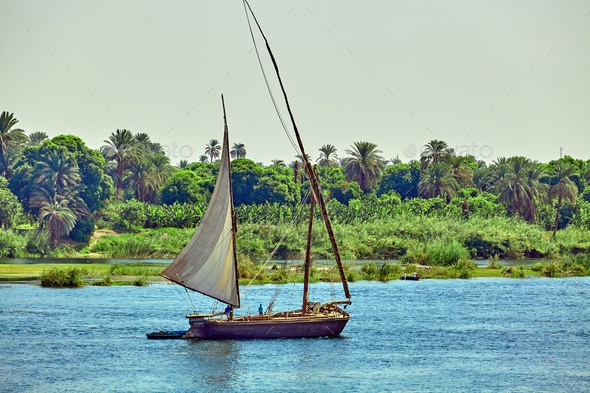
What stopped the annual flooding of the Nile in 1970?
A serious drought
The construction of the Aswan High Dam
A sudden change in climate
An earthquake changed the course of the river

Countries with low level of literacy are in which level of economic development?
More Developed
Newly Industrialized
Less Developed

Which number correctly identifies the location of the Kush civilization?
1
2
3
4
What are the main differences between Muslim and Hindu beliefs?
Ex. What do they each believe (main tenets)?
How do they worship?
What are their dietary restrictions?
What are their religious holidays?
Islam is an important influence on the culture of Saudi Arabia, some parts of everyday life are influenced by this religion. Describe at least two ways that Islam influences cultural expression, such as clothing, art, food, government, and/or music.

