
 Worksheets
Revision 2
Total questions: 40
Worksheet time: 1hrs 22mins

What kind of cell is shown
plant
meiosis
mitosis
animal
Select the three parts of the cell theory
Cells are the building blocks of life
Scientists worked hard to discover the cell
All life processes take place in cells.
New cells are produced from existing cells
Select the organelle that release energy
mitochondria
nucleus
vacuole
cytoplasm
Holds the cell's organelles, tiny structures that carry out cells activities
mitochondria
cytoplasm
nucleus
chloroplast
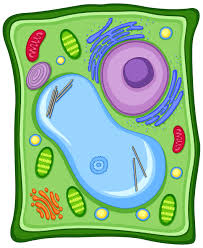
The image shows a
plant cell
animal cell
mitosis process
It contains information about every part of an organism
nucleus
DNA
mitochondria
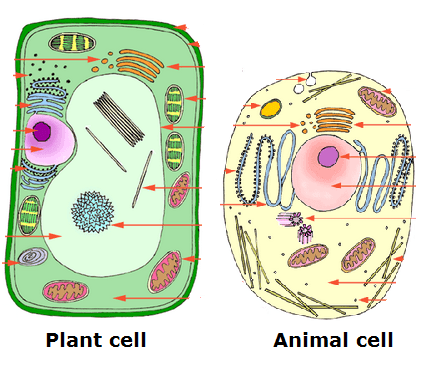
What distinguishes a plant cell from an animal cell? (How do you tell them apart) Hint: There's 3 ways (Check all 3)
Central Vacuole
Mitochondria
Cell Wall
Ribosomes
Chloroplasts

I am the "brain" of the cell or the "control center" for everything happening within the cell. I am a...
Golgi Body/Apparatus
Nucleus
Ribosome
Lysosome

I decide what goes in and out of the cell. I am fluid like and found in BOTH plant and animal cells. I am a...
Cell Wall
Cell Membrane
Cytoplasm
Golgi Apparatus

Who came up with the name "cells" while looking at a slice of cork under a microscope?
Matthias Schleiden
Anton van Leeuwenhoek
Robert Hooke
Rudolf Virchow

The fluid portion of the cell (all cells have this):
nucleus
cytoplasm
pili
cell membrane

Structures that have different jobs within the cell:
antibodies
lipids
organelles
blood cells

What kind of microscope (seen here) is common in classrooms, uses light to shine through a sample, with a maximum magnification of about 1000 to 1500x?
Dissecting microscope
Compound light microscope
Scanning Electron Microscope (SEM)
Transmission Electron Microscope (TEM)
Which type of specialized cell carries electrical signals through the body to the brain?
red blood cells
squamous (skin) cells
muscle cells
white blood cells (macrophages)
nerve cells (neurons)

Red blood cells have room to carry more oxygen.
This statement describes a STRUCTURE.
This statement describes a FUNCTION.
Red blood cells have a disk-shape with a lot of surface area.
This statement describes a STRUCTURE.
This statement describes a FUNCTION.

Neurons have branches on the end of a long body.
This statement describes a STRUCTURE.
This statement describes a FUNCTION.

Muscle cells become shorter and thicker when they contract the muscle.
This statement describes a STRUCTURE.
This statement describes a FUNCTION.

What is the function of nerve cells?
They are long and have finger-like projections.
Transport oxygen throughout the body.
Control DNA expression.
Transmit electrical signals to different parts of the body.
How does the neuron's form or shape help it perform its function?
It is round and disc like to carry plenty of oxygen
It is cylindrical in order to stretch and relax
Neurons can be long in order to send messages throughout the body
It is flat so that gases can pass across easily
Which of these are not a characteristic of a living thing?
Obtain and use resources for energy
Its moves
Responds to stimuli
Reproduces
Grows and developed
If your shoe size goes from a size 5 to a size 7, which characteristic does this show?
Responding to stimuli
Growing and developing
Using energy
Responding to stimuli
At what level of classification are organisms able to breed and have offspring of the same kind? It is the MOST specific level.
Species
Genus
Family
Kingdom
Identify all of the following that are nonliving.
Rock
Oxygen
Bacteria
Battery

Which characteristic of living things is represented in the picture?
Share similar chemicals
Grows and develops
Responds to stimuli
Evolves (as a population)

Which characteristic of living things is represented in the picture?
Reproduction
Responds to Stimuli
Shares similar chemicals
Homeostasis
Something has to breathe to be considered living.
True
False
Something has to move to be considered living.
True
False
In order for something to be considered dead, it must have once been considered living.
True
False

