wayground logo

Free Printable Worksheets

NEW

Font size

S
M
L
XL
Worksheets

6.1 and 6.3 Test Review

Total questions: 54

Worksheet time: 35mins

Name
Class
Date
1.
Glucose (C6H12O6) contains atoms of carbon, hydrogen, and oxygen that are chemically bonded together.  What type of matter is glucose?
a)
Glucose is an element
b)
Glucose is a compound 
c)
Glucose is a mixture
d)
Glucose is a metal
2.
Which statement below is TRUE about compounds?
a)
The properties of compounds are totally different than the properties of the elements that form them
b)
All compounds are listed on the Periodic Table of Elements
c)
A compound is a pure substance that is made from one type of atom
d)
The properties of compounds are the same as the properties of the elements that form them
3.
A pure substance that is made from one type of atom is a(n) ______________ .
a)
Mixture
b)
Atom
c)
Element
d)
Compound
4.
Classify Sulfuric Acid (H2SO4) as an element or compound.
a)
Element
b)
Compound
5.
Classify Sulfur (S) as an element or compound.
a)
Element
b)
Compound
6.
TRUE OR FALSE:
Water is an element.
a)
True
b)
False
7.

A substance that is made up of two or more different element is called a(n) _________.

a)

Compound

b)

Molecule

c)

Atom

8.
Large bodies of water do not quickly fluctuate in temperature. Why?
a)
Water is a solvent.
b)
Water has a high heat capacity.
c)
Water acts as a buffer.
d)
Water is non-polar.
9.
Water striders can walk across the surface of calm water. Their feet push the surface of the water down slightly, but they do not break the surface. Why?
a)
The insects are light enough so they do not break the hydrogen bonds holding the water molecules together
b)
The insects actually use their wings to hover slightly above the water’s surface and they only skim it with their feet.
c)
The insect’s feet are non-polar, so they are repelled by the polar water molecules and are pushed away from the water’s surface.
d)
The insects are small enough to see the individual water molecules, so they are able to step carefully from one molecule to the next
10.
What two elements make up water?
a)
Helium and oxygen
b)
Hydrogen and oxygen
c)
helium and carbon
d)
oxygen and carbon
11.
What word describes when water is attracted to other substances?
a)
cohesion
b)
adhesion
c)
capillary action
d)
surface tension
12.
Why does water move from the roots to the leaves of plants?
a)
Water is pushed by solutes
b)
Capillary action pulls the water molecules like a chain
c)
Water is pulled by gravity
d)
Water’s cohesion causes it to “pull” towards the leaves
13.
Attractions between water molecules are called
a)
Covalent bonds
b)
Ionic bonds
c)
Polar bonds
d)
Hydrogen bonds
14.
Which is NOT a unique property of water?
a)
Frozen water floats on liquid water.
b)
Water covers most of the Earth’s surface and retains a large amount of heat.
c)
Water molecules stick to each other through hydrogen bonds.
d)
Water cools very rapidly.
15.
Why does ice float?
a)
As water freezes, it expands and its density decreases.
b)
As water freezes, it takes up more hydrogen from the atmosphere, causing it to have a greater buoyancy.
c)
As water freezes, air becomes trapped between the hydrogen bonds of water molecules.
d)
As water freezes, it takes up more oxygen from the atmosphere, causing it to have a greater buoyancy.
16.
Water is polar because...
a)
The unequal sharing of electrons gives the water molecule a slight negative charge near its oxygen atom and a slight positive charge near its hydrogen atoms.
b)
The molecule has two poles, at which the it is colder than other regions of the molecule.
c)
The unequal sharing of electrons gives the water molecule a slight negative charge near its hydrogen atoms and a slight positive charge near its oxygen atom.
d)
The water molecule is neutral.
17.

How many hydrogen atoms are in a water molecule?

a)

5

b)

1

c)

2

d)

0

18.

The bond that holds the Oxygen and Hydrogen atoms together in a water molecule is a ________ bond.

a)

ionic

b)

Hydrogen

c)

Covalent

d)

Weak

19.

_________ bonds form between ions.

a)

ionic

b)

covalent

c)

hydrogen

d)

polar

20.
What part of an atom is involved in chemical bonding?
a)
protons
b)
neutrons
c)
electrons
d)
nucleus
21.
Compounds made from only nonmetals are _________________ compounds.
a)
ionic
b)
covalent
c)
metallic
d)
chemical
22.
A covalent bond involves a __________ of electrons.
a)
sharing
b)
borrowing
c)
exchanging
d)
switching
23.

What is an element?

a)

are pure substances that cannot be changed into simpler substances

b)

A part or aspect of something abstract

c)

A substance made of two or more different substances

d)

arranges the elements in order of atomic number

24.

What is a mixture?

a)

are pure substances that are composed of two or more atoms (elements) that are chemically combined.

b)

are pure substances that cannot be changed into simpler substances

c)

are composed of two or more different substances that keep their own individual properties and are combined physicallyv

d)

arranges the elements in order of atomic number (the number of atoms in each element)

25.

What is a homogeneous mixture?

a)

an unevenly mixed mixture

b)

a mixture that is uniform (evenly mixed) throughout

26.

A heterogeneous mixture is

a)

A mixture that is uniform throughout

b)

A mixture that is different throughout

27.

Which set of elements is most likely to form an ionic compound?

a)

Na and O

b)

C and O

c)

Na and K

28.
Which end of the water molecule has a slightly positive charge?
a)
the oxygen end
b)
the hydrogen end
c)
both ends are slightly positive
d)
neither end is positive
29.
When water molecules stick easily to other water molecules, this is called what?
a)
cohesion
b)
adhesion
c)
solution
d)
polar molecule
30.
The tightness across the surface of water that enables paper clips to float is ____________.
a)
adhesion
b)
capillary action
c)
surface tension
d)
polarity
31.
Which statement explains why water molecules stick together?
a)
both sides are negative
b)
one side has a positive charge and the other side has a negative charge
c)
one side has a negative charge adn the other side has a neutral charge
d)
both sides are positive
32.

Which part of a water molecule has a Positive Charge?

a)

The Hydrogen

b)

The Oxygen

c)

The Top

d)

The Bottom

33.

Water is polar. What does that mean?

a)

it is a molecule with opposite charges on opposite ends

b)

it is a molecule with no charge

c)

it is a molecule with identical charges on opposite ends

d)

it is a molecule with too many protons
34.

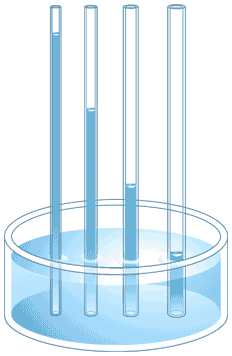
What is the term for water's ability to defy gravity and climb up a tube?

a)

Capillary Action

b)

Specific Heat

c)

Universal Solvent

d)

Magic

35.

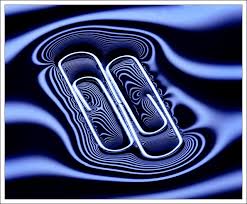
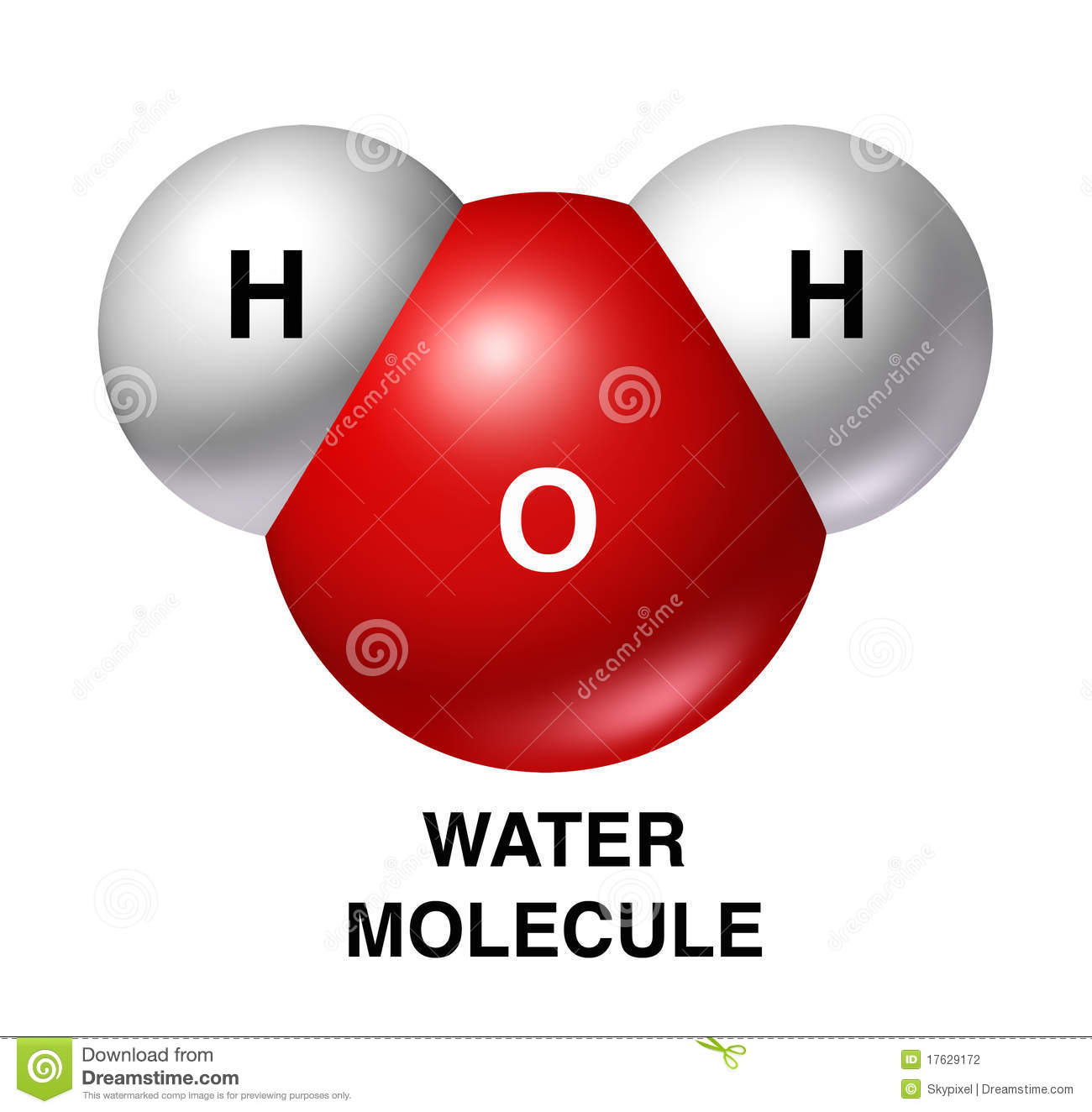
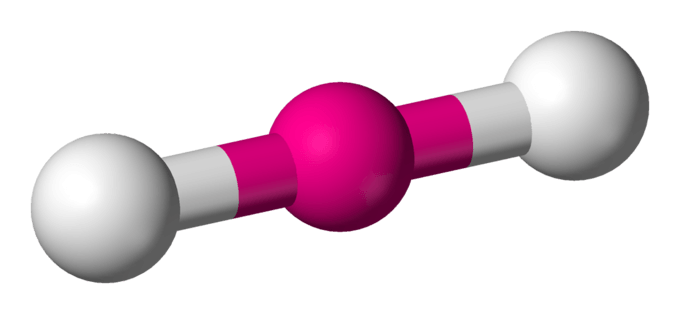
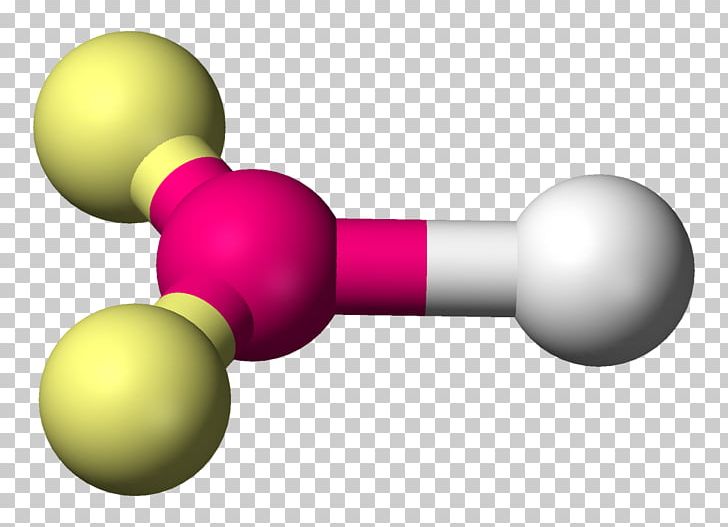
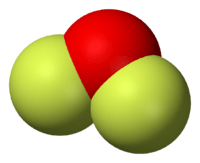
Which of the following is the correct molecular structure for water, H2O?
a)
b)
c)
d)
36.
 Many fish and aquatic plants can survive a cold winter because the layer of ice that forms at the top of the lake insulates the water below and prevents the lake from freezing solid. What unique property of water contributes to this effect? 
a)
Water absorbs heat when it evaporates and forms a gas 
b)
 Water expands and becomes less dense when it freezes.
c)
Water molecules completely separate into ions in solutions.
d)
 Water forms hydrogen bonds with ions and other polar substances. 
37.
 Which of the following characteristics of water is not a result of hydrogen bonding?
a)
adhesive strength
b)
capillarity
c)
cohesive strength
d)
All of the above are a result of hydrogen bonding.
38.

When salt is dissolved in water, water is the

a)

solvent

b)

solute

c)

solution

d)

reactant

39.

A substance with a pH of 6 is called a....

a)

Base

b)

Acid

40.

A solution is a(an)...

a)

chemical reaction

b)

breaking of a chemical bond

c)

combination of two or more liquids

d)

evenly distributed mixture of two or more substances

41.

Which acid listed is the strongest acid?

a)

Hydrochloric acid pH 1.0

b)

Sulfuric acid pH 1.2

c)

Tomatoes pH 4.2

d)

Water pH 7.0

42.
Does a solution with a hydrogen ion concentration less than that of pure water have a pH greater or less than 7?
Remember water break into two pieces, H+ (hydrogen ion) and -OH (hydroxide)
a)
Greater than
b)
Less than
43.
A change of one unit on the pH scale represents a tenfold increase in the concentration of hydrogen ions.  
How much greater acidity is there in tomatoes (4.2) vs rainwater (6.2)?
a)
2 times
b)
4 times
c)
10 times
d)
100 times
44.

What is a buffer?

a)

an acid

b)

a base

c)

a weak acid or base

d)

an emulsifier

45.
Use the picture of an atom below to answer the question.

Which statement best describes the part of the atom that is shown by the letter B?
a)
It is an electron, and it has a negative charge.
b)
It is an electron, and it has a positive charge.
c)
It is a proton, and it has a negative charge.
d)
It is a neutron, and it has a neutral charge.
46.
The positive particles of an atom are 
a)
electrons 
b)
positrons 
c)
neutrons 
d)
protons 
47.

What is the atomic number of an element with three protons?

a)

2

b)

1

c)

3

d)

6

48.
The subatomic particle with a negative charge is the
a)
electron
b)
proton
c)
neutron
d)
nucleus 
49.

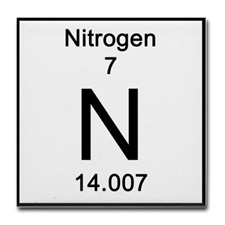
How many protons does the element in this image contain?

a)

14

b)

7

c)

15

d)

18

50.
Where are electrons of an atom found?
a)
Nucleus
b)
Electron Cloud
c)
Some are in the nucleus and some in the electron cloud.
d)
They are moving everywhere.
51.

What two subatomic particles are contained in the nucleus?

a)

Protons + Electrons

b)

Neutrons + Electrons

c)

Atoms

d)

Protons + Neutrons

52.

How many electrons does Carbon have?

a)

12.011

b)

12

c)

5

d)

6

53.
What is an isotope? 
a)
A charged atom
b)
An atom with different amounts of neutrons
c)
An atom with different amounts of protons
d)
A neutral atom
54.
How many neutrons does a Carbon 13 atom have?
a)
6
b)
5
c)
7
d)
8