Wayground logo

Free Printable Worksheets

Font size

S
M
L
XL
Worksheets

Nuclear Chemistry, Energy and Weapons

Total questions: 20

Worksheet time: 40mins

Name
Class
Date
1.
The time taken for half of an amount of radioactive atoms to decay.
a)
Nuclear fusion
b)
Full-life
c)
Dead time
d)
Half-life
2.
Arrange in order of increasing ability to penetrate matter.
a)
Beta, gamma, alpha
b)
Alpha, gamma, beta
c)
Gamma, beta, alpha
d)
Alpha, beta, gamma
3.
A nuclear fission reaction occurs when a uranium-235  atom is bombarded with a neutron. This reaction is used to produce energy in a nuclear power plant. Why is it not possible to carry out a nuclear fusion reaction in a nuclear reactor?
a)
A fusion reaction releases harmful rays
b)
A fusion reaction is difficult to control
c)
A fusion reaction requires extremely low temperature and pressure
d)
A fusion reaction requires extremely high temperature and pressure
4.
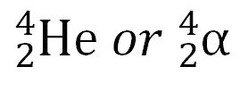
What do these symbols represent?
a)
alpha particle
b)
beta particle
c)
neutron
d)
gamma ray
5.
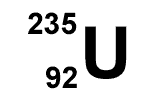
How many neutrons are in this isotope of Uranium?
a)
235
b)
92
c)
327
d)
143
6.
What sort of shield will block gamma rays?
a)
skin
b)
paper
c)

wood

d)
thick lead
7.
The type of radioactive particle that can be stopped by a sheet of paper is the ____.
a)
alpha particle
b)
beta particle
c)
gamma ray
d)
uranium
8.
Where does fusion occur naturally?
a)
Underwater
b)
All around us
c)
In the radioactive waste
d)
On the sun
9.
This is an example of...
a)
Fission  reaction
b)
Fusion reaction
c)
Decomposition reaction
d)
Combustion
10.
How do atoms with stable nuclei differ from atoms with unstable nuclei? Nuclei is the plural of nucleus.
a)
The number of particles in stable nuclei never changes; the number of particles in unstable nuclei does change 
b)
Stable nuclei contain equal numbers of protons and neutrons; unstable nuclei do not 
c)
Stable nuclei emit electrons; unstable nuclei emit protons and neutrons 
d)
Stable nuclei can be found everywhere; unstable nuclei do not occur in nature
11.
How is nuclear fusion different from nuclear fission?
a)
In fusion, the product is a larger atomic nucleus.
b)
Fission produces energy but fusion does not.
c)
Fusion produces energy but fission does not.
d)
In fission, the product is a larger atomic nucleus.
12.
This is an example of ---
a)
Radioactive Decay
b)
Nuclear Fission
c)
Nuclear Fusion
d)
Fossil fuel reaction
13.
What do  control rods do in a nuclear reactor?
a)
Regulate the rate of reaction  by absorbing and slowing neutrons
b)
Produce electricity
c)
Produce neutrons to increase the rate of reaction
d)
Reduce heat produced by the uranium rods
14.

Nuclear reactors make heat, which warms water into steam, which turns a _______

a)

Waterwheel

b)

Windmill

c)

Hydroelectric Plant

d)

Turbine

15.
At a nuclear power plant, these are referred to as __________________.
a)
cooling towers
b)
reactor towers
c)
smoke stacks
d)
vapor chambers
16.

Which city was the second nuclear bomb dropped on, on 9th August 1945?

a)

Hiroshoma

b)

Nagasaki

c)

Pearl Harbour

d)

Tokyo

17.

The United States program to build the nuclear bomb was called...?

a)

The Manhattan Project

b)

Bomb Project

c)

New York Project

d)

Brooklyn Project

18.

Sequence the above statements that outline how a power plant works from beginning to end.

A. The turbine sets the generator in motion

B. Water is heated producing steam

C. Radioactive decay releases energy in the form of heat

D. Steam is directed against turbine blades causing them to turn

E. Electricity is generated

a)

E, C, B, D, A

b)

C, B, D, A, E

c)

C, B, D, E, A

d)

B, D, E, A, C

19.
Marie Curie was the first woman to win a...
a)
Golden Globe
b)
Nobel Prize
c)
Oscar
d)
 Emmy Award
20.

Which of the following can be caused by exposure to high level radiation? Click all that apply

a)

Cancer

b)

Severe burns

c)

Vomiting and Bleeding

d)

Headache