
 Worksheets
Solar system test
Total questions: 35
Worksheet time: 1hrs 14mins


What causes seasons?
Earth's tilted axis as it rotates on its axis.
Earth's tilted axis as it revolves around the sun.
Earth's distance from the sun in the summer.
Earth's hemispheres receiving equal amounts of sunlight.

Why don't we have eclipses every month?
Because the Earth's orbit is tilted 5%.
Because the Earth's axis is tilted 5%.
Because the moon's orbit is tilted 5%.
Because the moon's axis is tilted 5%.


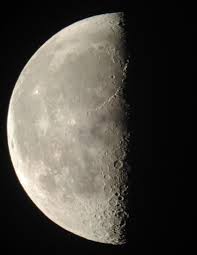
Third Quarter


This model is showing us a...
lunar eclipse
solar eclipse
phases of the moon
earth eclipse

If you look up at the sky and see this, you are witnessing a....
solar eclipse
total eclipse
lunar eclipse
jupiter

If you are looking up at the sky and see this, you are looking at a....
solar eclipse
total eclipse
lunar eclipse
jupiter
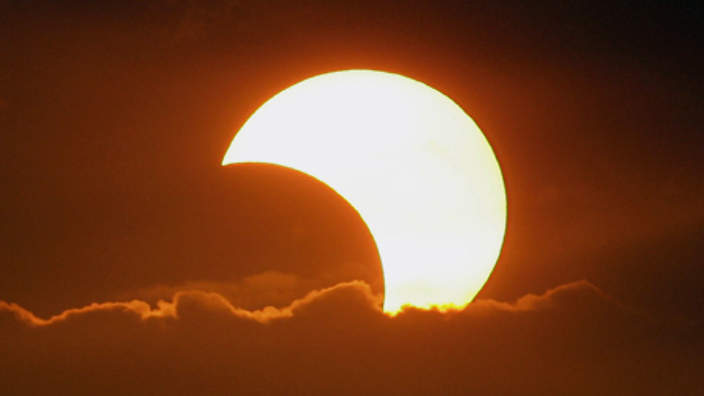
This image is an example of
Lunar Eclipse
Waxing gibbous moon
Total solar eclipse
Partial solar eclipse


Which planets have shorter year, or orbit around the sun, than Earth?
Mars and Jupiter
Mercury and Venus
Saturn and Uranus
Neptune only

What causes a hemisphere to be in the summer season?
It's closer to the sun.
It's receiving the direct rays of the sun & has more daylight hours.
It's tilted away from the sun and has less daylight hours.
The axis is pointed towards the north star.

The equator has more rainforests which heat up the planet.
The equator remains the same distance from the sun all year.
The equator always receives direct sunlight & the daylight hours are the same all year round.
The further away a location is from the equator the less the daylight hours change from one season
True
False

Uranus's axis is tilted 98° towards the sun. It takes 84 years to orbit the sun and 17 hours to rotate around its own axis. How does this affect the seasons of Uranus?
The seasons would change every 8.5 hours.
There are no seasons. One side is always dark and the other side is always light.
The seasons change because of the distance to the sun, not because of the tilt.
The seasons would change every 42 years.
How would you calculate how much smaller Neptune is compared to the sun, if the sun has a diameter of 1 380 000 000 km large and Neptune has a diameter of 44 579 km?
Divide the diameter of the sun (1.38 billion km) by the diameter of Neptune (44 579)
Divide the diameter of Neptune by the diameter of the sun.
Divide the sun's diameter by 1 AU, which is 93 million.
Multiply the diameter of the sun by the diameter of Neptune

What planet has an orbit period that is about double that of earth's orbit time.
Why do lunar eclipses not happen once every lunar cycle (once a month).
Lunar eclipses actually do happen every lunar cycle, but they are only visible to people in the umbra.
Lunar eclipses do not happen every cycle because the moon's orbit is tilted at about 5°.
Lunar eclipses actually do happen every lunar cycle. A new moon is the same as a lunar eclipse
Lunar eclipses do not happen every cycle because the earth is tilted at 23.5°
During a lunar eclipse
Earth's shadow covers the moon
the sun's shadow covers the moon
the moon covers the sun
Earth's shadow covers the sun

A light year is defined as
The distance from the moon to the earth
The distance of the earth to the sun
The distance that light travels in 1 year
It is the same as 1 AU
Why do we always see the same side of the moon?
Because the earth and the moon rotate at the same speed
Because the moon's rotation take the same amount of time as its orbit
Because the moon orbits on a 5° tilt
Because Transformers live on the Dark Side of the moon and don't want us to know
When the northern hemisphere experiences longer daylight hours, then...
it is winter in the northern hemisphere
it is summer in the southern hemisphere
the southern hemisphere would also have longer daylight hours
it would be winter in the southern hemisphere

