
 Worksheets
Year 7 Cooking and Nutrition End of Unit Quiz
Total questions: 39
Worksheet time: 20mins
What colour plasters should you use if you cut yourself?
The colour doesn't matter
Green
Blue
Skin colour
High-risk foods do not include
raw eggs
cooked eggs
cooked rice
raw rice
True or false, You can wear rings and bracelets when cooking in the food room
TRUE
FALSE
High-risk foods are usually…
high in protein
high in fat
low in protein
low in fat
Why is it important to cover open containers of food?
To stop pests getting in
To stop other foods getting tainted i.e. chopped onion smell tainting cheese
To stop cross contamination
To stop the food from drying out or getting freezer burn
Which product is labelled with the ‘use by’ date mark?
Crisps
Raw chicken
Raw Rice
Crackers
Which temperature should food be cooked to?
63
72
75
100
What is the danger zone?
The temperature of a fridge
When bacteria is reproducing rapidly
When bacteria dies
The temperature of a car
Which one of the following statements is true?
The danger zone temperature range is between 5 °C and 75°C.
The chilled temperature range is between -5 °C and +5°C.
Foods labelled with the ‘use by’ date mark can be safely stored at ambient temperature.
Foods labelled with the ‘best before’ date mark can be safely stored at ambient temperature.
Where should raw meat be stored in the fridge?
Top shelf
In the door of the fridge
Bottom shelf
Next to the cooked meat
What colour chopping board should I use for lettuce?
Blue
Purple
Green
Brown

What is wrong with this picture
The meat is on the wrong shelf
Raw meat is being stored next to cooked meat
None of the meat has been covered
The raw meat is on a plate with the cooked meat
Which of the following is not one of the 4C's?
Cooking
Chilling
Cleaning
Cross Contamination
Cooling
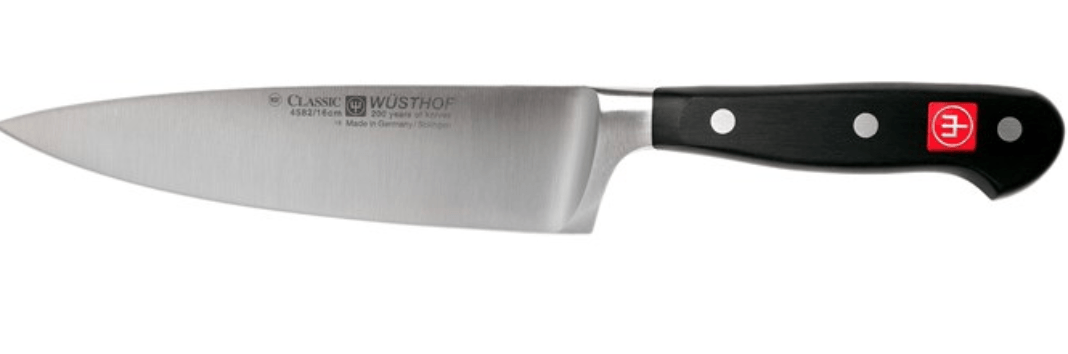
Chef's Knives are mostly used for..
slicing tomatoes and soft foods
Chopping, Dicing, and mincing
Small items like fruits and vegetables
removing bones from fish
A _____ knife is a safe knife.
Dull
Small
Large
Sharp
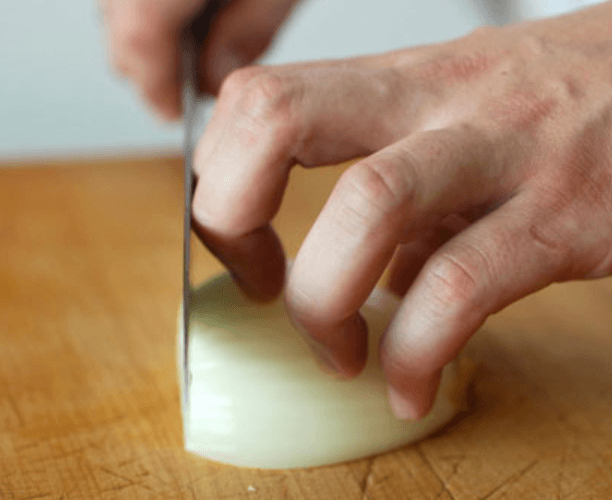
use the _________ technique to protect fingers while cutting foods.
Claw grip
flat fingers
Nuckle grip
Palm grip
What size is a minced food?
Large, irregular sized pieces
Medium, irregular sized pieces
Small, irregular sized pieces
Use a serrated knife on this
garnishes
raw meat
breads
vegetables
Do this after cutting lettuce after cutting raw meat
Dip the knife in sanitizer
Run the knife through the dishwasher
Wash and sanitize the knife separately
Wash the knife with other dishes
Why should you NOT use a dull knife
Accidental cuts are less likely
Accidental cuts are more likely
Requires less pressure to slice vegetables
Uses less time for sharpening
Why is the bridge-claw technique important when cutting?
Keeps fingers from cramping
Prevents strain on wrist
Keeps food sanitary
Guides food and prevents cuts
This cut resembles a matchstick
Julienne
Chiffonade
Diagonal
Mince
Similar to Julienne but larger
Brunoise
Diagonal
Battonnet
Tournee
Cutting boards must be cleaned after each use to avoid cross-contamination?
True
False
Which knife is designed to cut away skin and peel, also useful for cutting intricate garnishes and other detail work?
Chef knife
Utility
Serrated knife
Paring knife
How should you wash your knives?
Leave knives in sink to clean later
Wash, rinse, dry, and put away. Do not place the knife in the sink.
Damp towel
Which is the correct position for fingers while cutting?


How should you pass a knife to another person?
Put knife on counter with handle away from you
Put knife on counter with blade away from you
Near edge of counter
How should you carry a knife through the kitchen?
In front of you
Pointing down, holding the handle, by the side of your leg
With both hands
Which 2 groups of the Eatwell Guide should we eat most of?
Fruit & vegetables
Potatoes, Bread, Rice, Pasta and other starchy carbohydrates
Meat, Fish, Eggs and other sources of protein
Oils and Spreads
Which is the smallest food group on the Eatwell Guide?
Beans, pulses, fish, eggs, meat, and other sources of protein
Oils & Spreads
Fruit and Vegetables
Dairy and alternatives
Which nutrient does the Beans, pulses, fish, eggs and meat group provide?
Fat
Carbohydrate
Calcium
Protein
Which nutrient does the Potatoes, Bread, Rice & Pasta group provide?
Carbohydrates
Protein
Fat
Calcium
Which important mineral does the Dairy and alternatives food group provide?
Potassium
Iron
Calcium
Selenium
What do our bodies need protein?
Growth & repair
Bones and teeth
Energy
Immune system
Which nutrient does the Oil and spreads food group provide?
Carbohydrate
Fat
Calcium
Protein
How many portions of fruit and vegetables should we aim to eat every day?
2
3
1
5
Which of the following foods is a better choice of carbohydrate?
Wholemeal bread
White bread
Cakes
Chocolate
Which is the healthiest method of cooking vegetables?
Steaming
Frying
Boiling
Microwave

