wayground logo

Free Printable Worksheets

NEW

Font size

S
M
L
XL
Worksheets

Damaged Statue

Total questions: 70

Worksheet time: 48mins

Name
Class
Date
1.

Which example is a form of precipitation?

a)

Dew

b)

Fog

c)

Frost

d)

Hail

2.

On Earth, what process generates most of the water vapor?

a)

Condensation

b)

Evaporation

c)

Precipitation

d)

Transpiration

3.

What are formed when water vapor condenses?

a)

Clouds

b)

Mountains

c)

Transpiration

d)

Valleys

4.
What is it called when plants give off water vapor as a waste product?
a)
condensation
b)
evaporation
c)
sublimation
d)
transpiration
5.

What percentage of Earth's fresh water that is not frozen

a)

97%

b)

1%

c)

100%

d)

3%

6.

Why does groundwater usually require less treatment than surface water?

a)

The layers of Earth protect groundwater from pollutants.

b)

As groundwater sinks into the ground, the layers of rock act like a natural filter and remove pollutants from the water.

c)

Surface water has more exposure to pollutants in runoff and the atmosphere.

d)

all of the above

7.
A rock formed from fragments of other rocks is a(n)
a)
Metamorphic Rock
b)
Sedimentary Rock
c)
Extrusive Rock
d)
Igneous Rock
8.
This rock was another type of rock that was heated and compressed over time. What type of rock is this?
a)
Sedimentary
b)
Igneous
c)
Metamorphic
9.
This rock started as molten magma. What type of rock is this?
a)
Sedimentary
b)
Igneous
c)
Metamorphic
10.
The process when rocks break into smaller pieces due to exposure to natural elements is called
a)
erosion
b)
weathering
c)
sediments
11.
What are the 3 major types of rocks?
a)
Igneous, Metamorphic, Sedimentary
b)
Metamorphic, Igneous, Cementation
c)
magma, lava, crystals
12.
The name rock is given when it is broken down into smaller pieces.
a)
texture
b)
weathering
c)
sediment
d)
erosion
13.

Rocks that form from colling magma inside Earth?

a)

Igneous intrusive

b)

Igneous extrusive

c)

Metamorphic foliated

d)

Metamorphic nonfoliated

14.
True/False: Igneous rocks can only turn into metamorphic rocks.
a)
True
b)
False
15.

This is a natural solid that is made of one or more minerals.

a)

Mineral

b)

Fossil

c)

Rock

d)

Sediment

16.

This is the continuous process of rock changing from one type to another.

a)

Igneous rocks

b)

Sedimentary rocks

c)

Metamorphic rocks

d)

Rock Cycle

17.

What type of rock might contain evidence of past life?

a)

Sedimentary Rock

b)

Igneous Rock

c)

Metamorphic Rock

18.

Which of the following lists the steps an igneous rock undergoes in order to become a sedimentary rock, in the correct order?

a)

Deposition, erosion, melting, cooling

b)

Erosion, weathering, eruption, cooling

c)

Dissolving, deposition, cooling, fracture

d)

Weathering, erosion, deposition, cementation

19.

Limestone is a sedimentary rock. During the rock cycle, limestone is changed into marble, a metamorphic rock. The processes that act on limestone and change it into marble are

a)

weather and erosion

b)

heat and pressure

c)

compacting and cementing

d)

melting, cooling, and hardening

20.
Which of the following is NOT a type of chemical weathering?
a)
water
b)
carbon dioxide
c)
ice wedging
d)
living organisms secreting acid to break down rocks
21.
What is weathering?
a)
The process by which
water, ice, wind or gravity
moves fragments of rock
and soil.
b)
The process by which
water, ice, wind or gravity
deposit rock sediments
and soil in a new place.
c)
The breaking down of
Earth’s crust into smaller
and smaller pieces.
22.
What is erosion?
a)
The process by which
water, ice, wind or gravity
moves fragments of rock
and soil.
b)
The process by which
water, ice, wind or gravity
deposit rock sediments
and soil in a new place.
c)
The breaking down of
Earth’s crust into smaller
and smaller pieces.
23.
Which of the following is NOT a type of physical weathering?
a)
burrowing plants
b)
ice wedging
c)
plant roots
d)
acid rain
24.
A marble statue is left exposed to the weather.  Within a few years, the details on the statue have begun to weather away.  This weathering probably is caused by...
a)
oxygen in the air
b)
carbonic acid in rainwater
c)
lichens
d)
abrasion
25.
Which of the following is an example of mechanical weathering?
a)
Acidic groundwater dissolving limestone
b)
frost wedging
c)
Paper being burned
26.
The diagrams  shows a natural process that weathers rock.
 Which statement best explains why this process results in weathering?
a)
frozen water acts as a solute
b)
water expands when it freezes
c)
the mass of water increases when it freezes
d)
frozen water dissolves most types of rock
27.
How do plants weather rocks?
a)
during photosynthesis
b)
when roots grow into cracks of rocks and expand the rock
c)
when the plant moves water from the roots to the leaves
28.
This rock may chemically weather easily because is has many spaces or holes in it that allow water to seep through it, meaning it is:
a)
permeable
b)
abrasive
c)
erosion
d)
unchangable
29.
The leaves on the plant are turning brown.
a)
Qualitative
b)
Quantitative
c)
Both
d)
Neither
30.
The plant has grown 4 cm since yesterday.
a)
Qualitative
b)
Quantitative
c)
Both
d)
Neither
31.
The barn contains pigs, cows, and horses.
a)
Qualitative
b)
Quantitative
c)
Both
d)
Neither
32.
The speed of the car was 45 mph.
a)
Qualitative
b)
Quantitative
c)
Both
d)
Neither
33.
Granny needed 4 newtons of force to make it up the ramp.
a)
Qualitative
b)
Quantitative
c)
Both
d)
Neither
34.
Trey is the fastest runner in the class!
a)
Qualitative
b)
Quantitative
c)
Both
d)
Neither
35.

What state of matter is an ice cube?

a)

Solid

b)

Liquid

c)

Gas

d)

Plasma

36.

What state of matter is the air we breathe?

a)

Solid

b)

Liquid

c)

Gas

d)

Plasma

37.

What state of matter is motor oil?

a)

Solid

b)

Liquid

c)

Gas

d)

Plasma

38.

Solid dry ice turning into gaseous carbon dioxide is an example of what phase change?

a)

Condensation

b)

Melting

c)

Sublimation

d)

Recombination

39.

Through what phase change does your body cool itself? (Hint: think about what happens to your sweat)

a)

Condensation

b)

Freezing

c)

Sublimation

d)

Vaporization

40.

Heating a solid to a high temperature will usually result in this phase change.

a)

Condensation

b)

Melting

c)

Sublimation

d)

Evaporation

41.
What line segment represents only the solid state?
a)
A-B
b)
B-C
c)
C-D
d)
D-E
42.
In which segment is the kinetic energy remaining constant?
a)
A-B
b)
B-C
c)
C-D
d)
E-F
43.
What state(s) of matter are present at D-E?
a)
Solid-liquid
b)
Liquid
c)
Liquid-gas
d)
Gas-Solid
44.
Between which points is the temperature of the substance increasing?
a)
A-B only. 
b)
A-B, C-D, E-F
c)
B-C only. 
d)
B-C, D-E
45.

What is a physical property?

a)

A property that describes how something changes over time

b)

An observable property that describes the state of a system

c)

A property that describes how reactive something is

46.

What is a physical property of these strawberries?

a)

Red

b)

Rotten

c)

Flammable

47.

What is a chemical property of paper?

a)

Flammable

b)

White

c)

Light

48.

What is a chemical change?

a)

A change that alters the physical and chemical properties of a substance

b)

A change of state (melting, freezing, etc.)

49.

Is an ice cream cone melting a physical or chemical change?

a)

Physical

b)

Chemical

50.

Is toasting bread a physical or chemical change?

a)

Physical

b)

Chemical

51.

Is grass growing a physical or chemical change?

a)

Physical

b)

Chemical

52.

Is crumpling a piece of paper a physical or chemical change?

a)

Physical

b)

Chemical

53.
A cliff formed near the ocean.  Which statement best describes how this cliff formed?
a)
Warm air melted the rock.
b)
Sun rays evaporated the rock.
c)
Ocean waves washed away rock.
d)
Plant roots pushed away the rock.
54.
When people plant vegetation, they _____ erosion.
a)
Reduce
b)
Increase
c)
Start
d)
Do not effect 
55.
Which of the following statements is not true?
a)
Water causes more erosion on slopes without plants
b)
Water flows from higher to lower ground
c)
Faster water erodes more sediment
d)
As water slows, smaller particles are deposited first
56.
How would you expect the sizes of sediments deposited on a mountain to compare to those deposited downriver?
a)
Larger
b)
Smaller
c)
The same
d)
It is impossible to predict
57.
The steeper the slope, the ________ the stream.
a)
Slower
b)
Broader
c)
Faster
d)
Curvier
58.
Which set of conditions would produce the most runoff of precipitation?
a)
gentle slope and permeable surface
b)
gentle slope and impermeable surface
c)
steep slope and permeable surface
d)
steep slope and impermeable surface
59.

When rain falls on an area of sandy soil, infiltration will usually be greater than surface runoff if the

a)

steep slope

b)

soil is saturated

c)

rate of precipitation is low (light rain)

d)

surface is impermeable

60.

The amount of surface runoff increases as

a)

porosity increases

b)

permeability increases

c)

the slope of the land decreases

d)

the infiltration rate decreases

61.

Infiltration means

a)

Water entering the soil

b)

how fast the water flows through the soil

c)

space between the particles in the soil

d)

loose earth material

62.
Are made from a combination of 2 or more elements...
a)
Molecules
b)
Pure Substances
c)
Compounds
d)
Elements
63.
A combination that can be separated by physical processes is a .....
a)
Pure Substance
b)
Glucose
c)
Element
d)
Mixture
64.
A mixture that is NOT evenly distributed is called ....
a)
Compounded
b)
Homogenous
c)
Heterogenous
d)
Salty
65.
Substance with atoms that are all alike.
a)
element
b)
compound
c)
homogeneous mixture
d)
heterogeneous mixture
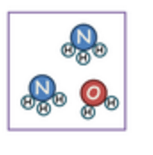
66.
This picture represents: 
a)
Element
b)
Compound
c)
Mixture of Elements
d)
Mixture of Compounds
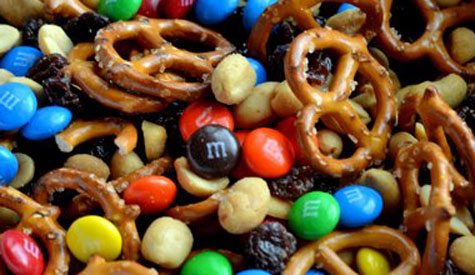
67.
What type of mixture is this?
a)
homogenous mixture
b)
chemical
c)
heterogeneous mixture 
d)
solid mix
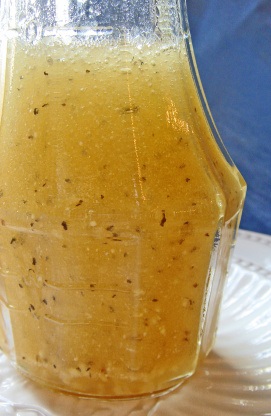
68.
Italian Salad Dressing is a . . .
a)
heterogeneous mixture
b)
homogeneous mixture
c)
Pure Substance
d)
Compound
69.

What type of mixture is black ink?

a)

heterogeneous mixture

b)

homogeneous mixture

70.
True or False: Matter is divided into two main groups: substances and mixtures.
a)
True
b)
False