wayground logo

Free Printable Worksheets

Font size

S
M
L
XL
Worksheets

All Year Vocabulary Review 2022

Total questions: 116

Worksheet time: 6hrs 48mins

Name
Class
Date
1.
Which of these is NOT a type of plate boundary?
a)
Convergent
b)
Divergent
c)
Bivergent
d)
Transform
2.
This type of plate boundary is when two plates slide past each other.
a)
Convergent
b)
Transform
c)
Divergent
d)
Subductive
3.
This type of plate boundary is when two plates crash into each other.
a)
Convergent
b)
Transform
c)
Divergent
d)
Subductive
4.
This type of plate boundary is when two plates move apart.
a)
Convergent
b)
Transform
c)
Divergent
d)
Subductive
5.

What is the name given to the one "Super continent"?

a)

Pangaea

b)

Superuno

c)

eine Welt

d)

Derosen

6.

A crack in the Earth's crust is called a...

a)

mid-ocean ridge

b)

subduction zone

c)

fault

d)

boundary

7.

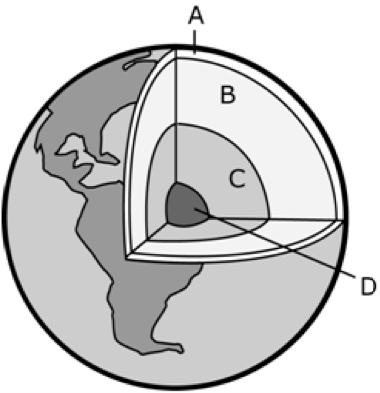
Which letter in the diagram identifies the layer of Earth made up of solid nickel and iron?

a)

layer A

b)

layer B

c)

layer C

d)

layer D

8.

Sally is researching the differences that exist in each layer of the Earth. Which of the following best describes Earth's crust?

a)

Solid, rocky

b)

Liquid, metallic

c)

Semisolid, convecting

d)

Dense, extremely hot

9.

Which of Earth's layers is best described as liquid metal?

a)

crust

b)

mantle

c)

outer core

d)

inner core

10.
This layer is directly below the crust.
a)
Crust
b)
Mantle
c)
Outer Core
d)
Inner Core
11.

What is magma?

a)

pieces of the Earth's crust

b)

molten rock inside of a volcano

c)

small rock

d)

plates that meet

12.

What is the tool that records earthquakes?

a)

A. Seismograph

b)

B. Seismologists

c)

C. Seismic wave

d)

D. Seismogram

13.
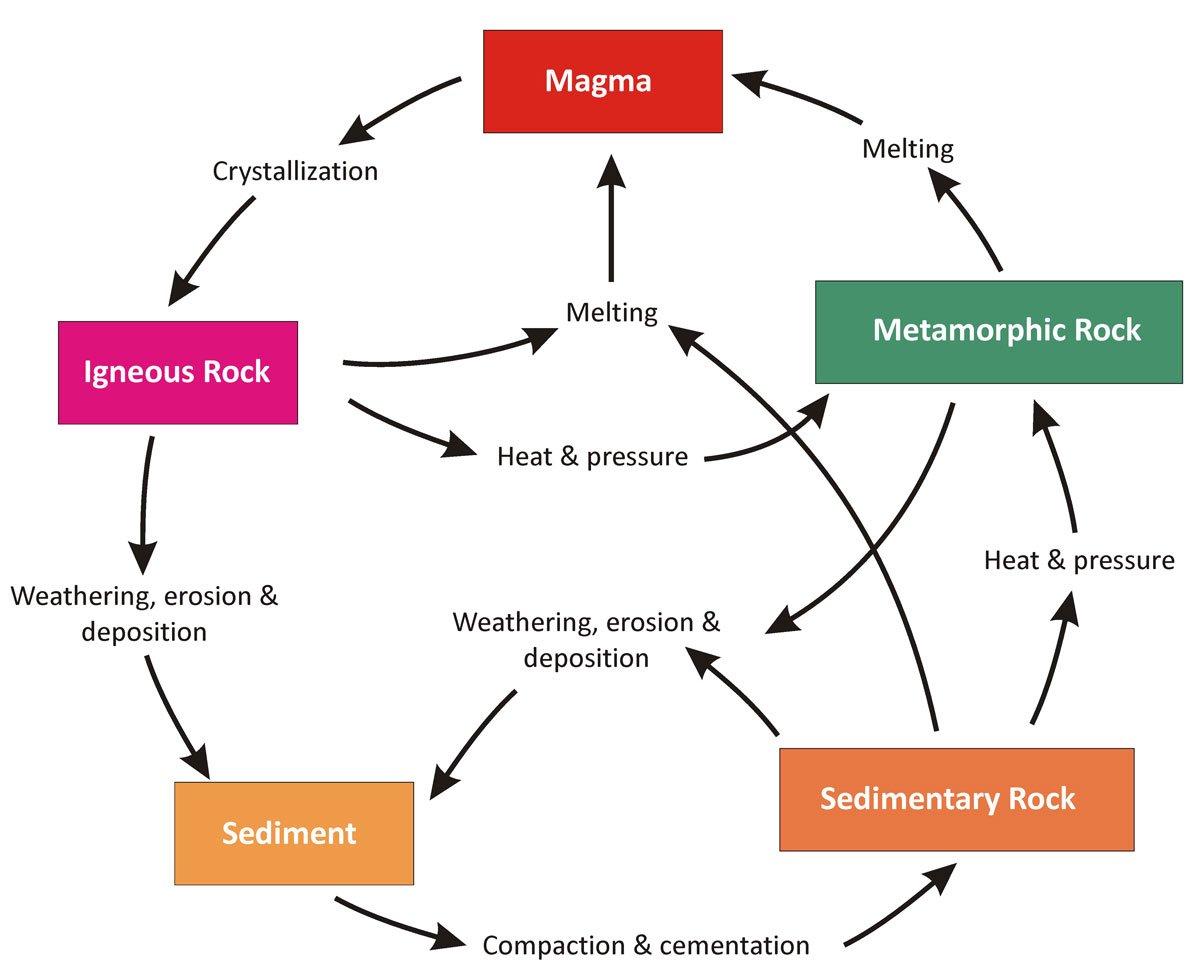
Formed by heat and pressure
a)
Sedimentary
b)
Metamorphic
c)
Extrusive Igneous
d)
Intrusive Igneous
14.
Formed by compacting & cementing of sediments
a)
Sedimentary
b)
Metamorphic
c)
Extrusive Igneous
d)
Intrusive Igneous
15.
Formed by melting
a)
magma
b)
sediments
c)
sedimentary rock
d)
intrusive igneous
16.
Formed by weathering & erosion
a)
magma
b)
sediments
c)
sedimentary rock
d)
intrusive igneous
17.
This rock was formed when molten rock cooled into a solid. What type of rock is it?
a)
Igneous Rock
b)
Metamorphic Rock
c)
Sedimentary Rock
18.
When sediments are pressed together tightly, this is called ____________.
a)
Compaction
b)
Cementation
c)
Weathering
d)
Erosion
19.
The process when rocks break into smaller pieces due to exposure to natural elements is called
a)
erosion
b)
weathering
c)
sediments
20.

The movement of weathered material on the Earth's surface by wind, water, or ice.

a)

Weathering

b)

Erosion

c)

Depostion

d)

Elliption

21.

The build up of land by depositing of soil and sediment in a new location.

a)

Weathering

b)

Erosion

c)

Deposition

d)

Destruction

22.
Acid rain causes
a)
physical weathering.
b)
chemical weathering.
c)
both chemical and physical weathering.
d)
neither chemical or physical weathering.
23.
Freezing causes
a)
physical weathering.
b)
chemical weathering.
c)
both chemical and physical weathering.
d)
neither chemical or physical weathering.
24.
Tree roots cause
a)
physical weathering.
b)
chemical weathering.
c)
both chemical and physical weathering.
d)
neither chemical or physical weathering.
25.
Anything from nature that living things use is called a ______________.
a)
energy
b)
pollution
c)
food
d)
natural resource
26.

Resources that are not able to be reproduced as quickly as they are used are called _____.

a)

renewable resources

b)

replaceable resources

c)

non renewable resources

d)

non replaceable resources

27.

Renewable resources ...

a)

are not replaceable

b)

are used more frequently than non renewables

c)

are never going to run out

d)

going to run out

28.
Which renewable resource gets its direct energy from the sun? 
a)
Geothermal
b)
Solar
c)
Wind
d)
Hydrogen
29.

What body of water is surrounded by land all around?

a)

a lake

b)

a river

c)

an ocean

d)

a waterfall

30.
In a _______, water flows from one place to another.
a)
lake
b)
river
c)
groundwater
d)
glacier
31.

Where are deltas located?

a)

At the mouth of a river

b)

At the start of a river

c)

On a beach

d)

At the top of a mountain

32.

An area of land that drains into one body of water is called -

a)

a watershed

b)

a wetland

c)

a forest buffer

d)

an estuary

33.

1. _______ is the contamination of air, land, and water.

a)

Pesticides

b)

Pollution

c)

Landfills

d)

Germicides

34.

10. What is conservation?

a)

Introduction of harmful substances that can contaminate our environment

b)

Contamination of land, air, or water

c)

Using earth’s resources wisely

d)

pollution

35.
Something that takes up space and has mass.
a)
volume
b)
matter
c)
mass
d)
density
36.
What are the three states of matter?
a)
solid, volume, mass
b)
density, volume, mass
c)
solid, liquid, gas
d)
density, gas, volume
37.
Sand is a ___________________.
a)
liquid
b)
solid
c)
gas
38.
Helium is a ____________.
a)
liquid
b)
solid
c)
gas
39.
The ability to move, work or cause a change in matter is...
a)
mass
b)
volume
c)
energy
d)
density
40.

What is mass?

a)

anything that takes up space

b)

the amount of matter an object has

c)

the amount of space an object takes up

d)

the measure of how warm something is

41.
Which state of matter has particles arranged like this?
a)
solid
b)
liquid
c)
gas
42.
Which state of matter has particles arranged like this?
a)
solid
b)
liquid
c)
gas
43.
Which state of matter has particles arranged like this?
a)
solid
b)
liquid
c)
gas
44.
Oil is an example of a
a)
solid
b)
liquid
c)
gas
45.

What is an atom?

a)

The smallest unit of matter

b)

The smallest unit of measurement

c)

Your next door neighbor

46.

Which part of the atom has a positive charge?

a)

Proton

b)

Neutron

c)

Electron

47.

Which part of the atom has a negative charge?

a)

Proton

b)

Neutron

c)

Electron

48.

Which part of the atom has a neutral charge?

a)

Proton

b)

Electron

c)

Neutron

49.

What is the center of the atom called?

a)

Orbital

b)

Ring

c)

Nucleus

50.

Which particles are found in the nucleus?

a)

Electrons and protons

b)

Electrons and neutrons

c)

Protons and neutrons

51.

In a ______________, one substance is dissolved in another substance.

a)

solution

b)

suspension

c)

colloid

52.

A combination of two or more substances that can be physically separated is called a...

a)

Mixture

b)

Pure substance

c)

Compound

53.
Sand and water. 
a)
mixture
b)
solution
54.
Saltwater
a)
mixture
b)
solution
55.
Trail mix
a)
mixture
b)
solution
56.

Is this a MIXTURE or a SOLUTION?

a)

Mixture

b)

Solution

57.

Is this a MIXTURE or a SOLUTION?

a)

Mixture

b)

Solution

58.

to spread out evenly in a liquid

a)

Evaporation

b)

Dissolve

c)

Magnetic

d)

Solute

59.

Which form of energy do windmills (molinos) use to generate electricity?

a)

Thermal energy

b)

Light energy

c)

Kinetic energy

d)

Gravitational potential energy

60.

Which form of energy do panels use to generate electricity?

a)

Kinetic energy

b)

Thermal energy

c)

Sound energy

d)

Light energy

61.

What type of energy is being transformed when you use a hairdryer?

a)

From thermal energy to electrical energy

b)

From electrical energy to kinetic energy

c)

From electrical energy to thermal energy

d)

From kinetic energy to thermal energy

62.

What type of energy is being transformed when you use a washing machine?

a)

From electrical energy to kinetic energy

b)

From electrical energy to light energy

c)

From electrical energy to sound energy

d)

From electrical energy to chemical energy

63.

What type of energy is being transformed when you use a flashlight?

a)

From chemical energy to electrical energy

b)

From electrical energy to thermal energy

c)

From chemical energy to light energy

d)

From electrical energy to light energy

64.

Energy can't be created or destroyed. It can only be transfered

a)

True

b)

False

65.

The ability to do work (move) is called...

a)

Matter

b)

Energy

c)

Weight

d)

Force

66.

A plant turns thermal energy from the sun into chemical energy during photosynthesis. This is an example of a(n)...

a)

Energy transformation

b)

Matter transformation

c)

Energy change

d)

Physical Change

67.

Which of the following is an example of thermal energy?

a)

A light bulb

b)

The movement of a car

c)

The digestion of food

d)

Heat from a fire

68.

Which of the following is NOT a form of energy?

a)

Thermal

b)

Mechanical

c)

Sound

d)

Water

69.

Energy that is stored is called...

a)

Kinetic Energy

b)

Potential Energy

c)

Mechanical Energy

d)

Thermal Energy

70.

What kind of energy does this device use?

a)

Chemical

b)

Electrical

c)

Thermal

d)

Mechanical

71.

Heat energy is also called

a)

electrical energy

b)

chemical energy

c)

radiant energy

d)

thermal energy

72.

What type of energy is seen here?

a)

chemical energy

b)

thermal energy

c)

mechanical energy

d)

electrical energy

73.

Another word for Light Energy is ...

a)

Thermal Energy

b)

Electrical Energy

c)

Radiant Energy

d)

Chemical Energy

74.
What do the leaves of a plant do?
a)
They make the food for the plant.
b)
They soak up the water from the ground.
c)
They deliver water to the other parts of the plants
d)
They make seeds
75.
What does the stem of the plant do?
a)
It makes food for the plant
b)
It soaks up the water from the ground
c)
It delivers water to the other parts of the plant
d)
It makes seed
76.
What gives plants the power to make their own food?
a)
the sun
b)
insects
c)
seeds
d)
the flower
77.
What keeps the plant from breaking or falling?
a)
the seeds
b)
the leaves
c)
the roots
d)
the flower
78.
What do plants use to absorb water from the ground?
a)
stems
b)
roots
c)
leaves
d)
flower petals
79.
What do plants release into the air?
a)
water vapor
b)
smell
c)
oxygen
d)
food
80.
Which part of the plant holds the seeds?
a)
flower
b)
roots
c)
leaves
d)
stem
81.

The basic parts of most plants are:

a)

roots, stems, leaves, flowers, fruits, and seeds

b)

taproots, stems, petioles, flowers, and seeds

c)

roots, stems, leaves, stamens, pistils, and seeds

82.

Photosynthesis produces

a)

oxygen

b)

fertilization

c)

glucose or sugar

d)

chlorophyll

83.

An organism’s habitat provides _____________________.

a)

food, water, shelter, and space.

b)

food, water, and clothes.

c)

only food.

d)

video games, ninjas, and baked beans.

84.

A squirrels niche would be _________________.

a)

hunting prey and providing meat for other squirrels.

b)

searching for fish to eat in the ocean.

c)

staying busy storing nuts and seeds for winter.

d)

help decompose other animals and plants.

85.

A squirrels habitat would be _____________.

a)

Ocean

b)

Arctic

c)

Forest

d)

Dessert

86.

What is a Niche of a honeybee?

a)

Pollenating Flowers

b)

A Honeycomb

c)

Eating other insects.

d)

Swimming.

87.
Four different students take turns pushing a large, heavy ball on the school parking lot. What is the best way to determine which student used the most force to push the ball?
a)
compare the sizes of the students
b)
compare the ages of the students
c)
compare the distances that the ball rolled
d)
compare the number of times the ball was rolled
88.
How does friction affect speed?
a)
more friction decreases speed
b)
more friction increases speed
c)
less friction decreases speed
89.
Which of the following would increase the motion of a ball after it is kicked?
a)
a high, grassy surface
b)
a surface sloped uphill
c)
a surface sloped downhill
90.
What does friction produce?
a)
light
b)
sound
c)
heat
d)
gravity
91.
The force that acts in the opposite direction of motion when two surfaces come in contact. 
a)
Force
b)
Friction
c)
Static
d)
Kinetic 
92.

What is defined as a push or pull?

a)

force

b)

motion

c)

vector

d)

speed

93.
Balanced forces do not change the objects speed or 
a)
direction
b)
distance 
c)
time
d)
mass
94.
What is the net force?
a)
40 N left
b)
0 N Balalnced
c)
400 N right
d)
40 N right
95.
What is the net force?
a)
30 N left
b)
25 N right
c)
5 N left
d)
55 N right
96.
Friction is a force that acts in an ___________ direction of movement.
a)
similar
b)
opposite
c)
parallel
d)
west
97.

What is force?

a)

A push or pull.

b)

A fast moving object.

c)

A large amount of energy.

98.
What is kinetic energy?
a)
energy of work
b)
energy of motion
c)
energy of gravity
d)
energy of power
99.

What happens when two objects collide?

a)

Energy is changed into force.

b)

Energy is transferred from one object to another.

c)

Energy is created and the objects move faster.

100.
Which of these substances conducts electricity the best?
a)
wood
b)
brick
c)
copper
d)
plastic
101.
What material would be safest to use as an insulator to cover electrical wires?
a)
rubber
b)
tin
c)
aluminum
d)
water
102.
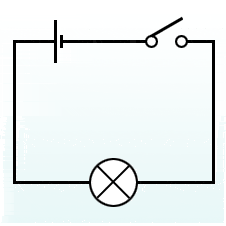
Will the light bulb in this circuit light and why/why not?
a)
yes, because it has two batteries
b)
no, because the switch is open
c)
yes, because it is in a circuit
d)
no, because the bulb is burned out
103.
Is the following photo of an open circuit or closed circuit? 
a)
A closed circuit which allows electricity to flow
b)
An open circuit which does not allow electricity to flow
104.

Why is electrical wiring usually made from copper?

a)

Because copper is shiny

b)

Because copper conducts electricity

c)

Because copper is not magnetic

d)

Because copper insulate electricity

105.
wood is a _____?
a)
conductor
b)
insulator
106.
water is a______?
a)
conductor
b)
insulator
107.
this circuit is .....?
a)
open
b)
parallel
c)
closed
d)
The cutest little circuit evah!
108.
When all parts of the circuit are connected it is a ______ circuit. 
a)
open
b)
closed
109.

This type of magnet can be turned on and off.

a)

horseshoe magnet

b)

electromagnet

c)

fridge magnet

d)

any magnet

110.
What types of charges attract?
a)
Positive and Positive
b)
Positive and Neutral
c)
Negative and Neutral
d)
Positive and Negative
111.
The buildup of charges on an object is called:
a)
positive charge
b)
static charge
c)
negative charge
d)
static discharge
112.
Electric charges that are alike _______ each other.
a)
Attract
b)
Repel
113.
Electric charges that are different _______ each other.
a)
Attract
b)
Repel
114.
Ms Jo Jo rubbed two balloons with a piece of wool. What will happen when the balloons are brought near each other?
a)
The balloons will repel each other.
b)
The balloons will attract each other.
c)
The balloons will become positively (+) charged.
d)
The balloons will pop.
115.

The buildup of electric charges is called . . .

a)

static electricity

b)

electric discharge

c)

electric charge

116.

Walking across a carpet is an example of charge being transferred by

a)

friction.

b)

induction.

c)

contact.