
 Worksheets
Isotopes
Total questions: 30
Worksheet time: 21mins
Name
Class
Date
1.

What is an isotope?
a)
A charged atom
b)
An atom with different amounts of neutrons
c)
An atom with different amounts of protons
d)
A neutral atom
2.
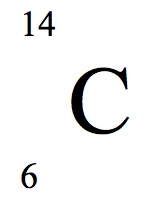
The photo above shows the isotopic notation for which isotope?
a)
Carbon 12
b)
Carbon 13
c)
Carbon 14
d)
Carbon 15
3.
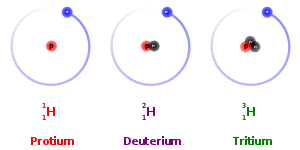
Different isotopes have...
a)
different masses
b)
different atomic numbers
c)
different electrons
d)
different protons
4.

How many neutrons does a Sodium 24 isotope have?
a)
12
b)
13
c)
14
d)
15
5.

How many neutrons does a Carbon 13 atom have?
a)
6
b)
5
c)
7
d)
8
6.

How many neutrons does a Calcium 48 isotope have?
a)
16
b)
20
c)
28
d)
12
7.

What is the name of the pictured isotope?
a)
Chlorine-Schmorine
b)
Chlorine-17
c)
Chlorine-35
d)
Chlorine-18
8.

What is the name of the pictured isotope?
a)
Carbon-12
b)
Carbon-13
c)
Carbon-14
d)
Carbon-15
9.
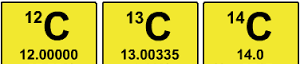
What do these isotopes of carbon all have in common?
a)
neutrons & mass number
b)
atomic number and neutrons
c)
atomic number and electrons
d)
protons, atomic number, and mass number
10.
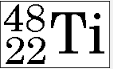
How many protons does this isotope of titanium have?
a)
48
b)
22
c)
26
d)
70
11.

In a correctly written symbol what would be located in the "A" position?
a)
number of neutrons
b)
atomic number
c)
number of electrons
d)
mass number
12.
What quantities vary between isotopes of an element?
a)
protons, electrons, and atomic mass
b)
protons, electrons, and atomic number
c)
neutrons and electrons
d)
neutrons and atomic mass
13.
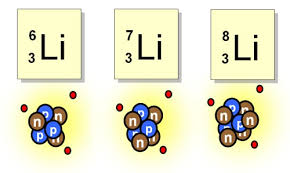
which atom has 4 neutrons?
a)
Li-6
b)
Li-7
c)
Li-8
d)
they have the same # of neutrons
14.
If X is the symbol for an element, which of the following two symbols represent isotopes of the same element? I. 7735X II. 7733X III. 8137X IV. 8135 X
a)
I and II
b)
III and IV
c)
I and IV
d)
I and III
15.
An atom is electrically neutral when
a)
protons and neutrons are the same
b)
protons and electrons are the same
c)
neutrons and electrons are the same
d)
neutrons balance the protons and electrons
16.
Isotopes of an element have a different number of...
a)
Protons
b)
Neutrons
c)
Electrons
d)
Mass
17.
76 protons and 114 neutrons
a)
Osmium-114
b)
Osmium-76
c)
Osmium-190
d)
Osmium-190.23
18.
Fluorine has an atomic number of 9. What can you conclude about an atom of fluorine from this fact?
a)
it has 9 protons
b)
it weighs 9 grams
c)
it has 9 electron shells
d)
it has a boiling point of 9 degree celsius
19.
In what part of an atom can protons be found?
a)
inside the electron
b)
inside the neutron
c)
inside the atomic nucleus
d)
inside the electron shells
20.
Since atoms are very small, what can you infer about atomic mass units?
a)
one atomic mass unit is equivalent to a gram
b)
one atomic mass unit is much lighter than a gram
c)
one atomic mass unit is much heavier than a gram
d)
atomic mass units and grams measure different properties
21.
If a sulfur atom has 16 protons, 16 electrons, and 16 neutrons, its atomic mass is:
a)
16
b)
32
c)
48
d)
64
22.
Fluorine has an atomic number of 9. What can you conclude about an atom of fluorine from this fact?
a)
it has 9 protons
b)
it weighs 9 grams
c)
it has 9 electron shells
d)
it has a boiling point of 9 degree celsius
23.
In what part of an atom can protons be found?
a)
inside the electron
b)
inside the neutron
c)
inside the atomic nucleus
d)
inside the electron shells
24.
Since atoms are very small, what can you infer about atomic mass units?
a)
one atomic mass unit is equivalent to a gram
b)
one atomic mass unit is much lighter than a gram
c)
one atomic mass unit is much heavier than a gram
d)
atomic mass units and grams measure different properties
25.
An atom of fluorine has an atomic mass of 19 u. Keeping in mind that its atomic number is 9, what can you infer about this atom?
a)
it has 9 neutrons
b)
it has 10 electrons
c)
it has 10 neutrons
d)
it has 10 protons
26.
If a sulfur atom has 16 protons, 16 electrons, and 16 neutrons, its atomic mass is:
a)
16
b)
32
c)
48
d)
64
27.
If a hydrogen atom has 1 proton, 1 electron, and 1 neutron, its atomic number is:
a)
1
b)
2
c)
3
d)
4
28.
On the periodic table, how is atomic mass represented?
a)
As an average of the mass of different isotopes
b)
as the exact mass of every atom
c)
as the mass of the most common isotopes
d)
As the masses of all protons added together
29.
What do carbon-12 and carbon-14 have in common?
a)
they have same number of protons
b)
they have the same number of neutrons
c)
they have the same atomic mass
d)
they have the same atomic weight
30.
How is carbon-12 different from carbon-14?
a)
They have a different number of protons
b)
they have a different number of electrons
c)
they have a different number of neutrons
d)
they are different elements
100 %

