

wayground logo

Free Printable Worksheets

NEW

Font size

S
M
L
XL
Worksheets

Chemical and Physical Changes Review

Total questions: 50

Worksheet time: 28mins

Name
Class
Date
1.
Anything that has mass & takes up space
a)
gravity
b)
force
c)
matter
d)
volume
2.
Measure of the amount of matter 
a)
mass
b)
volume
c)
weight
d)
density
3.
Jason poured 500 grams of water into a container and tightly sealed it. The water was allowed to freeze. Which is most likely true about the ice that formed?
a)
The mass of the ice is the same as the mass of the water.
b)
The mass of the ice is greater than the mass of the water.
c)
The ice formed is a different substance than the water.
d)
The ice formed is the same temperature as the water.
4.
Matter can not be created nor destroyed: it can only be
a)
Destroyed a little bit
b)
Invisible
c)
Transformed, changed
d)
None of the above
5.
Which of these is not a chemical reaction?
a)
Burning of wood
b)
Milk going bad
c)
Mixing vinegar and baking soda
d)
Melting of ice
6.

The Law of Conservation of Mass States

a)

Energy cannot be created nor destroyed, it can only change form.

b)

Mass cannot be created nor destroyed, it can only change form.

c)

Mass can be created or destroyed, it cannot change form.
7.
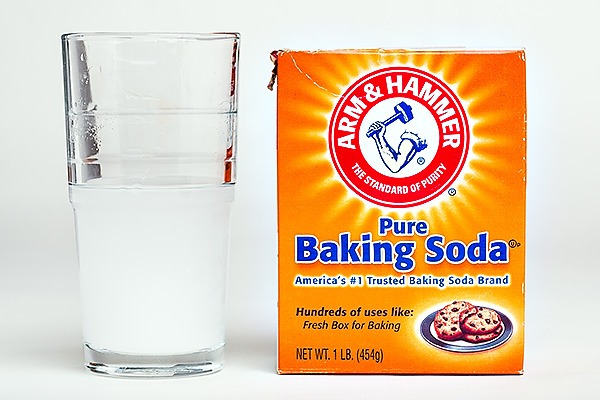
Anthony is performing an experiment. He adds 0.25 grams of baking soda to 5 grams of water and stirs. Anthony watches as the baking soda dissolves in the water. If Anthony weighs the water and baking soda solution, what will its mass be?
a)
4.75 grams
b)
5.0 grams
c)
5.25 grams
d)
7.5 grams
8.

If a physical change occurs...

a)

A new substance has been formed

b)

The substance is the same, but looks different

9.
A student notices that an inflated balloon gets larger when it is warmed by a lamp. Which best describes the mass of the balloon as a result of this change?
a)
The mass of the balloon increases because the size of the balloon has increased.
b)
The mass of the balloon increases because the temperature of the balloon has increased.
c)
The mass of the balloon stays the same because the gas inside the balloon still has the same mass after it warms up.
10.
A 500-gram block of solid cheese is melted in a pot. Which is most likely the mass of the cheese after it is melted?
a)
500 grams, because the cheese does not gain or lose mass just because it was melted
b)
499 grams, because some of the cheese evaporates as it melts
c)
502 grams, because the cheese absorbs heat as it melts
11.
Rodney tears a piece of paper weighing 1 oz into small pieces. What most likelyhappens to the weight of the sheet of paper after Rodney tears it into pieces?
a)
The 
b)
The weight is cut in half.
c)
The weight stays the same.
12.

A student mixes 125 grams of sugar, 250 grams of water and 5 grams of flavoring. The solution weighs...

a)

250 grams

b)

380 grams

c)

375 grams

d)

400 grams

13.
What will weigh more when a chemical change is complete?  The reactants before the chemical reaction, or the product after the reaction is complete?
a)
They both will weigh the same
b)
The product always weighs more than the reactant
c)
The reactant will weigh more than the product
d)
They both will loose mass after the reaction
14.
Jamie weighs a glass of water and observes its weight to be 12 ounces. Jamie then adds 6 ice cubes to the glass of water. Each ice cube weighs one ounce. After all of the ice cubes have melted, what will be theapproximate weight of the glass of water?
a)
b)
12 
c)
18 ounces
15.

Kathy buys a 5-ounce cup of ice cream. The summer heat melts the ice cream before she can eat any. Which best describes the weight of the melted ice cream?

a)

2.5 ounces

b)

5 ounces

c)

15 ounces

d)

15 ounces

16.

Ashley placed 20 grams each of water, grape juice, orange juice, and coffee in an ice cube tray. Ashley wanted to see what the mass of each liquid would be after freezing. Which is most likely Ashley's conclusion when she weights the frozen samples?

a)

Each sample will weight 40 grams

b)

Each sample will weigh 25 grams

c)

Each sample will weigh 20 grams

d)

Each sample will weigh 15 grams

17.

James wanted to observe the interaction between his favorite soda and some candy. James poured 20 ounces of soda and 2 ounces of candy in a closed container weighing 5 ounces. What would most likely be the weight of the mixture and container after the candy has completely dissolved?

a)

5 ounces

b)

20 ounces

c)

25 ounces

d)

27 ounces

18.

Solid can change into a liquid when it's .......

a)

cooled

b)

burned

c)

heated

d)

freezed

19.

What kind of change occurs if matter changes in amount, size, or shape?

a)

substance change

b)

chemical change

c)

physical change

d)

elemental change

20.
Blue liquid and yellow liquid mixed to make a green liquid
a)
Chemical Change
b)
Physical Change
21.
An gel ice pack getting cold after you put it in the freezer for an hour.
a)
Chemical Change
b)
Physical Change
22.
Using dye to change the color of a shirt green.
a)
Chemical Change
b)
Physical Change
23.

What is an example of a physical change?

a)

cutting

b)

running

c)

skipping

24.
What is a mixture?
a)
pennies
b)
2 or more different things combined
c)
different size rocks
d)
marbles
25.
What are the three states of matter?
a)
gas, liquid, mass
b)
solid, liquid, gas
c)
mass, solid, magnet
d)
gas, temperature, solids
26.
Anything that has mass and takes up space is called
a)
float
b)
matter
c)
magnetism
d)
physical property
27.
Bob puts 100 grams of ice into a pitcher with 900 grams of water. He gets distracted and comes back later to find that the ice has melted in the water. How many grams of water does Bob now have in the pitcher?
a)
200 g
b)
700 g
c)
1,000 g
28.
Which of the following is a sign that a chemical reaction has occurred?
a)
change in shape
b)
melting
c)
formation of a gas
d)
dissolving
29.
Is melting butter for popcorn a chemical or physical change?
a)
chemical
b)
physical
30.
Which of the following is NOT an example of a physical change?
a)
crumpled paper
b)
pencil sharpening
c)
shrunken clothing
d)
rust
31.
A change where one or more new substances are created.
a)
Physical Change 
b)
Chemical Change 
32.
Fizzing, foaming, and burning are all examples of
a)
Chemical change
b)
Physical change
33.
Which of these is a result of a chemical change?
a)
A mixture
b)
A solution
c)
A new substance
d)
Melting or freezing
34.
Wood burned in a fireplace
a)
Chemical Change
b)
Physical Change
35.
Which of these is NOT an indicator of a chemical change?
a)
a change in color
b)
giving off or taking in of heat
c)
the release of gases
d)
a change in shape
36.
Change in color, release of smell or light, and giving off heat are indicators of ___
a)
a nuclear change
b)
a physical change
c)
a chemical change
d)
a state change
37.
A copper penny turning greenish after a few years is an example of ...
a)
Chemical Change
b)
Physical Change
38.
Which of the following is NOT an example of a physical change?
a)
crumpled paper
b)
pencil sharpening
c)
shrunken clothing
d)
sour milk
39.
Which of the following IS a physical change?
a)
Getting a haircut
b)
Rusty metal
c)
sour milk
d)
A compound
40.
Is salt dissolving in water a physical or chemical change?
a)
Physical
b)
Chemical
41.
Qualitative or Quantitative:
The butterfly is on a pink flower. 
a)
Qualitative
b)
Quantitative
42.
There are nine dolphins in this pod.
a)
qualitative
b)
quantitative
43.

These kind of observation use your senses to observe results.

a)

qualitative

b)

quantitative

44.

These kind of observations are made using instruments such as rulers, balances and thermometers.

a)

qualitative

b)

quantitative

45.
The leaf is 5mm wide.
a)
Qualitative
b)
Quantitative
46.
It tastes sweet.
a)
Qualitative
b)
Quantitative
47.

The gummy worm increased by 2 inches.

a)

Qualitative

b)

Quantitative

48.

The dogs were small.

a)

Qualitative

b)

Quantitative

49.

The patient had a temperature of 102 °F .

a)

Qualitative

b)

Quantitative

50.

The birds were young.

a)

Qualitative

b)

Quantitative
