wayground logo

Free Printable Worksheets

Font size

S
M
L
XL
Worksheets

equations, expressions, inequalities

Total questions: 177

Worksheet time: 30hrs 30mins

Name
Class
Date
1.
x - 62 = 123
How should you show your work to isolate the variable and solve the equation?
a)
Add 62 to each side. 
b)
Subtract 62 from each side.
c)
Multiply each side by 62.
d)
Add 123 to each side.
2.
What is the inverse operation of division?
a)
Division
b)
Multiplication
c)
Addition
d)
Subtraction
3.
What is the correct step to solve for the variable?
15 = m - 5
a)
add 15 to both sides
b)
add 5 to both sides
c)
subtract 15 from both sides
d)
subtract 5 from both sides
4.

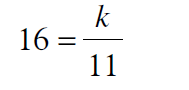
The variable, k, is being divided by 11. How should you show your work to isolate the variable?

a)

Divide both sides by 11

b)

Multiply both sides by 11.

c)

Add 11 to both sides.

d)

Subtract 11 to both sides.

5.
What is the inverse operation of subtraction?
a)
Subtraction
b)
Multiplication
c)
Division
d)
Addition
6.
What would be the best first step to solving the equation?
-6x=-24
a)
multiply both sides by -6
b)
divide both sides by -6
c)
add 6  to both sides
d)
subtract -6  from both sides
7.
What would be the best first step to solving the equation in one step?
a)
multiply both sides by 3
b)
multiply both sides by -3
c)
divide both sides by -3
d)
add 3 to each side
8.
Which equation has w = 8 as the solution?
a)
8w= 64
b)
16w = 240
c)
16 - w = 9
d)
4 + w = 10
9.

Level 3

Identify the steps to solve for b

a)

Add 6 to both sides and divide both sides by 5

b)

Add 6 to both sides and multiply both sides by 5

c)

Subtract 6 from both sides then multiply both sides by 5

d)

Subtract 6 from both sides then divide both sides by 5

10.

When solving a two-step equation which operations do you undo first?

a)

addition and subtraction

b)

addition and multiplication

c)

multiplication and division

d)

subtraction and division

11.
What is the solution for x + 9 = 21
a)
10
b)
12
c)
11
d)
13
12.
What is the solution for x + 9 = 21
a)
10
b)
12
c)
11
d)
13
13.
Solve for b
2b = -16
a)
8
b)
4
c)
-8
d)
3
14.
a)
x = 20
b)
x = 7
c)
x = 10
d)
x = 3
15.
x - 8 = -5 
a)
13
b)
-13
c)
3
d)
-3
16.
m+13=21
a)
m=34
b)
m=8
c)
m=273
d)
m=6
17.
Solve for y:
y - 7 = 10
a)
17
b)
-3
c)
3
d)
-17
18.
What equation matches this situation?
Robyn had some video games then bought 4 more.  Now she has a total of 10 games.
a)
v - 4 = 10
b)
v + 4 = 10
c)
10 - 4 = v
d)
Answer not Given
19.
k+8=15
a)
k=23
b)
k=10
c)
k=7
d)
k=11
20.
2. Cheryl gets paid $8 per hour for her job at the record store.  She made a total of $96 last week.  Which equation models this situation?
a)
96h = 8
b)
h/96 = 8
c)
8h = 96
d)
h/8 = 96
21.
Write the expression.
Twelve fewer questions than were on the first test. 
a)
12 + q
b)
q - 12
c)
q x 12
d)
q ÷ 12
22.
Write the expression. 
Twelve times the number of feet.
a)
f + 12
b)
f - 12
c)
12f
d)
12 ÷ f
23.
What equation is modeled here?
a)
x - 6 = 13
b)
x + 6 = 12
c)
x + 6 = 13
d)
x6 = 13
24.
Solve for x.
a)
x = 6
b)
x = 7
c)
x = 13
d)
x = 19
25.
Solve this equation.
a)
x = 4
b)
x = 7
c)
x = 3
d)
x = 11
26.
Martha baked cupcakes for 3 different classes. If each class needs 24 cupcakes which equation could be used to find x, the total number of cupcakes Martha will bake?
a)
3x=24
b)
x/3=24
c)
24x =3
d)
x/24 =3
27.
Solve:
a)
96
b)
-96
c)
4
d)
-4
28.
Solve:
a)
-12
b)
-8
c)
12
d)
8
29.
14 + (22 - 2) =
a)
34
b)
37
c)
40
30.
20 x 2 - (10 - 4)
a)
22
b)
30
c)
34
31.
(23 + 24) -10 =
a)
37
b)
27
c)
47
32.
(2 x 5) + 18
a)
48
b)
20
c)
28
33.
Solve:
(32 ÷ 8) + 27 - 11
a)
10
b)
20
c)
30
34.
Solve:
(40 x 4) - 33
a)
100
b)
125
c)
127
35.
What does the E in PEMDAS stand for?
a)
Exceptional
b)
Egg
c)
Exponent
36.
Which operation is performed FIRST?
(13 - 1) + 4
a)
addition
b)
subtraction
c)
multiplication
37.
Which operation is performed SECOND?
(13 - 1) + 4
a)
addition +
b)
subtraction -
c)
multiplication X
38.
(2 + 2) - 1
a)
4
b)
2
c)
3
39.
Which operation is performed FIRST?
25 x (3-1)
a)
multiplication
b)
subtraction
c)
division
40.
Which operation is performed SECOND?
44 ÷ 2 X (3 -1)
a)
muliplication X
b)
division ÷
c)
subtraction -
41.
Which operation is performed FIRST?
44 ÷ 2 X (3 -1)
a)
muliplication X
b)
division ÷
c)
subtraction -
42.
Which operation is performed SECOND?        
(32 ÷ 8) + 27 - 11
a)
division ÷
b)
addition +
c)
subtraction -
43.
Which operation is performed SECOND?
(40 x 4) - 33
a)
multiplication X
b)
subtraction
c)
division ÷
44.
Which operation is performed FIRST:
38 + (9 x 6) ÷ 3
a)
addition +
b)
division ÷
c)
multiplication X
45.
Which operation is performed SECOND :
38 + (9 x 6) ÷ 3
a)
multiplication
b)
addition
c)
division
46.
Solve:
38 + (9 x 6) ÷ 3
a)
40
b)
65
c)
56
47.

5 + 36 ÷\div  2 x 3 - 4

a)

7

b)

55

c)

12

48.

16 ÷ 2 x 4 - 3

a)

5

b)

-1

c)

25

d)

29

49.

Which operation would you do first in the following equation?

10 - 4 ÷ 1 x 5

a)

Subtraction

b)

Division

c)

Multiplication

d)

Addition

50.

5 x (6-3)

a)

19

b)

27

c)

15

d)

23

51.

Pick the correct order for Order of Operations

a)

Parentheses, Multiplication, Division, Addition, Exponents, Subtraction

b)

Exponents, Multiplication, Division, Addition, Parentheses, Subtraction

c)

Parentheses, Exponents, Multiplication, Division, Addition, Subtraction

52.
(7 x 5) + (6 x 4)
a)
48
b)
69
c)
59
d)
72
53.
18 + (6 – 2) × 2
a)
26
b)
29
c)
44
d)
40
54.
12 ÷ 3 x 4
What do you do first?
a)
3 x 4
b)
12 ÷ 4
c)
12 ÷ 3
55.
2 + 2 x 2 
Evaluate and Solve                                                   
a)
7
b)
4
c)
8
d)
6
56.
What does the ( E )in PEMDAS mean?
a)
experience
b)
exponents
c)
examples
d)
evidence
57.
True or false:
Addition ALWAYS comes before subtraction.
a)
True
b)
False
58.
What is 32?
a)
6
b)
12
c)
9
d)
1
59.
8 ÷ 8 + 6 × 2
a)
8
b)
13
c)
14
d)
23
60.
12 - 4 x 2 = 
a)
16
b)
4
c)
8
d)
18
61.
14 + 8 x 7 - 3 = 
a)
46
b)
122
c)
88
d)
67
62.
2 x 9 ÷ 3 =
a)
5
b)
7
c)
8
d)
6
63.
2 x 9 ÷ 3 =
a)
5
b)
7
c)
8
d)
6
64.
Solve. 
7-6+5=
a)
6
b)
4
c)
5
d)
-4
65.
(2 x 5) + 18
a)
48
b)
20
c)
28
66.
(2 + 2) - 1
a)
4
b)
2
c)
3
67.

Which operation would you do first in the following equation?

10 - 4 ÷ 1 x 5

a)

Subtraction

b)

Division

c)

Multiplication

d)

Addition

68.
17 - 5 · 3
a)
2
b)
36
c)
3
d)
35
69.
15 + 7 × 2 – 11 + 35=
a)
38
b)
251
c)
53
d)
50
70.
What does 32 mean?
a)
3 x 2
b)
3 x 3
c)
2 x 2 x 2
71.
18 + (6 – 2) × 2
a)
26
b)
29
c)
44
d)
40
72.
Solve the following:
(2 + 7 - 1) ÷ 22
a)
16
b)
2
c)
72.25
d)
8.75
73.
40 - 24 + 8
a)
40
b)
32
c)
24
d)
42
74.
True or false:
Addition ALWAYS comes before subtraction.
a)
True
b)
False
75.
112 - 8 ⋅ 7 + 2
a)
100
b)
793
c)
67
d)
49
76.

Are these two expressions equal?

(6 - 4) -1 and 6 - (4 - 1)

a)

Yes, they both equal 1

b)

Yes, they both equal 3

c)

No, they are not equal

77.

Which choice models this situation?


Lisa finished a race in 58 seconds. This was 4 seconds faster than her best practice time. What was Lindsey's best practice time?

a)

t + 4 = 58

b)

t - 4 = 58

c)

4t = 58

d)

t/4 = 58

78.

Which choice models this situation?


At Pierce County Middle School, there are 5 art classes with 24 students in each class. How many students altogether are in the art classes?

a)

s - 5 = 24

b)

s + 5 = 24

c)

5s = 24

d)

s/5 = 24

79.
Write an equation models the following statement:
 17 less than h equals 42
a)
17-h=42
b)
h-17=42
c)
h+17=42
d)
17+h=42
80.

What equation is modeled?

a)

2x -6 = 13

b)

x + 6 = 13

c)

6x = 13

d)

x - 6 = 13

81.

What equation is modeled?

a)

2x = -4

b)

2x = 4

c)

2+x = 4

d)

x+2=4

82.

Which choice models this situation?


Last week, James worked 35 hours in 5 days on the farm. He worked the same number of hours each day. How many hours did he work each day?

a)

h - 5 = 35

b)

h + 5 = 35

c)

5h = 35

d)

h/5 = 35

83.
Translate the statement into an equation:
Five less than a number is 6
a)
n - 5 = 6
b)
5 - n = 6
84.
Translate the sentence into an equation.
Seven subtracted from n is 18 
a)
n + 7 = 18
b)
7 - n = 18
c)
n - 7 = 18
d)
n + 7 = 18n
85.
Write an equation that represents the following:
The quotient of 440 and a number is 220
a)
440 - n = 220
b)
n - 440 = 220
c)
440 / n = 220
d)
n / 440 = 220
86.

twice a number is the same as 36

a)

x + 2 = 36

b)

x - 2 = 361

c)

2x = 36

d)

x/2 = 36

87.

x - 8 = 5

a)

a number increased by 8 equals 5

b)

a number and 8 multiplied together to equal 5

c)

The difference of a number and 8 yields to 5.

d)

a number split into 8 groups is the same as 5.

88.

x + 12 = 20

a)

12 times a number is the same as 20.

b)

a number divided into 12 groups equals 20.

c)

The sum of a number and 12 equals 20.

d)

a number decreased by 12 is 20.

89.

4 is the quotient of 16 and a number n.

a)

4 = 16n

b)

4 = 16/n

c)

4 = 16 + n

d)

4 = 16 - n

90.

Your friend writes the word sentence as an equation. Is your friend correct?

a)

Yes

b)

No

91.

A crew is picking up chairs in the gymnasium after an event. After clearing 217 chairs from the gym floor, 36 chairs still remain. Write an equation you can use to find the number of chairs placed on the gym floor for the event.

a)

217n = 36

b)

n - 217 = 36

c)

n + 217 = 36

d)

n/217 = 36

92.
Translate the sentence into an equation:
The product of a number and two-thirds is 24.
a)
2/3 + x = 24
b)
2/3 x = 24
c)
3/2 x = 24
d)
x / (2/3) = 24
93.
Which number sentence is an example of the associative property?
a)
19+6=5x5
b)
3x9=9+3
c)
3x(2x6)=(3x2)x6
d)
4x0-4+0
94.
The Identity property tells us that any number multiplied by 1 is that number.  Which expression below is an example of this property?
a)
2x0=0
b)
2x2=4
c)
2+1=3
d)
2x1=2
95.
Which property is being used in the equation below?
10 x 8 = 8 x 10
a)
Identity Property
b)
Equality Property
c)
Commutative Property
d)
Associative Property
96.
The Zero Property of Multiplication states that any number multiplied by zero is equal to zero.  
Which expression below is an example of this property?
a)
3x1=3
b)
3x0=0
c)
3+1=4
d)
3+0=3
97.
What number can I multiply ANY number by, and get that number?
a)
2
b)
0
c)
10
d)
1
98.
Which example DOES NOT show the commutative property?
a)
 6 x 2=2 x 6 
b)
3 x 1=3 
c)
4 x 5=5 x 4
d)
3 x 1=3 x 1
99.
Which equation represents the distributive property of the following equation:
4 x 7
a)
(4 x 3) + (4 x 4)
b)
(4 + 3) x (4 + 4)
c)
(4 x 3) x (4 x 4)
d)
(4 + 3) + (4 + 4)
100.
3 x (4 + 5) = (3 x 4) + (3 x 5)
This is an example of the _________ Property.
a)
Zero
b)
Associative
c)
Commutative
d)
Distributive
101.
Which is an example of the commutative property of multiplication?
a)
4 x (1 x 2) = (4 x 1) x 2
b)
2 x 2 = 4 x 1
c)
2(3) = 2(4)
d)
3 x 4 = 4 x 3
102.
Which of these illustrates the associative property of multiplication?
a)
4 x (5 x 6) = (4 x 5) x 6
b)
6 (9 + 1) = (6 x 9) + (6 x 1)
c)
4 x (56) = (45) x 6
d)
5 + 0 = 0 + 5
103.
Rewrite (9 x 6) x 5 using the associative property.
a)
270
b)
9 x 30
c)
9 x (6 x 5)
d)
5 x 9 + 5 x 6
104.
What is the distributive property?
a)
a(b + c) = ab + ac
b)
a (b + c) =  a + (b + c)
c)
abc = a + b + c
d)
a (b + c) = a(c + b)
105.
How can 5 (3 + 9) be expressed using the distributive property?
a)
5(3) + (5 + 9)
b)
5(3) + 5(9)
c)
5 + 9 = 9 + 5
d)
(5 + 3) x (5 + 9)
106.
How can 5(4 + 1) be expressed using the distributive property?
a)
5(4) x 5(1)
b)
(5 x 4) x (5 x 1)
c)
5 x 4 + 5 x 1
d)
(5 + 4) x (5 + 1)
107.
Which property of multiplication is shown below:
0 × 27 = 0
a)
Commutative Property
b)
Associative Property
c)
Identity Property
d)
Zero Property
108.
Which property of multiplication is shown below:
1 × 83 = 83
a)
Commutative Property
b)
Associative Property
c)
Identity Property
d)
Zero Property
109.
The commutative property of multiplication states that the order of the numbers in an equation:
a)
Should go from least to greatest
b)
Doesn't change the product
c)
Should go from greatest to least
d)
Is always important
110.
Rewrite (9 x 6) x 5 using the associative property.
a)
270
b)
9 x 30
c)
9 x (6 x 5)
d)
5 x 9 + 5 x 6
111.
States that the product of the number and 1 is that number.
a)
Identity Property of Zero
b)
Identity Property of Multiplication
c)
Identity Property of Addition
d)
Multiplicative Property of Zero
112.
Which of these illustrates the associative property of multiplication?
a)
3 x (2 x 7) = (3 x 2) x 7
b)
6(3 + 1) = (6 x 3) + (6 x 1)
c)
4 x 23 = 23 x 6
d)
5 x 0 = 0
113.
States that the way in which numbers are grouped does not change its product. 
a)
Commutative Property of Multiplication 
b)
Associative Property of Addition
c)
Commutative Property of Addition 
d)
Associative Property of Multiplication 
114.

The commutative property says that if 4x6=24, then

a)

3x8=24

b)

4x5=20

c)

6x4=24

d)

6+4=10

115.

Which two problems show the identity property?

a)

6x1=7

b)

19+1=20

c)

37x1=37

d)

64x1=64

116.

Which problem does NOT show the zero property

a)

6x0=0

b)

6+0=6

c)

5x0=0

d)

934x0=0

117.
Which property of multiplication is shown below:
0 × 27 = 0
a)
Commutative Property
b)
Associative Property
c)
Identity Property
d)
Zero Property
118.
Which property of multiplication is shown below:
17 × 113 = 113 × 17
a)
Commutative Property
b)
Associative Property
c)
Identity Property
d)
Zero Property
119.
Which property of multiplication is shown below:
1 × 83 = 83
a)
Commutative Property
b)
Associative Property
c)
Identity Property
d)
Zero Property
120.
The commutative property of multiplication states that the order of the numbers in an equation:
a)
Should go from least to greatest
b)
Doesn't change the product
c)
Should go from greatest to least
d)
Is always important
121.
Rewrite (9 x 6) x 5 using the associative property.
a)
270
b)
9 x 30
c)
9 x (6 x 5)
d)
5 x 9 + 5 x 6
122.
States that the product of the number and 1 is that number.
a)
Identity Property of Zero
b)
Identity Property of Multiplication
c)
Identity Property of Addition
d)
Multiplicative Property of Zero
123.
Which of these illustrates the associative property of multiplication?
a)
3 x (2 x 7) = (3 x 2) x 7
b)
6(3 + 1) = (6 x 3) + (6 x 1)
c)
4 x 23 = 23 x 6
d)
5 x 0 = 0
124.
States that the way in which numbers are grouped does not change its product. 
a)
Commutative Property of Multiplication 
b)
Associative Property of Addition
c)
Commutative Property of Addition 
d)
Associative Property of Multiplication 
125.
Which property is this an example of?
8 x (3 x 7) = (8 x 3) x 7
a)
Associative Property of Addition
b)
Identity Property of Multiplication
c)
Identity Property of Addition
d)
Associative Property of Multiplication
126.
Which of these illustrates the zero property of multiplication?
a)
4 x (5 x 6) = (4 x 5) x 6
b)
6 (9 + 1) = (6 x 9) + (6 x 1)
c)
4 x (56) = (45) x 6
d)
5 x 0 = 0
127.
Which of these illustrates the associative property of multiplication?
a)
4 x (5 x 6) = (4 x 5) x 6
b)
6 (9 + 1) = (6 x 9) + (6 x 1)
c)
4 x (56) = (45) x 6
d)
5 + 0 = 0 + 5
128.
Which example DOES NOT show the commutative property?
a)
 6 x 2=2 x 6 
b)
3 x 1=3 
c)
4 x 5=5 x 4
d)
3 x 1=3 x 1
129.
Which example DOES NOT show the identity property?
a)
10 x 1 = 10
b)
5 x 1= 5 
c)
3 x 4 = 4 x 3
d)
0 x 1 = 0
130.
Use the commutative property of multiplication to solve the equation.
5 x 2 = 10, so ____ x 5 = 10
a)
10
b)
5
c)
2
d)
7
131.
Which number sentence is an example of the associative property?
a)
19+6=5x5
b)
3x9=9+3
c)
3x(2x6)=(3x2)x6
d)
4x0-4+0
132.
m - 5 > 10
a)
m is less than 15
b)
m is greater than 5
c)
m is greater than 15
d)
m is less than 5 
133.
- 2k > 18
a)
k is greater than 20
b)
k is less than negative 9
c)
k is greater than negative 9
d)
k is less than 36 
134.
8x ≥ -32
a)
x ≥ -4
b)
x ≥ 4
c)
x ≤ -4
d)
x ≥ 4
135.
more than
a)
<
b)
>
c)
d)
136.
Fewer Than
a)
<
b)
>
c)
d)
137.
No More Than
a)
<
b)
>
c)
d)
138.
At Least
a)
<
b)
>
c)
d)
139.
less than or equal to
a)
<
b)
>
c)
d)
140.

Match the graph with its inequality. hint: don't be tricked by the variable on the right.

a)

11 < a

b)

11 > a

c)

11 ≤ a

d)

11 ≥ a

141.
Pick the correct inequality.
a)
A
b)
B
c)
C
d)
D
142.
What inequality does the number line graph represent?
a)
x ≥ 3
b)
x > 3
c)
x < -3
d)
x ≤ -3
143.
When graphing b< 6 would you use an open or closed circle?
a)
Open
b)
closed
144.
Will my circle be colored in?
5 ≥ x
a)
Yes
b)
No
145.
Which graph matches the inequality
r ≥ -6?
a)
A
b)
B
c)
C
d)
D
146.
Which represents the word sentence as an inequality?
A number w is smaller than 5.
a)
w < 5
b)
w > 5
c)
w ≤ 5
d)
w ≥ 5
147.
Which inequality represents the below statement. I can have no more than 10 pieces of candy. 
a)
x ≥ 10
b)
x > 10 
c)
x ≤ 10 
d)
x < 10 
148.
10 ≥ x - 3
a)
x ≤ 13
b)
x ≥ 13
c)
x ≤ 7
d)
x ≥ 7
149.
The keywords "at most" are used with which of the following symbols?
a)
b)
>
c)
<
d)
150.
The keywords "at least" are used with which of the following symbols?
a)
b)
c)
>
d)
<
151.
x - 7 ≥ 4
a)
x ≥ 11
b)
x ≥ -11
c)
x ≥ 3
d)
x ≥ -3
152.
14 ≥ x - 8
a)
22 ≥ x
b)
-22 ≥ x
c)
6 ≥ x
d)
-6 ≥ x
153.
Which of the following symbols means "less than"?
a)
<
b)
>
c)
d)
154.
Which of the following symbols means "more than"?
a)
>
b)
<
c)
d)
155.
Which of the following symbols means "less than or equal to"?
a)
b)
<
c)
>
d)
156.
Which of the following symbols means "greater than or equal to"?
a)
b)
c)
>
d)
<
157.
5x - 7 ≥ 8
a)
x ≥ 3
b)
x  ≤ 3
c)
x = 3
d)
x ≠ 3
158.
9x - 3 > 6
a)
x > 1
b)
x < 1
c)
x ≥ 1
d)
x = 1
159.
The keywords "not equal to" are used with which of the following symbols?
a)
b)
c)
>
d)
<
160.
Solve and graph.
p - 3 > -8
a)
A
b)
B
c)
C
d)
D
161.
Solve and graph.
k - 13 > -51
a)
A
b)
B
c)
C
d)
D
162.
What inequality does the number line graph represent?
a)
x ≥ 3
b)
x > 3
c)
x < -3
d)
x ≤ -3
163.

Solve. 4x - 4 > 8

a)

x > 6

b)

x > 48

c)

x > 1

d)

x > 3

164.

Solve. 3x + 2 > 14

a)

x > 4

b)

x > 36

c)

x > 5 1/3

d)

x > 48

165.
Solve the inequality.
x + 5 ≤ 13
a)
x ≥ 8
b)
x ≥ 18
c)
x ≤ 8 
d)
x ≤ 18 
166.
When you graph an inequality, you used a closed dot when you use which symbols?
a)
≤, ≥ 
b)
<, >
167.
Match the graph with its inequality.
a)
11 < a
b)
11 > a
c)
 11 ≤ a
d)
 11 ≥ a
168.
Solve the inequality.
30 + n ≥ 50
a)
x > 50
b)
x > 80
c)
x < 30
d)
x > 20
169.
Is x = 9 a solution to the given inequality.
x > 9
a)
TRUE
b)
FALSE
170.
Is x = 12 a given solution to the inequality.
x > 5
a)
TRUE
b)
FALSE
171.
What inequality does the number line graph represent. 
a)
x < 2
b)
x > 2
c)
x ≥ 2
d)
x ≤ 2
172.
10 ≥ x - 3
a)
x ≤ 13
b)
x ≥ 13
c)
x ≤ 7
d)
x ≥ 7
173.
what does the number line show
a)
x = 3
b)
x > 3
c)
x < 3
d)
 x > 6
174.

What is the inequality for:

You must be at least 48 inches tall to ride the bumper cars.

a)

h < 48

b)

h > 48

c)

h ≤ 48

d)

h ≥ 48

175.

What is the inequality for:

The postal scale will weigh a maximum of 50 lbs.

a)

p < 50

b)

p > 50

c)

p ≤ 50

d)

p ≥ 50

176.

What is the inequality for:

I make less than $10/hour at my summer job.

a)

m > 2

b)

m ≥ 2

c)

m < 2

d)

m ≤ 2

177.

What is the inequality for:

There are more than 10 people in my family.

a)

p < 10

b)

p ≤ 10

c)

p > 10

d)

p ≥ 10