wayground logo

Free Printable Worksheets

NEW

Font size

S
M
L
XL
Worksheets

Disease 3

Total questions: 47

Worksheet time: 10mins

Name
Class
Date
1.
The cells produced via meiosis are called:
a)
sex cells
b)
somatic cells
c)
body cells
d)
skin cells
2.
What is it called when a sperm and egg meet?
a)
meiosis
b)
fertilization
c)
cell division
d)
mitosis
3.
Meiosis makes sperm and egg cells. In humans, sperm and egg cells each have _____ chromosomes. Therefore a fertilized human egg cell (sperm and egg cell combined) would create a cell with _____ chromosomes.
a)
23, 46
b)
46, 23
c)
2, 4
d)
50, 100
4.
Unlike mitosis, meiosis in male mammals results in the formation of
a)
one haploid gamete
b)
three diploid gametes
c)
four diploid gametes
d)
four haploid gametes
5.
What kind of cells are made in MEIOSIS?
a)
Haploid Gametes
b)
Diploid Somatic Cells
c)
Skin Cells
d)
Liver Cells
6.
Goes through P.M.A.T two rounds 
a)
Mitosis
b)
Meiosis
c)
Osmosis
d)
Transcription
7.
Which process and type of resulting cells are represented?
a)
mitosis, gametes
b)
mitosis, body cells
c)
meiosis, gametes
d)
meiosis, body cells
8.
If a somatic cell in a butterfly contains 24 chromosomes, a butterfly egg would contain
a)
3
b)
6
c)
12
d)
24
9.
The process of crossing over occurs in what phase of meiosis?
a)
anaphase 1
b)
prophase 1
c)
prophase 2
d)
telophase 1
10.
Which of these cells would be produced through meiosis?
a)
skin cells
b)
liver cells
c)
brain cells
d)
sperm cells
11.
Crossing over helps promote 
a)
male genotype
b)
genetic variation
c)
DNA replication
d)
mitosis
12.
Chromosomes exchange genetic material during 
a)
crossing over
b)
replication
c)
synthesis
d)
translation
13.
A human zygote should have _____ chromosomes inside.
a)
46
b)
23
c)
92
d)
64
14.
Unlike mitosis, meiosis in male mammals results in the formation of
a)
one haploid gamete
b)
three diploid gametes
c)
four diploid gametes
d)
four haploid gametes
15.
Which letter(s) in the diagram correspond to cells that are haploid? 
a)
A
b)
B
c)
C
d)
A and B
16.
Compared to the number of chromosomes contained in a body cell, how many chromosomes would normally be contained in a gamete?
a)
The same number
b)
One-fourth as many
c)
Twice as many
d)
Half as many
17.
What causes genetic variation in meiosis?
a)
chromosomes lining up
b)
crossing over of chromosomes
c)
separation of chromosomes
d)
chromosomes pulling apart
18.
What is one of the advantages, why is it better to reproduce sexually versus asexually?
a)
survival of the fittest
b)
overproduction
c)
genetic variation
d)
cloning
19.
Diploid Cells are represented by
a)
2n
b)
n
c)
4n
d)
1/2 n
20.
a)
Anaphase
b)
Cytonkinesis
c)
Interphase
d)
Prophase
21.
In mitosis, the two resulting cells are
a)
different from the starting cell and identical to each other.
b)
different from the starting cell and different from each other.
c)
identical to the starting cell and different from each other.
d)
identical to the starting cell and identical to each other.
22.
Which is Metaphase?
a)
A
b)
B
c)
C
d)
D
23.
The stages of mitosis in order
a)
Metaphase, Anaphase, Prophase, Telophase
b)
Prophase, Anaphase, Metaphase, Telophase
c)
Prophase, Metaphase, Anaphase, Telophase
d)
Anaphase, Prophase, Telophase, Metaphase
24.
Name the phase:
a)
Prophase
b)
Metaphase
c)
Anaphase
d)
Telophase
25.
Structure (b) is a ____.
a)
chromosome
b)
chromatid
c)
centromere
26.

How many mutated copies of the gene are needed to lead to tumor growth?

a)

1

b)

2

c)

3

d)

4

27.

Uncontrolled cell division results in what?

a)

Cell growth

b)

Cell death

c)

tumors/cancer

d)

none of these

28.

Mitosis results in how many cells, and of what type?

a)

2, Haploid

b)

2 Diploid

c)

4 Haploid

d)

4 Diploid

29.

Cytokinesis is the division of the.....what?

a)

nucleus

b)

chromosomes

c)

cell/cytoplasm

d)

division of labor!

30.

What stage of the Cell Cycle is labeled A?

a)

M Phase

b)

Cytokinesis

c)

Interphase

d)

Prophase

31.

What happens during the stage labeled C?

a)

S Phase - DNA is copied

b)

G2 Phase - DNA is copied

c)

Metaphase - chromosomes line up in the middle of the cell

d)

S Phase - cell makes organelles for division
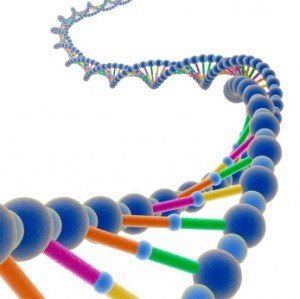
32.
Which of the following best describes a DNA molecule?
a)
double helix
b)
contains ribose
c)
made of amino acids
d)
contains Uracil
33.
Which of the following units are repeatedly joined together to form a strand of DNA?
a)
amino acids
b)
nucleotides
c)
fatty acids
d)
polysaccharides
34.
In a molecule of double-stranded DNA, the amount of Adenine present is always equal to the amount of
a)
cytosine
b)
guanine
c)
thymine
d)
uracil
35.
Guanine bonds with ______________.
a)
Adenine
b)
Guanine
c)
Cytosine
d)
Thymine
36.
Why is DNA important?
a)
it is very small and very complicated
b)
it's in everything
c)
it serves as the blueprint for traits of all living things
d)
because we eat it every day for energy
37.
Which 2 molecules form the sides (backbone) of the DNA ladder?
a)
deoxyribose sugar and adenine
b)
deoxyribose sugar and a hydrogen bond
c)
deoxyribose sugar and the nucleus
d)
deoxyribose sugar and phosphate
38.
Which organelle is DNA usually found in?
a)
cell membrane
b)
vacuole
c)
chloroplast
d)
nucleus
39.
Nitrogenous bases are joined by which type of bond?
a)
polar bonds
b)
ionic bonds
c)
covalent bonds
d)
hydrogen bonds
40.

Replicate the following strand of DNA by selecting the complementary base pairs:

AATCATGGA

a)

AATCATGGA

b)

TTAGTACCT

c)

UUAGUACCU

d)

GGATAUCUA

41.
The enzyme that unzips the DNA to prepare for replication
a)
helicase
b)
replicase
c)
polymerase
d)
synthase
42.

DNA replication results in two DNA molecules, considered semi-conservative because...

a)

each one with two original strands

b)

each one with two new strands

c)

each one with one new strand and one original strand

d)

one with two new strands and the other with two original strands

43.
In what phase of the cell cycle does DNA replication take place?
a)
G1
b)
S
c)
G2
d)
M
44.
What are the three components of a nucleotide?
a)
sugar, hydrogen, nitrogen base
b)
sugar, oxygen, nitrogen base
c)
sugar, phosphate, nitrogen base
d)
sugar, phosphate, protein
45.
Why would DNA replicate?
a)
to make a completely new set of DNA for a new body cell
b)
just in case the DNA goes bad in this cell
c)
to send to other body cells whose  DNA is damaged
d)
I don't know
46.

Name the process where DNA is copied

a)

Translation

b)

Transcription

c)

Replication

d)

mutation

47.
a)

Telomerase will speed up the rate of cell proliferation (division)

b)

Telomerase shortens telomeres, which delays cellular aging

c)

Telomerase would have no effect on cellular aging

d)

Telomerase would reduce telomere shortening and slow the aging process