
 Worksheets
Gateway Content Review: Periodic Trends & Atomic Structure
Total questions: 20
Worksheet time: 13mins
What is the atomic radius?
The distance from the nucleus to the outermost electron of an atom
The distance from one side of an atom to the other side
The distance around the atom
The distance between atoms in the gas phase
The distance between atoms in the solid phase

Which element's atom is larger? Nitrogen or Phosphorus?
Nitrogen
Phosphorus
As you move ______ a group, more energy levels are added, which increases the size of the atom
down
up
diagonal
away

Which element's atom is the smallest?
Rhodium
Silver
Cadmium
Tin
Which of these best explains the reasoning behind the trend that as you go across a period, size decreases?
As you go across a period, more energy levels are added, which shrinks the atom.
The added electrons in the nucleus give the atom a negative charge, which shrinks the atom.
The added protons in the nucleus pull the electrons closer to them, which shrinks the atom.
All of the above

What type of bond is depicted in the image?
Nonpolar Covalent
Polar Covalent
Ionic

What type of bond is depicted in the image?
Nonpolar Covalent
Polar Covalent
Ionic

What type of bond is depicted in the image?
Nonpolar Covalent
Polar Covalent
Ionic
As you look from left to right across a period, electronegativity
increases
decreases

Which has the greater electronegativity:
N or C?
C
N
What is Ionization energy?
The energy used in a chemical reaction
Potential energy
The energy it takes to remove one electron from an atom or ion in its gaseous state
Explain why ionization energy decreases as you go down a group.
Outer electrons are further away from the nucleus you go down a group
Electrons feel less pull from the nucleus as you go down a group
Electrons are easier to remove as you go down a group
All of the above

Which has the highest ionization energy?
Arsenic
Iron
ZInc
Cobalt

Which has a lower ionization energy?
Lithium
Cesium
Sodium
An atom has 10 protons, 15 neutrons and 10 electrons what is its mass number.
20
10
35
25
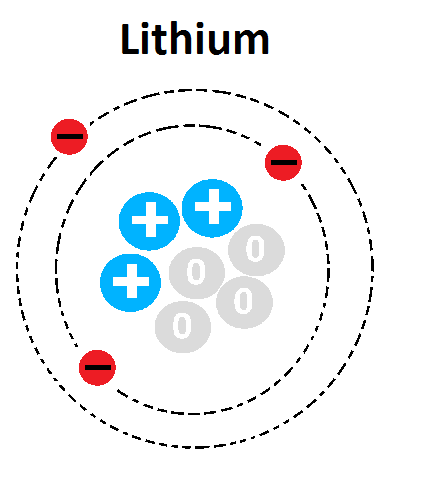
What is the atomic number of this atom?
1
3
4
7

