
Font size
 Worksheets
Earth's Movements and Structure Quiz
Total questions: 39
Worksheet time: 29mins
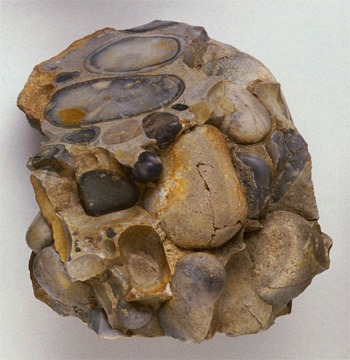


What type of rock is this?
Sedimentary
Igneous
Metamorphic
Sand

What type of rock is made from magma?
SEDIMENTARY
METAMORPHIC
IGNEOUS

What type of rock is made of tiny fragments of rocks?
SEDIMENTARY
IGNEOUS
METAMORPHIC

Which rocks are made by heat and pressure?
IGNEOUS
SEDIMENTARY
METAMORPHIC

What type of rock is this?
Intrusive Igneous
Extrusive Igneous
Metamorphic
Sedimentary


Which type of rock was MOST LIKELY formed by the Tennessee River over the last 100 million years?
Igneous
Sedimentary
Mountainous
Metamorphic
What is the thinnest layer?
Crust
Mantle
Outer Core
Inner Core

Which is the correct order of the Earth's layers?
Outer most layer first.
Crust, Outer Core, Mantle, Inner Core
Crust, Mantle, Outer Core, Inner Core
Inner core, Outer core, Mantle, Crust
As you move deeper into the Earth's core, the temperature is:
cooler
hotter

True or false.
The asthenosphere is located below the mantle. Due to extreme heat and pressure. The solid rocks can flow like liquid.
True
False
What is your name?
First and Last

Which layer contains the ground we walk on?
atmosphere
lithosphere
hydrosphere
mesosphere
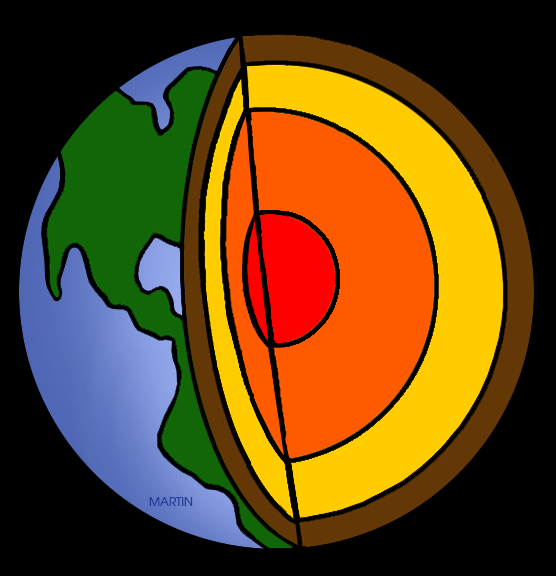
Which layer is shown in orange?
crust
mantle
outer core
inner core
Which layer is shown in yellow?
crust
mantle
outer core
inner core

Which layer is made (mostly) of SOLID iron and nickel?
crust
mantle
outer core
inner core

Which layer is made (mostly) of LIQUID iron and nickel?
crust
mantle
outer core
inner core
Which layer is the hottest?
crust
mantle
outer core
inner core
Which layer is the coolest?
crust
mantle
outer core
inner core
Earthquake
Transform boundary
Divergent boundary
Convergent boundary
Subduction boundary

The San Andreas fault is a transform fault. The map below shows a student's approximation of where the fault line crosses through the United States. Students were asked to make maps predicting which way land would most likely move over thousands of years.


A mid-ocean ridge separates the Pacific plate and the Nazca plate off the western coast of South America. Which statement best describes the relative motions of the Pacific and Nazca plates?
The Pacific and Nazca plates are moving to the east
The Pacific and Nazca plates are both moving to the west
The Pacific plate is moving to the west, and the Nazca plate is moving to the east
The Pacific plate is moving to the east, and the Nazca plate is moving to the west

The image shows a plate boundary. Arrows have been added to indicate the movement of the plates. What plate boundary feature is also shown?
A ridge formed by an inactive convergent boundary
A valley forming at an active divergent boundary
A fault forming at an active transform boundary
A volcano formed by an active transform boundary

The model below shows two continental plates. The folded mountains in this model form at which type of plate boundary?
transform boundary
divergent boundary
subduction boundary
convergent boundary

Most earthquakes tend to occur at which location?
The central regions of very large continents
Groups of islands farthest from any continents
The boundaries between continents and oceans
The steep slopes of the very oldest mountains

A map is provided that presents information on a certain region of the Earth. Based on the information on the map, at which location are mountains most likely to form?
A
B
C
D

A force caused the continents to drift apart over time. Once scientists figured out what that force was, the theory of plate tectonics was born! The image above shows what Geologists think the Earth looked like millions of years ago. What name was given to this land mass.
Plate Tectonics
Oceana
Pangea
North America


What is the name of the plate shown in the image?
South American
African
North American

What is the name of the plate shown in the image?
North American
South American
Eurasian

What is the name of the plate shown in the image?
Antarctic
Pacific
Indo-Australian

What is the name of the plate shown in the image?
North American
African
Antarctic

