Wayground logo

Free Printable Worksheets

Font size

S
M
L
XL
Worksheets

Electricity

Total questions: 25

Worksheet time: 30mins

Name
Class
Date
1.
A particle that carries a negative electric charge is called a(n) ______.
a)
neutron
b)
atom
c)
proton
d)
electron
2.
The flow of electricity in a circuit-
a)
current
b)
flow
c)
circuit
3.
Electricity that flows in a closed path is called a
a)
path
b)
current
c)
circuit
4.
To complete a circuit the switch must be
a)
unattached
b)
open
c)
closed
5.
The flow of electricity requires a
a)
complete path
b)
incomplete path
c)
insulated current
6.
Two types of circuits are
a)
parallel and magnetic
b)
electromagnetic and series
c)
series and parallel
7.
When socks get stuck to towels in your dryer, this is an example of________________
a)
current electricity
b)
static electricity
8.
What is the major difference between static electricity and current electricity?
a)
Current electricity involves a continuous flow of neutrons; static electricity is a sudden transfer of protons
b)
Current electricity can be deadly; static electricity is almost always safe
c)
In current electricity, there's a single transfer of electrons; in static electricity, there's a steady flow of electrons
d)
Current electricity involves a flow of electrons; static electricity involves a single transfer of electrons
9.
True or False, Lighting is a form of static electricity.
a)
True
b)
False
10.
This is an example of a _______ circuit
a)
open
b)
series
c)
parallel
d)
square
11.
This is an example of a ______ circuit
a)
Series
b)
Parallel
c)
Open
d)
Dihexihedral
12.
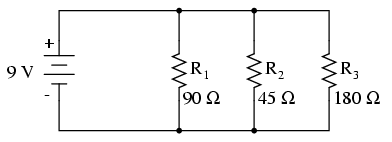
What kind of circuit is this?
a)
series
b)
parallel
13.
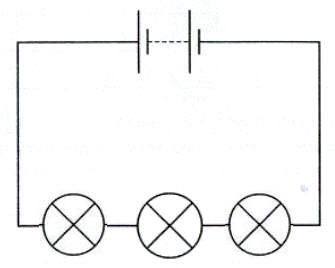
what kind of circuit is this?
a)
parallel
b)
series
c)
chris barton
d)
open
14.
This circuit has more than one loop. When one light goes out, the others stay on. 
a)
closed circuit
b)
series circuit
c)
parallel circuit
d)
open circuit
15.

A group of students hang a balloon with an electrical charge from the ceiling with a string. They bring another balloon near the first one. Predict what will happen when the balloons are brought closer together. The balloon on the string will?

a)

move upward if the charges are opposite.

b)

remain still if the charges are opposite.

c)

move downward if it loses its charge.

d)

move away if the charges are the same.

16.

Which statement supports that electricity can be very dangerous to humans?

a)

It keeps us in contact with others who may live far away.

b)

Inventors need to create something that could be put between humans and the flow of electricity.

c)

Conductors are usually made from wire.

d)

Our bodies are good conductors.

17.

Which of the following occurs due to static electricity?

a)

A steel ball falls vertically to the ground after it is released from a height.

b)

An iron nail moves toward a bar magnet after the two are placed close to each other.

c)

A laboratory cart rolls across the floor after it is pushed by a student.

d)

A plastic comb attracts a small piece of paper after it is used to comb someone's hair.

18.

A student rubbed a balloon with a wool cloth. The balloon developed a negative charge. The student placed the balloon against a wall and let go. The balloon stayed next to the wall for a few minutes, then fell. What is the MOST likely reason the balloon fell?

a)

The balloon gave up positive charges to the wall.

b)

he wall gave up negative charges to the balloon.

c)

The balloon gave up negative charges to the wall.

d)

The wall gave up positive charges to the balloon.

19.

Which material is NOT a good electrical conductor?

a)

wood

b)

water

c)

copper

d)

aluminum

20.

A student is given three identically sized blocks. Each block is made of a different material. What characteristic of the blocks should be examined to find out which block is made of metal?

a)

weight

b)

conductivity

c)

color

d)

texture

21.
An electromagnet is a permanent magnet that does not switch on and off.
a)
True
b)
False
22.
Metal is a great example of a conductor.
a)
True
b)
False
23.
Rubber is a great example of a insulator.
a)
True
b)
Fasle
24.
What type of circuit has two or more paths that electricity can follow?
a)
Parallel
b)
Perpendicular
c)
Bilateral
d)
Triangular
25.
This type of electricity happens when charges build up on an object.
a)
True
b)
False