wayground logo

Free Printable Worksheets

NEW

Font size

S
M
L
XL
Worksheets

ABOG

Total questions: 27

Worksheet time: 14mins

Name
Class
Date
1.

What are the 4 main gases found in dry air?

a)

Hydrogen, oxygen, carbon dioxide, argon

b)

Nitrogen, oxygen, carbon dioxide, argon

c)

Hydrogen, oxygen, carbon dioxide and helium.

d)

Nitrogen, oxygen, carbon dioxide, water vapour

2.

What is the percentage of nitrogen gas in the air?

a)

1%

b)

0.04%

c)

21%

d)

79%

3.

What is the percentage of oxygen gas in the air?

a)

1%

b)

0.04%

c)

21%

d)

78%

4.

What is the percentage of carbon dioxide gas in the air?

a)

1%

b)

0.04%

c)

21%

d)

79%

5.

What gas is not present in the air?

a)

xenon

b)

carbon dioxide

c)

hydrogen

d)

helium

6.
Which gas in our atmosphere is most abundant?
a)
Argon
b)
Oxygen
c)
Nitrogen
d)
Carbon Dioxide
7.
What is the percentage of oxygen in Earth's atmosphere?
a)
1%
b)
21%
c)
78%
d)
90%
8.
What are the 2 most abundant gases in Earth's atmosphere?
a)
carbon dioxide and oxygen
b)
carbon dioxide and nitrogen
c)
nitrogen and oxygen
d)
nitrogen and hydrogen 
9.

Which of the following is not a property of air?

a)

Air has weight

b)

Air is invisible

c)

Air is oxygen

d)

Air is impacted by temperature

10.

What can be concluded from the experiment pictured?

a)

Air has no volume

b)

Air has mass

c)

The mass of the black balloon is increasing

d)

The mass of the meter stick is unreliable

11.
What is the process of combining nitrogen gas with other elements to make nitrogen into usable compounds?
a)
nitrogen composition
b)
ammonia 
c)
nitrogen fixation
d)
denitrification
12.
How much of the atmosphere is composed of nitrogen gas?
a)
87%
b)
38%
c)
78%
d)
21%
13.
Organisms that break down dead plants & animals and release nitrogen back into atmosphere...
a)
bacteria
b)
plants
c)
animals
d)
producers
14.
Organisms that need nitrogen to survive
a)
only plants
b)
only animals
c)
only bacteria
d)
all living organisms
15.
Plants and animals cannot use nitrogen directly from the air.
a)
True
b)
False
16.
Based on this diagram, which of the following can you infer is the chemical formula for gaseous nitrogen?
a)
N
b)
N2
c)
N3
d)
N4
17.
What happens when organisms die and decay? 
a)
Their bodies are lifted up
b)
Their nitrogen returns to the soil
c)
they keep their nitrogen
d)
They stay on earth forever
18.
When energy is generated from the burning of wood or other organic matter, we call it_______.
a)
Solar Energy
b)
Biomass Energy
c)
Thermal Energy
19.
Using the heat from the Earth to generate electricity would be called...
a)
Hydroelectric
b)
Biometric
c)
Geothermal
d)
Fossil Fuels
20.
These fuels are made from living things such as leaves, food wastes, and manure.
a)
geothermal fuels
b)
hydrogen fuels
c)
biomass fuels
21.
What do we call large areas of windmills?
a)
Wind farms
b)
Hurricanes
c)
Turbines
d)
Wind tunnels
22.
Energy that uses heat that comes from within the Earth is called
a)
Geophysical
b)
Geography
c)
Geothermal
d)
Geographic
23.
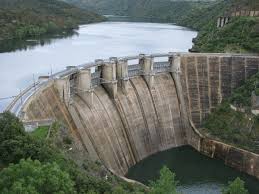
Which energy uses water held behind a dam?
a)
Geothermal
b)
Hydroelectric
c)
Nuclear
d)
Solar
24.
Solar energy is 
a)
Energy from the uneven heating of the earth.
b)
Energy from burning fossil fuels.
c)
Energy from the sun.
d)
Energy from turbines.
25.
What is hydroelectric power?
a)
electricity produced by flowing water
b)
wind power
c)
energy from the sun
26.
What is energy from the sun called?
a)
solar energy
b)
nuclear energy
c)
hydroelectric power
27.
Which renewable resource gets its direct energy from the sun? 
a)
Geothermal
b)
Solar
c)
Wind
d)
Hydrogen