
 Worksheets
Revision 2022
Total questions: 31
Worksheet time: 18mins

What causes acid rain?
High concentrations of sulfuric or nitric acid from pollution
Fertilizer use
Pesticide use
CFCs

Acid rain can damage
Drinking water sources
Aquatic life
Architecture/buildings
All options are correct
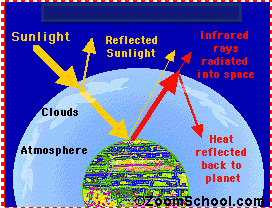

What percentage of the Earth's fresh water is available to us?
97%
7%
1%
50%
There is nothing we can do to stop water pollution.
True
False

We can prevent water pollution by:
Reducing the use of plastic
Proper disposal of chemicals
Keeping the use of chemical fertilizers in check
All of the above
What can happen to fish when there is not enough oxygen in the water?
They can suffocate
They can't float
They can't see
Nothing. Fish don't need oxygen
TRUE or FALSE: Many people on Earth do not have access to clean water.
TRUE
FALSE

What can be concluded from the experiment pictured?
Air has no weight
Air has weight
The weight of the black balloon is increasing
The weight of the meter stick is unreliable

This photograph shows a beach on a partly sunny day. Which of the following is an interaction between the sun and the ocean that results in clouds forming near the beach?
Energy from the sun causes precipitation over the ocean
Energy from the sun causes water to evaporate from the ocean
Light from the sun reflects off the surface of the ocean
Light from the sun decreases the amount of water vapor in the air over the ocean

Water drops seen on the lid of a hot tea pot is an example of__________.
Evaporation
Condensation
Precipitation
Water cycle
Which of these protects us from harmful UV rays
O2
H2O
O3
CO2
The nearest layer of air near Earth surface is called
Atmosphere
Lithosphere
Hydrosphere
Troposphere
The layer of Earth in which clouds are formed is the
Troposphere
Lonosphere
Stratosphere
Lithosphere
Which of these gases is present in a very small quantity in air, and is very important to plants
Oxygen
Carbon di oxide
Nitrogen
Inert gas
The gas use for burning
Carbon di oxide
Hydrogen
Oxygen
Nitrogen
___________ water is used in laboratories for doing experiments
Evaporated water
Condensed water
Filtration water
Distilled water
What is the % of nitrogen in air?
75%
71%
78%
60%
A process wherein coarse sand traps larger, insoluble particles. The sand also contains specially grown microbes which remove some of the bacteria.
chlorination
sedimentation
coagulation
filtration

What are the properties of water?
We can not taste and smell water
We can taste water
we can smell water
Water has colour
Air is Colourless,Odourless and Tasteless.
True
False
What does stratosphere do?
Burns meteoroids
Has all the weather phenomena
Saves us from the suns ultraviolet rays
As you go higher the level of the oxygen in the atmosphere becomes ---------
more
less
remains the same
This layer is the hottest layer of the atmosphere?
Troposphere
Stratosphere
Mesosphere
Thermosphere

