
 Worksheets
Extinctions
Total questions: 17
Worksheet time: 10mins

The "Cambrian Explosion" is a term used to describe which of the following?
An explosion that caused many animals to go extinct 65 million years ago
An explosion that led to decrease in oxygen on Earth 200 million years ago
A significant increase in the variety of different life forms on Earth
A significant decrease in the variety of different life forms on Earth

Fossils that show body structures that are found in both ancestral species and in its descendants are called what?
Traditional Fossils
Transitional Fossils
Half-Point Fossils
Ancestral Fossils

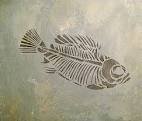
If scientists found this fossil in a desert, what could they infer?
what fish are like today
that this fish lacked oxygen
that water once covered the area where this fossil was found

Organisms D and C clearly lived in an aquatic (water) environment. Organism A does not look like it lived in the water. What is the most likely explanation for this?
The fossil in layer A died on land and was carried to the water
The fossils in layer C and D did not live in the same location as the fossil in layer A
The environment changed over a long period of time. It used to be under water, but is not anymore

According to most scientists, what is the ultimate cause of most mass extinctions?
overhunting
evolution of new species to replace old ones
major change in environment or climate
asteroid impact

Which of these provides the BEST evidence that the environment of Earth has changed over millions of years?
active migration of sand dunes
marine (water) fossils found on top of mountains
polished appearance of rock surfaces
none of the above

Scientists theorize that the ancient horse on the left is related to the modern horse on the right. The scientists theorize that the horse has gone through many changes over time. How did the scientists conclude that the animal changed over time?
by examining fossil records
by learning about natural selection
by studying deposition of sediments
by observing different types of rock formations

A scientist drew some diagrams of ancestors of elephants based on fossil evidence. Which is the BEST conclusion that can be made from comparing the diagrams?
(Model Description: The first elephant ancestor is 50 million years old and very small, the second elephant ancestor is 30 million years old and much larger. The trunk is also short. The last ancestor is 20 million years old and taller, but shorter width wise. The trunk is also longer.)
Ancient elephants were better adapted than modern elephants.
Elephant habitats have remained the same over time.
Elephant fossil evidence is widespread and complete.
Elephant species have changed over time.

An animal fossil has sharp, pointy teeth. What can we infer about this animal?
The animal lived in the water
The animal is a carnivore (only ate meat).
The animal lived near the beach.
The animal is an herbivore (only ate plants).

What statement is true about fossils?
Some living things have not really changed in millions of years.
All living organisms leave behind fossils.
Fossils show that camels never change.
Plant fossils have never changed.

Scientist study the ____________________ to learn about the history of life, past environments on Earth, and how different groups of organisms have changed over time.
fossil record
historical record
animal record
Earth record

What is the name of the street the auditorium faces?
Cedros
Burbank
Vesper
Albers

