
 Worksheets
Unit 6: Biodiversity and Changes
Total questions: 19
Worksheet time: 16mins
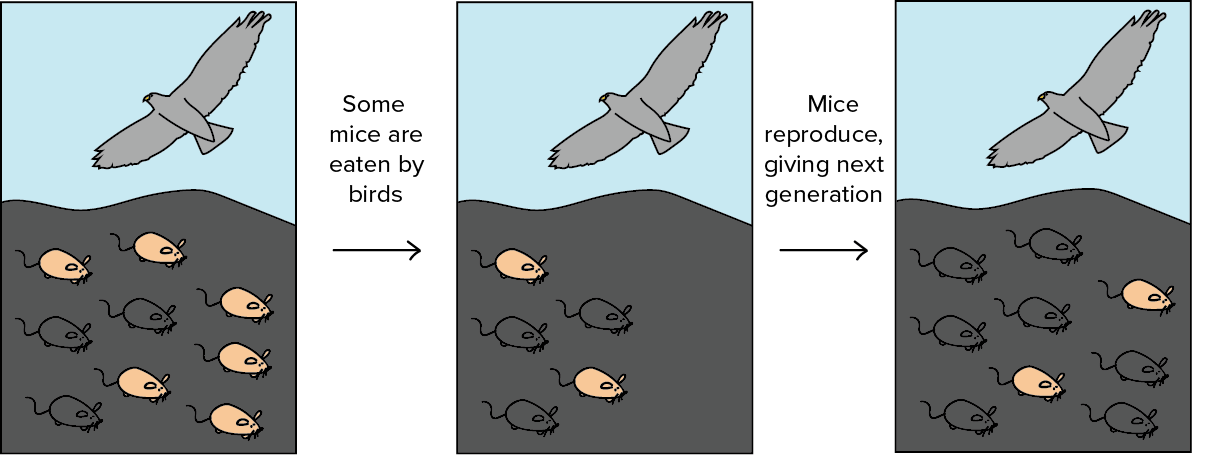

1. The process of choosing parent organisms for desired characteristics is called
natural selection
Artificial selection
random selection
genetic manipulation
What is an example of artificial selection?
Letting dogs choose their own mate
Letting plants pollinate on their own
Crossing a labrador and a poodle to create a labradoodle
Which statement is true comparing natural selection and artificial selection?
In natural selection, traits benefit humans and in artificial selection, the traits benefit the species
In natural selection, traits benefit the species and in artificial selection, the traits benefit humans
In natural and artificial selection, the process takes hundreds of years to occur
In natural and artificial selection, nature determines what traits will be passed down to offspring.
Which biome is more biodiverse?
Desert
Grassland
Tundra
Rainforest

Image "B" shows more biodiversity than image "A". Why?
Because "B" shows more different species than image "A"
Because image "B" has less different species than "A"
"A" has a greater number of same species plants so this statement is wrong.
Both images show the same biodiversity

Food Web B is an example of...
Low biodiversity and low sustainability. If the producer dies then all the food web will suffer.
High biodiversity and high sustainability. If an organism is removed the food web will continue with no effect.
Which of the following is NOT a component of biodiversity?
Genetic diversity
Species diversity
Habitat diversity
Ecosystem diversity
How do humans impact the environment? Select all that apply.
By changing the way a animal looks by altering the what food the animal eats.
By polluting the ocean water and the earth's atmosphere through urbanization.
By destroying biomes in which animals live through deforestation.
By not watering plants that causes them to go into drought and ultimately die off.

What kind of environmental change is shown in the picture above?
Short term
Long term

What two environmental changes can be found in this image?
pollution and climate change
climate change and urbanization
deforestation and pollution
urbanization and deforestation
Natural Disasters such as, earthquakes, flooding, and volcanic eruptions can cause ...
short term changes
long term changes

