
 Worksheets
T8 Lesson 4 Energy Levels, Electrons, and Covalent Bonding
Total questions: 27
Worksheet time: 16mins
Name
Class
Date
1.

Sodium has an atomic number of 11, how many protons does this atom have?
a)
22
b)
11
c)
12
d)
2
2.

Where is the proton located?
a)
In the very dense nucleus
b)
Floating around in the negative electron cloud
c)
the loose nucleus
d)
the positive electron cloud
3.
What number on the element key tells you how many protons an element has?
a)
Atomic Mass
b)
Element name
c)
Atomic number
d)
Element Symbol
4.

Which description about the proton is accurate?
a)
Positively charged particle with a mass less than 0 amu
b)
A neutrally charged particle with a mass less than 0 amu
c)
Positively charged particle with a mass of 1 amu
d)
A neutrally charge particle with a mass of 1 amu
5.

The following element key shows how many protons?
a)
16
b)
15.999
c)
Oxygen
d)
8
6.
Which of the following is NOT an accurate description of the nucleus?
a)
positively charged from the protons
b)
extremely dense from neutrons and protons
c)
negatively charged
d)
in the center of the atom
7.
Which subatomic particle along with the protons make up the total mass of an atom.
a)
Neutron
b)
Electrons
c)
Valence electrons
d)
protons make up all the mass
8.
A stable element with 27 electrons will contain how many protons?
a)
27 protons in the electron cloude
b)
59 protons in the extremely dense nucleus
c)
27 protons in the extremely dense nucleus
d)
59 protons in the electron cloud
9.

How many protons are in Neon
a)
10
b)
20
c)
21
d)
30
10.
What is the mass number and name of an element with 8 protons and 8 neutrons?
a)
16 - Carbon
b)
16 - Oxygen
c)
24 - Oxygen
d)
8 - Neon
11.
What is the mass of a neutron?
a)
1 amu
b)
0 amu
c)
same as electron
d)
doesn't have any mass
12.

What is the formula to solve for the neutron?
a)
Mass + Atomic Number= Neutrons
b)
Mass x Atomic Number = Neutrons
c)
Mass - Atomic Number = Neutrons
d)
Mass + Number of Protons = Neutron
13.

Where is the neutron located?
a)
In the loose nucleus with the electron
b)
In the dense nucleus with the protons
c)
In the electron cloud
d)
The nucleus floats on orbitals
14.
What is the charge of the neutron?
a)
Negative
b)
Positive
c)
electrical charge
d)
Neutral (no charge)
15.

How many neutrons does the an element with an atomic number of 3 and a mass of 6.9 contain?
a)
6.9
b)
4
c)
3
d)
7
16.

How many neutrons does oxygen have?
a)
16
b)
15.99
c)
8
d)
Doesn't contain any neutrons
17.
An atom with 19 protons, and 19 electrons and a mass of 39 has how many neutrons?
a)
19
b)
39
c)
20
d)
58
18.

Which element has 6 protons?
a)
Be
b)
B
c)
C
d)
N
19.
a collection of atoms of one type that cannot be broken down into simpler substances by ordinary chemical or physical means
a)
element
b)
subatomic particle
c)
electron
d)
matter
20.
Which element is similar to Li?
a)
Be
b)
K
21.
Which element is similar to Mg?
a)
Ca
b)
B
22.
Which element is similar to B?
a)
C
b)
Al
23.
Which element is similar to F?
a)
Ne
b)
Cl
24.
Which element is similar to He?
a)
H
b)
Ar
25.
How are covalent bonds explained?
a)
When one atom takes the other atom's electron
b)
When the atom shares an electron with an another atom
c)
When the two nucleus merge
d)
When the neutrons leave the nucleus
26.
In chemical compounds, covalent bonds form when
a)
the electronegativity difference between two atoms is very large.
b)
electrons are completely transferred between two metals.
c)
pairs of electrons are shared between two nonmetal atoms.
d)
two nonmetal atoms are attracted to each other by opposite charges.
27.
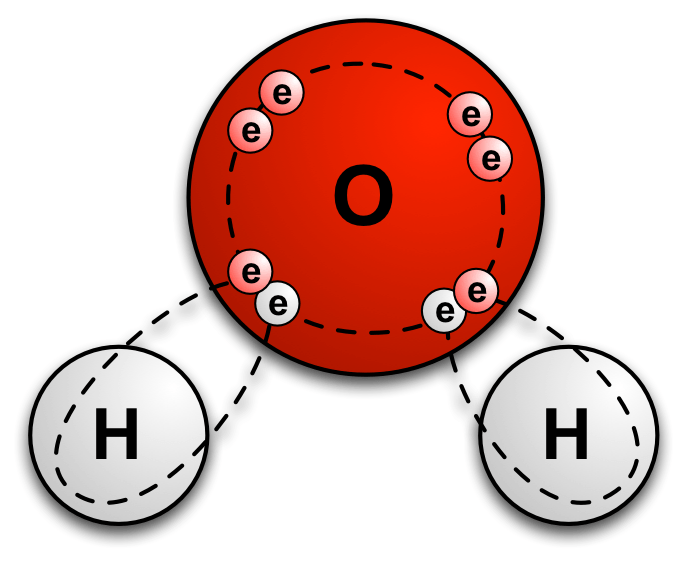
What would you name this molecule?
a)
SNa3
b)
H3O
c)
NaCl
d)
H2O
100 %

