
 Worksheets
Ocean Currents
Total questions: 20
Worksheet time: 11mins

The movement of deep, cold, nutrient filled water to the surface of the ocean after the winds move the warmer water away is called _______.
Ocean Current
Upwelling
Deep Currents
Surface Currents

Surface currents are mainly formed by and driven by the ______.
Winds

Regular movements of ocean water formed by density and are far below the surface, are called
_________.
Ocean water is more dense than fresh water at the same temperature due to differences in _________.
Deep Ocean currents are primarily caused by ________.
temperature and salinity
wind
gravity
precipitation

The warm, strong current off the coast of Florida is the ____________.
Gulf Stream
Current

When surface currents meet continents they ___?
Stop moving
Are deflected (change paths)
Continue in the direction they were going

Salt water is ____________ fresh water.
more dense than
less dense than
the same density as
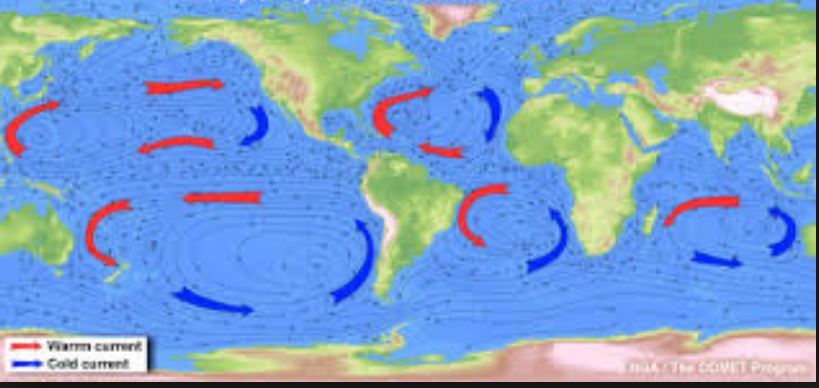

Why is it warmer in Charleston than it is in San Diego even though they are the same distance from the Equator?
Why is it colder in San Diego than it is in Charleston even though they are the same distance from the Equator?


What impact does plastic waste in the oceans have on marine life?
Animals have a good instinct to avoid plastic waste.
Animals will not eat the plastic waste.
Plastics in the ocean have no impact on the marine life.
Animals can get sick after mistaking them for food, or accidently get caught in the plastic.

How does plastic trash get into the ocean to create the Great Pacific Garbage Patch? Choose 3 possible answers.
Plastic left on the ground as litter often blows into rivers, eventually ends up in the ocean.
Rain and floods carry plastic from the land into the oceans.
Animals carry plastic to the ocean.
Shipwrecks, fishing boats, and careless people at the beach or boating.
Organisms such as ____, ____, and ____ rely on ocean currents for transportation.
Sea turtles, coconut trees, and plankton
Oxygen, nitrogen and carbon
thermal and kinetic energy
fish, kelp, sea otters
Ocean currents transport matter and energy. Besides water, ocean currents also carry important matter such as ____, ____and _____ necesary for the survival of marine organisms.
fresh water, ice and warm water
coconuts, plankton and sand dollars
nitrogen, carbon dioxide, and oxygen

