wayground logo

Free Printable Worksheets

Font size

S
M
L
XL
Worksheets

Properties of Real Numbers

Total questions: 70

Worksheet time: 3hrs 34mins

Name
Class
Date
1.
Identify the property
a + b = b + a
a)
Identity of addtion
b)
commutative of addition
c)
associative of addition
d)
symmetric
2.
Identify the property
(a ⋅ b) ⋅ c = (c ⋅ b) ⋅ a
a)
commutative of multiplication
b)
identity of multiplication
c)
inverse of multiplication
d)
associative of multiplication
3.
Identify the property
a + 0 = a
a)
identity of addition
b)
identity of multiplication
c)
inverse of addtion
d)
multiplication of zero
4.
Pick the answer that is an example of the inverse property of multiplication
a)
5 ⋅ 0 = 5
b)
5 ⋅ 1/5 = 1
c)
5 - 5 = 0
d)
5 ⋅ 1 = 5
5.
Pick the answer that is an example of the identity property of addtion
a)
a + (-a) = 0
b)
1 + 1 = 2
c)
a + 0 = a
d)
a + b = b + a
6.
Identify the property
a(b + c) = ab + ac
a)
Associative of addtion
b)
Distributive
c)
Commutative of addition
d)
Inverse
7.
Identify the property 
a + (-a) = 0
a)
Inverse of addition 
b)
Identity of addtion
c)
associative of addition 
d)
symmetric
8.

If you multiply a number and its multiplicative inverse, what do you get?

a)

0

b)

1

c)

Not enough information

d)

None of these

9.

What is the additive inverse of 2/3?

a)

-2/3

b)

3/2

c)

2/3

d)

-3/2

10.

Any number you multiply by zero is equal to zero.

a)

True

b)

False

11.
(19 x 5) x 2 = 19 x (5 x 2)
a)
Associative Property of Multiplication
b)
Commutative Property of Multiplication
c)
Identity Property of Multiplication
d)
Associative Property of Addition
12.
x 12 =12
a)
Identity Property of Multiplication
b)
Commutative Property of Multiplication
c)
Multiplication Property of One
d)
Distributive Property
13.

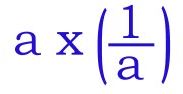
What property is this?

a)

Multiplicative Inverse

b)

Multiplicative Identity

c)

Commutative

d)

Associative

14.
What property is this?
(n+13) + 4 = n + (13+4)
a)
Associative Property
b)
Commutative Property
c)
Additive Identity
d)
Distributive Property
15.
What is the ADDITIVE INVERSE of
-7
a)
-7
b)
-1/7
c)
1/7
d)
7
16.
What is the MULTIPLICATIVE INVERSE of
8
a)
-8
b)
-1/8
c)
1/8
d)
1
17.

Fill in the blank to properly show the DISTRIBUTIVE PROPERTY:

7(11 + 4) = 77 + ____

a)

3

b)

4

c)

7

d)

28

18.
What property is this?
1a = a
a)
Commutative Property of Multiplication
b)
Multiplicative Inverse
c)
Multiplicative Identity
d)
Distributive Property
19.
This is an example of which property:
(2⋅3)4=(3⋅2)4
a)
Associative
b)
Commutative
c)
Inverse
d)
Identity
20.
What property is this?
9(b + 0.5) = 9b + 4.5
a)
Commutative
b)
Associative
c)
Distributive
d)
Additive Inverse
21.

What property is this?

a)

Multiplicative Inverse

b)

Multiplicative Identity

c)

Commutative

d)

Associative

22.
What property is this?
(n+13) + 4 = n + (13+4)
a)
Associative Property
b)
Commutative Property
c)
Additive Identity
d)
Distributive Property
23.

Which of the following is an example of the MULTIPLICATIVE PROPERTY OF ZERO?

a)

-76 x 0 = 0

b)

-9 + 9 = 0

c)

100 - 100 = 0

d)

49 + 0 = 49

24.

Which property is this:

a)

Additive Identity

b)

Additive Inverse

c)

Multiplicative Property of 0

d)

Multiplicative Inverse

25.
What is the ADDITIVE INVERSE of
-7
a)
-7
b)
-1/7
c)
1/7
d)
7
26.
What is the MULTIPLICATIVE INVERSE of
8
a)
-8
b)
-1/8
c)
1/8
d)
1
27.

Fill in the blank to properly show the DISTRIBUTIVE PROPERTY:

7(11 + 4) = 77 + ____

a)

3

b)

4

c)

7

d)

28

28.
What property is this?
1a = a
a)
Commutative Property of Multiplication
b)
Multiplicative Inverse
c)
Multiplicative Identity
d)
Distributive Property
29.
The Distributive Property would say
3(a + 2b) = ______
a)
3(2b + a)
b)
(a + 2b)3
c)
3a + 2b
d)
3a + 6b
30.
x 2 = 2 x 9
a)
Commutative Property of Multiplication
b)
Associative Property of Multiplication
c)
Multiplicative Inverse Property
d)
Distributive Property
31.
Apply distributive property to find an equivalent expression to:
a)
(-⅔ x ¾) + (-⅔ x ⅙)
b)
(-⅔ x ¾) x (-⅔ x ⅙)
c)
(-⅔ + ¾) x (-⅔ + ⅙)
d)
(-⅔ + ¾) + (-⅔ + ⅙)
32.
What property is this?
-11.3 + 0 = -11.3
a)
Additive Inverse
b)
Additive Identity
c)
Multiplicative Identity
d)
Multiplicative Property of Zero
33.
The Commutative Property of Addition would say
2n + 4 = _______
a)
2(n + 2)
b)
n2 + 4
c)
4 + 2n
d)
2n + 4
34.
What property is this?
77+(8+3) = (8+3)+77
a)
Commutative
b)
Associative
c)
Additive Identity
d)
Distributive
35.

Apply the DISTRIBUTIVE PROPERTY to solve this:

8(3 + 4) =

a)

24 + 32

b)

11 + 12

c)

123 + 124

d)

5 + 4

36.
What property is this?
14 x 1 + 77 = 91
a)
Additive Identity
b)
Additive Inverse
c)
Multiplicative Identity
d)
Multiplicative Inverse
37.
What property is this?
9(b + 0.5) = 9b + 4.5
a)
Commutative
b)
Associative
c)
Distributive
d)
Additive Inverse
38.
What property is this?
37 x 9 x 0 x 17 x 4 = 0
a)
Property of Zero
b)
Commutative
c)
Distributive
d)
Associative
39.
What property is this?
77+(8+3) = (8+3)+77
a)
Commutative
b)
Associative
c)
Additive Identity
d)
Distributive
40.
What property is this?
-11.3 + 0 = -11.3
a)
Additive Inverse
b)
Additive Identity
c)
Property of Zero
d)
Commutative
41.
What property is this?
(a+13)+4 = a+(13+4)
a)
Associative
b)
Commutative
c)
Additive Identity
d)
Distributive
42.
What property is this?
38 + (-38) = 0
a)
Additive Identity
b)
Additive Inverse
c)
Property of Zero
d)
Commutative
43.
What property is this?
4/55/4 + 16 = 1 + 16
a)
Multiplicative Inverse
b)
Multiplicative Identity
c)
Commutative
d)
Associative
44.
What is a number that would be involved in EVERY equation involving multiplicative identity? 
a)
-1
b)
0
c)
1/2
d)
1
45.
What is a number that would be involved in EVERY equation involving additive identity?
a)
-1
b)
0
c)
1/2
d)
1
46.
Fill in the blank to properly solve the equation using ADDITIVE INVERSE:
-7 + _ = 0
a)
-7
b)
-1/7
c)
1/7
d)
7
47.
Fill in the blank to properly solve the equation using MULTIPLICATIVE INVERSE:
8 x _ = 1
a)
-8
b)
-1/8
c)
1/8
d)
1
48.
Which of the following is an example of the ASSOCIATIVE PROPERTY OF ADDITION?
a)
11 + (8 + 3) = 11 + (3 + 8)
b)
(20 + 0.5) + 3 = 20 + (0.5 + 3)
c)
5(7 + 2) = 5(7) + 5(2)
d)
3 x (5 x 4) = (3 x 5) x 4
49.
Which of the following is an example of the MULTIPLICATIVE PROPERTY OF ZERO?
a)
-76 x 0 + 11 = 11
b)
-9 + 9 = 0
c)
100 - 100 = 0
d)
49 + 0 = 49
50.
Fill in the blank to properly solve the DISTRIBUTIVE PROPERTY:
7(12 - 4) = 84 - _
a)
3
b)
4
c)
7
d)
28
51.
What is the multiplicative inverse of 2/3?
a)
-2/3
b)
3/2
c)
-3/2
d)
2/3
52.
What is the additive inverse of 2/3?
a)
-2/3
b)
3/2
c)
2/3
d)
-3/2
53.
3+0=3
is an example of which property?
a)
Multiplicative Inverse
b)
Additive Identity
c)
Multiplicative Identity
d)
Additive inverse
54.
To solve this equation, which property would be useful:
x+5=17
a)
Multiplicative Inverse
b)
Additive Identity
c)
Multiplicative Identity
d)
Additive inverse
55.
This is an example of which property:
(2⋅3)4=2⋅3⋅4
a)
Associative
b)
Commutative
c)
Inverse
d)
Identity
56.
This is an example of which property:
(2⋅3)4=(3⋅2)4
a)
Associative
b)
Commutative
c)
Inverse
d)
Identity
57.
Identify the property
a + 0 = a
a)
identity of addition
b)
identity of multiplication
c)
inverse of addtion
d)
multiplication of zero
58.
Identify the property
a(b + c) = ab + ac
a)
Associative of addtion
b)
Distributive
c)
Commutative of addition
d)
Inverse
59.
Identify the property 
a + (-a) = 0
a)
Inverse of addition 
b)
Identity of addtion
c)
associative of addition 
d)
symmetric
60.
Which of the following is irrational?
a)
Square root of 81
b)
Square root of 9
c)
Square root of 144
d)
Square root of 12
61.
Is 8.27 rational or irrational?
a)
Rational
b)
Irrational
c)
Both
d)
None of the above
62.
List all the classifications of numbers that apply to the real number. 
-18/6
a)
Rational
b)
Rational, Integer, Whole
c)
Natural, Whole, Integer, Rational
d)
Rational, Integer
63.
What is the definition of an integer
a)
All positive and negative whole numbers
b)
Decimals or fractions that terminate for repeat
c)
All positive whole numbers
d)
0
64.

-14 could be classified as all of these EXCEPT?

a)

Integer

b)

Real

c)

Rational

d)

Whole

65.

Classify the number: 3

a)

natural, whole, integer, rational, real

b)

whole, integer, rational, real

c)

natural, whole, integer, irrational, real

d)

natural, whole, integer, rational

66.
Which statement is NOT true?
a)
Every rational number is a real number.
b)
Every counting number is a whole number.
c)
Every integer is a rational number.
d)
Every decimal number is an irrational number.
67.

The set of whole numbers is closed under which operations. Select all that apply.

a)

Addition

b)

Subtraction

c)

Multiplication

d)

Division

68.

A number that can be written in the form a/b where a and b are integers is a ________________ .

a)

Irrational Number

b)

Rational Number

c)

Whole Number

d)

Integer

69.

Integers are closed under which operations. Select all that apply.

a)

Addition

b)

Subtraction

c)

Multiplication

d)

Division

70.

Irrational numbers are closed under addition.

a)

True

b)

False