
 Worksheets
8.11 A: Competition in Ecosystems
Total questions: 15
Worksheet time: 15mins
Primary consumers compete most for _______.
sunlight
oxygen
space
food

Which two species most likely compete for water?
X
Y
Z

Which organisms in the food web compete for the same food source in this environment?
Mice and bobcats
Coyotes and bobcats
Insects and coyotes
Plants and mice

Which organism competes with bass for food in this ecosystem?
Catfish
Pickerel
Copepods
Snails
Which of the following activities represents competition among organisms?
A cougar attacks and eats an elk from a herd
A cougar steals a squirrel killed by a wolf
A bobcat kitten learns to stalk both mice and snakes
A group of squirrels feed on abundant acorns

Which two species of bird would have the greatest amount of competition? (Choose 2.)
A
B
C
D
E

Competition in an ecosystem occurs when
animals get bored.
more than one individual or population in an ecosystem relies (needs) the same limited resource.
there is more than enough of a resources for every living organism.
resources are unlimited.

Trapping has severely reduced the population of rabbits in an ecosystem, as shown in the bar graph below. What is the most likely effect this will have on other organisms?
The hawk population will increase rapidly and the rabbit population will decrease rapidly.
The snake population will decrease rapidly and the grass population will increase rapidly.
The grass population will decrease rapidly and the snake population will increase rapidly.
The grass, rabbit, snake, and hawk populations will all decrease rapidly.
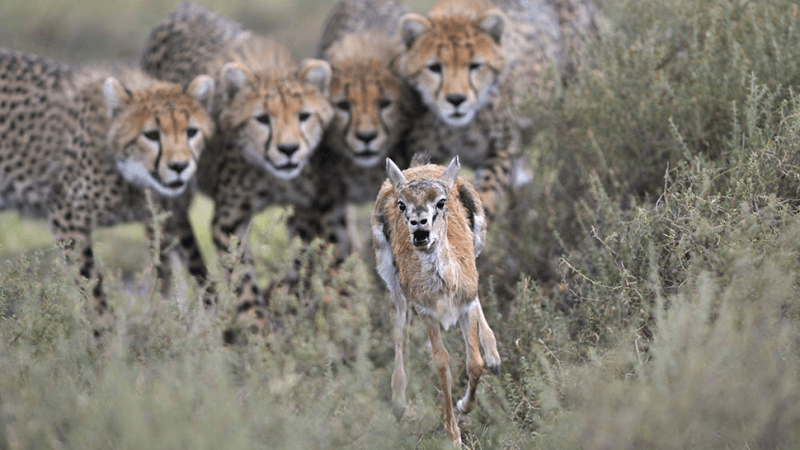
Hawks and owls eat the same type of food and struggle with one another to get their food. What is this an example of?
Competition
Biotic factor
Symbiosis
Population

Organism X feeds mainly on small fish, amphibians, and reptiles. With which organism is organism X most likely to compete?
Great blue heron
Mallard
Pied-billed grebe
Great egret

When the hare population increased, what happened to the lynx population?
It increased.
It decreased.
It stayed the same.


This diagram shows the variety of organisms that live in different tide zones. Mussels are common organisms that compete for space in intertidal (middle) tide zones. If all of the mussels were removed from zone A, which organisms would likely compete for the space in Zone A?
Periwinkle and Limpets
Sea lettuce and Chiton
Sea urchins and Hermit crabs
Rock louse and Periwinkle

