
 Worksheets
Mechanisms of Evolution 2022
Total questions: 32
Worksheet time: 25mins
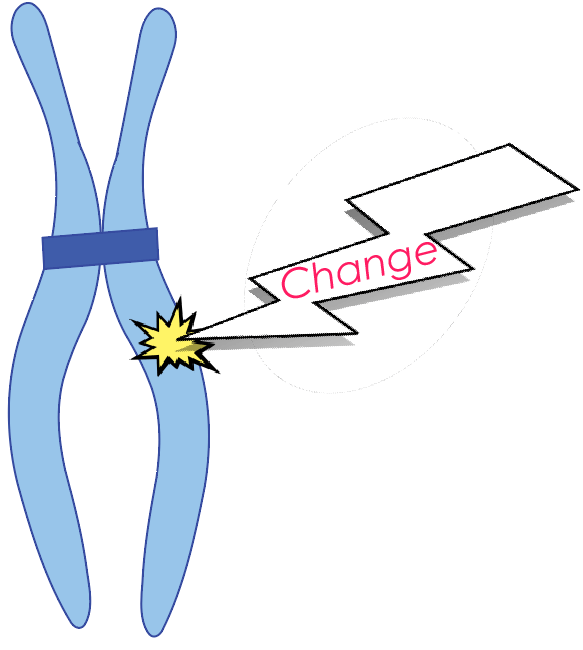
A change in a gene, group of genes or chromosome that results in a change in the proteins
Replication
Mutations
Translation
Transcription
Genetic drift is driven by chance, not Natural Selection.
true
false

A forest fire ignites in the Sam Houston State Forest and kills many members of a population of pigmy rattlesnakes.
Gene Flow
Genetic Drift
Genetic Diversity is increased through this process.
Gene Flow
Genetic Drift
New traits usually occur due to:
Random genetic mutations
An organism adapting
Effects from the environment
If a new trait DOES help an organism survive, what may happen to it?
It dies and its DNA is not passed on
It survives and its DNA is passed on
It changes its traits to adapt and survive
What is natural selection?
When reproduction occurs and mutations happen.
When a offspring has the traits from its parents.
When an organism is able to camoflauge in its environment.
the process whereby organisms that are better adapted to their environment tend to survive and reproduce more offspring.
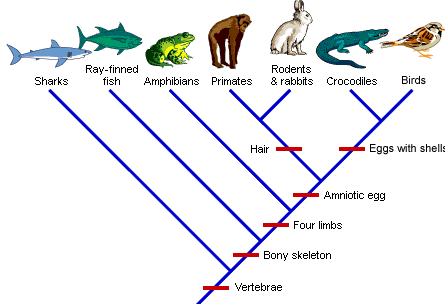
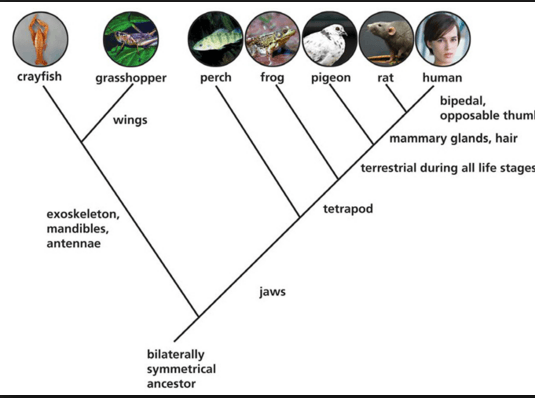

Which species is most closely related to species C?
A
B
D

Which letter represents the most recent common ancestor of sponges and mushrooms?
A
B
C
D
E
Natural selection acts on
phenotype
genotype
gene expression
reproduction
Which of the following best explains convergent evolution?
different selective pressures result in similar phenotypic adaptations in different populations or species
similar selective pressures result in similar phenotypic adaptations in different populations or species
similar selective pressures result in different phenotypic adaptations in a population or species
different selective pressures result in similar phenotypic adaptations in a populations or species
Which of the following does provides evidence for evolution and common ancestry?
analogous structures
homologous structures
Which type of data provides the most accurate and reliable evidence to construct phylogenetic trees or cladograms?
morphological
molecular
biogeographical
temporal
Which of the following types of reproductive barriers involves inhibiting reproduction due to a different mating seasons?
behavioral
temporal
gametic
ecological
Which of the following types of reproductive barriers involves inhibiting reproduction due to a difference in mating rituals?
behavioral
temporal
gametic
ecological

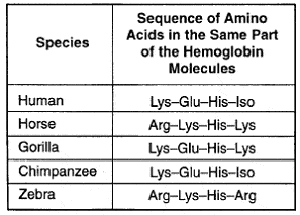
What type of evidence is represented in the picture above:
Fossils
Vestigial Structures
DNA
Homologous Structures
A category of structures that have a similar function, but are structurally different.
Homologous structures
Analogous structures
Vestigial structures
Common core structures

What type of structure does this image illustrate?
Homologous structures
Analogous structures
Vestigial structures
A type of structure that is physically present, but does not seem to serve a significant function for an organism.
Homologous structure
Analogous structure
Vestigial structure
Standard structure
The process of convergent evolution can help explain
Why there are so many different types of animals
Why distantly related species are sometimes very similar
How some animals become so aggressive
How some animals become extinct

The three species pictured do not share a common ancestor, yet have evolved to have a similar anatomy and life style. This is an example of ?
Homologous Structures
Divergent Evolution
Vestigial Organs
Convergent Evolution

The three species pictured share a common ancestor and have adapted so that each lives in a different environment. This is an example of
Law of Superposition
Evolutionary Arms Race
Divergent Evolution
Convergent Evolution

Two species living in similar environments, but a very long distance away look very similar. However, that are not closely related (analogous). Their resemblance is most likely an example of.
sexual selection
temporal isolation
convergent evolution
divergent evolution
Analyze the answer choices below. Choose all of the answer choices that describe Divergent Evolution.
Organisms have similar internal structures
Organisms share a common ancestor
Organisms have to live in similar types of environments
Homologous structures support Divergent Evolution


