
 Worksheets
Cyber Security Nova labs
Total questions: 23
Worksheet time: 14mins
What is a network in this video?
interconnected computers or devices
A super computer
A computer vulnerability
An Internet service provider
All of the above
Why are cyber vulnerabilities unlikely to ever go away?
The government won’t allow people to fix them.
Criminals need them to steal identities.
They are side effects of the freedom and ease of communicating online.
They’re protected in a secret base on the moon.

What did the identity-theft crime ring use Tim’s photo for?
To create a Tim-like disguise
To make a counterfeit passport
They sent it in spam emails to Tim’s friends
To figure out Tim’s address

Why do hackers hack?
To make discoveries
To protect information
To steal information and money
To expose corruption
All of the above
Which of these is not a hack?
Using a bicycle to power a computer
Stealing an unlocked bicycle
Building a working bicycle out of discarded umbrellas
Creating a kinetic bicycle sculpture
Which of these is regularly used for secure online communication?
Caesar cipher
Public-key cryptography
Morse code
Enigma code
How can you tell if a website encrypts its traffic?
Google it.
Look for the lock symbol in a URL.
All websites encrypt their traffic.
Encrypted sites take longer to load.
What can you trust to be secure 100 percent of the time?
Text messages
Emails
Browser history
Apps
None of these

what is a computer virus?
it will give your computer a common cold
covid 19 that gets people sick
executable program that gets installed unintentionally and harms your computer
a program that makes your computer run faster

Once a computer virus is installed, it can...
steal your information
control programs
delete all your information
allow someone else to control your computer
all of the above
DDOS stands for
Discover Do Operate Service
botnet virus
Distributed Denial of Service
Double Detection of Smallware

A phishing scam is when...
a link that will get you to change your password
when you get what seems like a trustworthy email by asking you to click email and takes you to a fake website.
when you click on a link and get free monies
when you go to salt lake park and look for fishes.

90% of the time a system gets hacked......
it was a super virus that cannot be detected
your computer or device was not updated
there is a security bug
happens because of a simple mistake made by a human
The process of using codes to make readable information unreadable. Encrypted information cannot be read until it is decrypted using a secret key.
Botnet
Doxnet
Encryption
Firewall

Consists of code written in a programming language that instructs computers to perform specific tasks.
Server
Malware
Software
Phishing

Computer programs that can block, detect, and remove viruses and other malware.
Antivirus software
Firewall
software patch
ransomeware
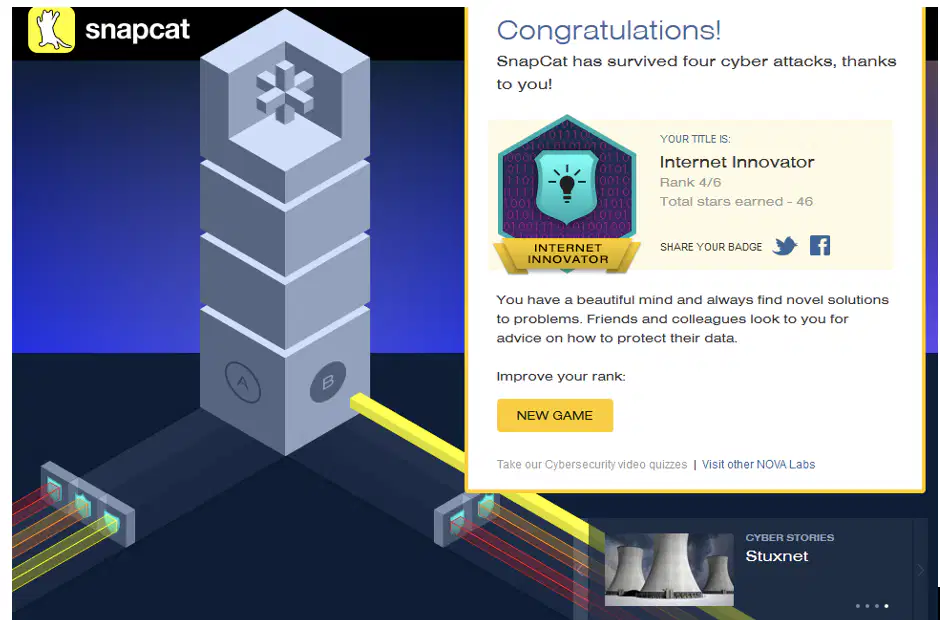
A fictional virus modeled after the Stuxnet virus. Like Stuxnet, (a) is able to damage physical infrastructure.
A computer or computer program that provides specific services on a network, such as an email server that directs emails and a web server that serves up web pages.
usb drive
software
software patch
server
A piece of software designed to update a computer program in order to fix a software vulnerability or improve the program.
software patch
software
phishing
DDos
Software that harms computers, networks, or people. Includes viruses, worms, ransomware, and other computer programs.
(a)
Multiple computers on a network that are infected with a program that can be controlled remotely. The infected computers are usually used to cause damage that couldn’t be achieved with a single computer
Bot/Botnet
DDos
Phishing
Malware
A type of malware that holds victims’ computer files hostage by locking access to them or encrypting them. It then demands a ransom if the victim wants his or her files back.
(a)

A program that records every key struck on a keyboard and sends that information to an attacker.
(a)

