wayground logo

Free Printable Worksheets

Font size

S
M
L
XL
Worksheets

Movement of substances

Total questions: 13

Worksheet time: 8mins

Name
Class
Date
1.

Diffusion is the movement of molecules from an area of _____ concentration to an ______ concentration

a)

High, low

b)

Low, high

c)

Low, low

d)

High, high

2.
If there is more oxygen in the blood than in an organ, which direction would the oxygen move?
a)
Out of the blood
b)
Into the blood
3.

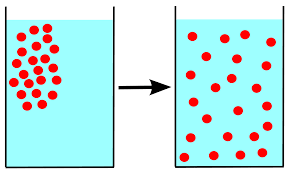
The picture below is an example of _________________.

a)

osmosis

b)

isotonic

c)

diffusion

d)

active transport

4.

An example of diffusion is

a)

CO2 and O2 exchange in the lungs

b)

Glucose transport

c)

Na+ / K+ Pumps

d)

Exocytosis

5.
Osmosis is the movement of _____ across a membrane.
a)
food
b)
energy
c)
oxygen
d)
water
6.
Permeable means
a)
things can pass through
b)
the concentration levels are different
c)
it is permanent
d)
things are stuck
7.
The picture is an example of...
a)
active tranport
b)
passive transport
c)
diffusion
d)
osmosis
8.
During osmosis
a)
water moves from high to low concentration
b)
large or oddly shaped molecules move across a cell membrane
c)

water moves from high to low water potential

d)
proteins are built
9.

Active transport is the movement of large materials across a cell membrane from ______ to ______ concentration

a)

high to low

b)

low to high

c)

high to high

d)

low to low

10.

Which factor(s) affect the rate of diffusion?

a)

Concentration gradient

b)

SA:V ratio

c)

Diffusion distance

d)

Temperature

11.
Which is true about active transport?
a)
It requires energy
b)
it does not require energy
c)
It moves substances down the concentration gradient
d)
it moves material from high to low concentration
12.
Which process uses proteins to move molecules against a concentration gradient?
a)
active transport
b)
endocytosis
c)
passive transport
d)
phagocytosis
13.

The process that moves oxygen across the cell membrane into the cell is called.....

a)

diffusion

b)

osmosis

c)

active transport

d)

phagocytosis