
 Worksheets
FINAL Review (Principles of Health Science) 2022
Total questions: 194
Worksheet time: 2hrs 51mins
1. larynx
2. nasal cavity
3. pharynx
4. trachea
Which of the following is the correct order that air would flow during inhalation.
When air is pushed OUT of the lungs, what is the correct order for the tubes it passes through?
bronchiole -> bronchi -> trachea -> nose
bronchi -> bronchiole -> trachea -> nose
trachea-> bronchi -> bronchiole-> nose
The left lung has how many lobes?
1
2
3
4
What is the medical term for Adam's Apple?
Pharynx
Trachea
Larynx
Oral cavity
The heart and lungs are located in which body cavity?
Thoracic
Abdominal
Superior
Dorsal
During exhalation, the diaphragm contracts.
True
False
About what percentage of lung cancer occurs because of smoking?
50
65
75
80
This genetic condition causes thick mucus buildup and can be tested by obtaining the patient's sweat.
Emphysema
Pneumonia
Cystic Fibrosis
Chronic Obstructive Pulmonary Disease
Condition that causes an infection due to fluid or pus buildup in the alveoli.
Cystic Fibrosis
Pneumonia
Emphysema
Chronic Obstructive Pulmonary Disease
Mucus-lined cavities in the bones in the face.
Paranasal sinuses
Oral sinuses
Oral cavity
Nose
The absence of breathing:
Apnea
Hypoxia
Sublingual
Malignant
Between the ribs:
Intercostal
Sublingual
Hypoxia
Apnea
The term malignant means:
Low oxygen
Beneath the tongue
Cancerous
Absence of breathing
Condition in which the airways swell and develop excess mucus. Often causes a wheezing noise when inhaling or exhaling.
Asthma
Emphysema
Lung cancer
COPD
COPD stands for:
Chronic Obstructive Pulmonary Disease
Chronic Occluded Pulmonary Disease
Cancerous Obstructive Pulmonary Disease
The following are the functions of the nasal cavity, except:
Warms and humidifies the inspired air.
Responsible for sense of smell.
Removes and traps pathogens and particulate matter from the inspired air.
Responsible in the transport of oxygen to the blood
When a particle enters your respiratory system, what is the initial reaction of your body to expel the foreign substance?
sneezing and coughing
sleeping
increase of blood pressure
decrease in hormones
The cardiac notch is located in the:
right lung
left lung
heart
Our pharynx is also known as our:
voice box
throat
windpipe
trachea
What attaches our trachea to our lungs?
Bronchioles
Bronchi
Pharynx
Larynx
From wrist to fingertip, what is the order of bones?
Carpals, metacarpals, phalanges
Phalanges, metacarpals, carpals
Carpals, phalanges, metacarpals
Metacarpals, carpals, phalanges

Which of the following is not a function of bones?
Protection
Blood cell formation
Storage
Absorption
What are the bones that protect your heart and lungs? (More than one answer.)


Long bones have a _____ that makes up most of bone's length and is composed of compact bone
epiphyseal plate
yellow marrow
diaphysis
articular cartilage
Which of the following bones is NOT part of the axial skeleton?
clavicle
frontal
vertebrae
sternum
Yellow marrow functions to ______.
produce new bone cells
store calcium
store fat
produce calcium
Red bone marrow functions to
produce fat
produce blood cells
store cells
produce new bone cells
Which is the correct order of ribs from superior to inferior?
floating, true, false
true, false, floating
true, floating, false
false, floating, true
An example of a long bone is?
Spinal Cord
Wrist Bone
Thigh Bone
Sternum
What lines the medullary cavity and spaces of the spongy bone?
Periosteum
Epiphysis
Intramembranous
Endosteum
The axial skeleton consist of which bones? (More than one answer.)
Skull
Pelvis
Hands
Sternum
The appendicular skeleton is made up of which of the following bones?
Ribs
Vertebrae
Spine
Pelvis
Marrow is found within bones and produces: (more than one answer)
White blood cells
Red blood cells
Endosteum
Periosteum
Porous means that bones become:
Strong
Flexible
Brittle
Porous
The word extremities refers to:
Arms
Legs
Spine
Thoracic
Which part of your vertebral column goes between the cervical and lumber spine?
Coccyx
Sacrum
Thoracic
Cervical
The shoulder joint is considered a/an:
synovial joint
immovable joint
slightly movable joint
fixed joint
The medullary cavity is located in the:
periosteum
endosteum
diaphysis
endophysis
What are the functions of our skeletal system? (More than one answer.)
Attachment for muscles
produce blood cells
provides support for our body
to handle fractures
Which is considered a flat bone?
radius
tibia
skull
ulna
The medical term for your cheek is:
nasal
maxilla
zygomatic
mandible
The medical term for your jaw is:
Mandible
Maxilla
Zygomatic
temporal
The clavicle and scapula are a part of the:
lower extremities
Shoulder girdle
shin bone
pelvic girdle
Our radius is on the:
lateral side
medial side
superior side
inferior side
What is the correct order of bones in our hand going from proximal to distal end:
Carpals, Metacarpals, Phalanges
Metacarpals, Carpals, Phalanges
Carpals, Phalanges, Metacarpals
Metacarpals, Phalanges, Carpals
Our fingers are also known as:
Carpals
Metacarpals
Phalanges
Tarsals
The largest bone in our body is the:
Humerus
Femur
Sternum
Ribs
The term for when the bone is broken, without external wound, also known as a closed fracture:
Compound
Simple
Comminuted
Impacted
The term for when a bone is broken, skin and soft tissue torn, increases chance of infection:
Compound
Simple
Comminuted
Spiral
An increase in the curvature of the spine resulting in a hunchbacked appearance:
Lordosis
Kyphosis
Scoliosis
Sprain
The exaggerated inward curvature in the lumbar region of the spinal column:
Lordosis
Kyphosis
Spinal curve
Scoliosis
The inflammation of bones at joints:
Arthritis
Bursitis
Scoliosis
Lordosis

What muscle is highlighted in the picture?
Triceps
Biceps
Quads
Deltoids

What muscle is highlighted in the picture?
Triceps
Biceps
Quads
Deltoids

What muscle is highlighted?
Triceps
Biceps
Quads
Deltoids

What muscles is highlighted?
Deltoid
Trapezius
Tricep
Pectoralis

What muscle is highlighted?
Trapezius
Lats
Pectoralis
Deltoids

What muscle is highlighted?
Lats
Abdominals
Pectoralis
Quads

What muscle is highlighted?
Lats
Trapezius
Hamstrings
Calves

What muscle is highlighted?
Abdominals
Quads
Gluteus
Hamstring

What muscle is highlighted?
Hamstrings
Quads
Calves
Gluteus

What muscle is highlighted?
Hamstrings
Quads
Calves
Gluteus
What system does the muscular system work in conjunction with to allow our body to move?
Digestive
Respiratory
Skeletal
Circulatory
Muscles compromise ______ of the mass of the average human body.
30%
40%
50%
60%
The protein _______ makes up thick filaments.
Myosin
Biotin
Actin
Calcium
The protein _______ makes up thin filaments.
Myosin
Actin
Calcium
Biotin
This connect muscles to bones:
Tendons
Ligaments
Joints
Muslces
Skeletal muscle is also called:
Striated
Smooth
Visceral
Skeleti
Striated muscle is involuntary.
True
False
Smooth muscle is also called:
Visceral
Skeletal
Striated
Skeleti
Visceral muscle is involuntary.
True
False
Moving a body part towards our body is called:
Rotation
Adbduction
Adduction
Flexion
Moving a body part away from the body is called:
Adduction
Abduction
Rotation
Extension
Increasing the angle of the muscle:
Extension
Flexion
Rotation
Adduction
Decreasing the angle of the muscle:
Flexion
Extension
Rotation
Adduction
Turning a body part on its axis:
Flexion
Extension
Rotation
Extension
Muscles do not contract because nerves controlling them are diseased or injured:
Paralysis
Dystrophy
Atrophy
Spasm
Decrease in muscle size due to disuse:
Atrophy
Dystrophy
Paralysis
Spasm
Progressive wasting and weakness of the muscles:
Atrophy
Dystrophy
Paralysis
Spasm
Sudden, violent and involuntary contraction of the muscle:
Atrophy
Paralysis
Spasm
Extension

What is this organ?
Liver
Kidney
Pancreas
Stomach

What is this organ (the one in red)?
Pancreas
Kidney
Liver
Stomach
What is the process of wave-like muscle contractions that moves food through the digestive tract?
Pericardium
Peristalsis
Pepsin
Pericoronitis
Where does absorption primarily take place?
Stomach
Small intestine
Large intestine
Gall bladder
What is the term given to a ball-like mixture of food and saliva that forms in the mouth?
Peristalsis
Mucus
Epiglottis
Bolus
What is the acidic fluid that passes from the stomach following churning?
Bolus
Chyme
Hydrochloric acid
Enzymes

What are these structures call that are found on the lining of the small intestine?
Gallbladder
Villi
Sphincter
Duodenum

Where does digestion begin?
Our teeth
Our stomach
The esophogus
Small intestines
Place the following events in sequence: A) Food enters your large intestines
B) Food enters your small intestines
C) Food enters your esophagus
A, B, C
C, B, A
C, A, B
B, A, C
What is the main function of villi?
They move food from the stomach to the small intestine
They absorb nutrients into the bloodstream
They absorb water from chyme
They move food from the small intestine to the large intestine

Which of the following answers correctly sequences the pathway food takes from the beginning to end?
mouth, esophagus, stomach, small intestine, large intestine
mouth, esophagus, stomach, large intestine, small intestine
mouth, stomach, esophagus, small intestine, large intestine
mouth, stomach, esophagus, large intestine, small intestine

Structure 16 is the
pancreas
salivary glands
larynx
esophagus
Structure 5 is the
pancreas
appendix
salivary gland
gall bladder
The tube through which food passes through the body is called the
alimentary canal
digestive system
intestines
esophagus
inter
difficult
Between
Within
Out,away
”a” mean?
Double
Both
Two
Without
bi
Without
Upon
Excessive
Two
Pre
Again
Out
Toward
Before
Poly
Many
Few
Above
Before
Neo
Birth
Death
Origin
New
Hyper
Below
After
Beyond
Excessive
itis
Excision
Condition
Abnormal reduction
Inflammation
Melan/o
Death
Disease
Black
Dissolution
Which of these word roots indicates lungs?
“laryng”
“pharyng”
“sinus”
“pneum”
What does the word root encephal refer to?
“Spinal cord”
“Brain”
“Nerve”
“Mouth”
What does the word root gastr refer to?
“large intestine”
“small intestine”
“kidneys”
“stomach”
Which of these suffixes indicates a surgical removal?
“-ectomy”
“-emia”
“-genic”
“-gram”
What does the prefix hypo- refer to?
“Over”
“Under”
“Between”
“Equal”
Which of these cavities contains the brain?
“Cranial”
“Spinal”
“Thoracic”
“Abdominal”
“Pelvic”
-otomy
examining instrument
suture of, sewing up of
cutting into
rupture of, bursting
Craniotomy
cutting into the face
cutting into the skull
cutting into the head
cutting into the brain
Hypodermic
pertaining to (area) away from the skin
pertaining to (area) near the skin
pertaining to (area) below the skin
pertaining to (area) above the skin
A patient suffering with gastritis would experience...
Inflammation of the liver
Inflammation of the stomach
muscular pain
all of the above
appendectomy is the surgical _____ of the appendix.
cutting
crushing
repair
removal
Osteoporosis is the abnormal porous structure of the ________.
bone
skin
heart
kidney


According to the CDC, how long should you wash your hands?
10 seconds
20 seconds
1 minute
Until the suds come off
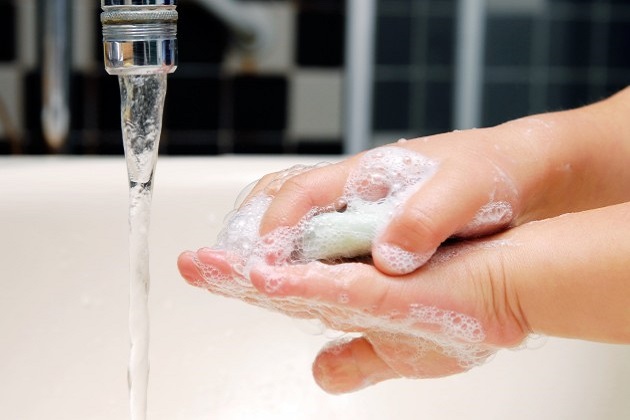
When should you wash your hands with soap and water?
When your hands are visibly dirty
Before and after eating
After using the restroom
All of the above

True or False: Hot water is more effective than cold water when washing your hands
True
False

What is the easiest and most important way to prevent the spread of infection?
Hand washing
Wearing gloves
Covering your nose when you cough or sneeze
Wearing a gown and a mask

Which of the following is NOT one of the most missed areas when washing your hands?
Backs of hands
Between the fingers
Knuckles
Sides of the hands
Palms
What song can you use to wash your hands for the right amount of time?
Yankee Doodle
We wish you a Merry Christmas
The National Anthem
The Happy Birthday song
______________ disorders are illnesses that affect the mind and reduces a person's ability to function
Social
Eating
Mental
Physical
Mental illness interferes with a person's
occupation
social and family relationships
daily tasks
all of the above
Who can get mental illness?
anyone
young children
adults
elderly
What is the factor that influences personality?
Personal behavior
Environment
Genetics
All of the above
Which of the following can help develop a positive self-esteem?
Not expecting yourself to be perfect
Practicing positive self-talk
Volunteering to help others
All of the above
Your physical, emotional, and mental health are all related and make up your overall health
True
False
People with mental illness are able to work.
True
False
People with mental illness are usually violent and unpredictable
True
False
What are denial, anger, bargaining, depression and acceptance associated with?
Stress management
Time management skills
Stages of grief
Feelings of well-being
Which of the following is an appropriate way to relieve stress?
Violent behavior
Yoga or meditation
Smoking
Ignoring the problem
Which is NOT a warning sign of suicide?
Giving away one’s possessions
Loss of interest in hobbies, sports, job, or school
Social media posts about death
Volunteering for community service

What is C pointing to?
Larynx
Pharynx
esophagus
trachea

What is D pointing to?
esophagus
trachea
bronchus
alveoli

What is E pointing to?
trachea
alveoli
bronchioles
bronchial tube or bronchus

What is G pointing to?
bronchioles
bronchus
alveoli
pleura

What is H pointing to?
alveoli
bronchioles
bronchus
pleura

What is I pointing to?
Bronchioles
alveoli
diaphragm
pleura
Shared passageway for food and air
bronchus
esophagus
pharynx
larynx

Another term for mechanical breakdown is: (more than once correct answer)
mastication
chewing
biting
swallowing
The pyloric sphincter is a ringlike ________ found at the far end of the stomach.
muscle
bone
ring
tendon
Saliva produces an enzyme called ______ to assist with breakdown.
Amylase
Chyme
Bile
Heparin
The liver produces _______ which prevents blood from clotting.
Insulin
Amylase
Heparin
Chyme
The pancreas produces _______ which regulates blood sugar.
Heparin
Insulin
Glucose
Amylase


This picture shows an example of:
Scoliosis
Kyphosis
Lordosis

This pictures shows an example of:
Scoliosis
Lordosis
Kyphosis

This picture shows an example of:
Kyphosis
Lordosis
Scoliosis

"B" is called _______
superior vena cava
inferior vena cava
right atrium
pulmonary valve

"D" is called ________
Tricuspid valve
Mitral valve
Pulmonary valve
Aortic Valve

"G" is called ______
Pulmonary artery
Pulmonary veins
Aortic valve
Aorta

"I" is called _______
Left atrium
Right atrium
Left ventricle
Right ventricle

"J" is called ________
Mitral valve
Tricuspid valve
Aortic valve
Pulmonary valve

"M" is called _________
Aorta
Pulmonary artery
Pulmonary veins
Superior vena cava
foot or child
pre
ped
myo
hemo
slow
melan
osteo
brady
micro
joint
arthro
cerebro
cardio
gastro
bad
mal
melan
cyan
poly
tumor
poly
lip
sub
onc
swelling
enter
edema
emesis
pneumo
surgical removal
-ectomy
-pathy
edema
cerebro
bone
inter
enter
arthro
osteo

