wayground logo

Free Printable Worksheets

Font size

S
M
L
XL
Worksheets

8th Review (Vocab/Rules/Formula)

Total questions: 160

Worksheet time: 6hrs 37mins
Name
Class
Date
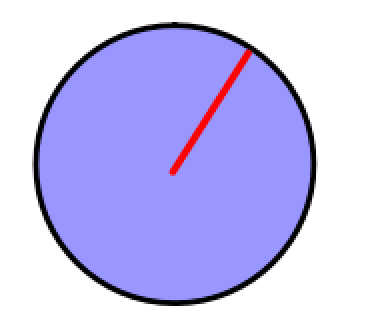
1.
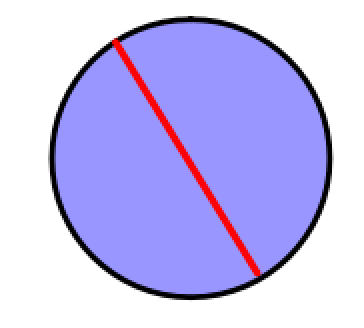
Is the red line a radius or diameter of the circle?
a)
Radius
b)
Diameter
2.
Is the red line a radius or diameter of the circle?
a)
Radius
b)
Diameter
3.
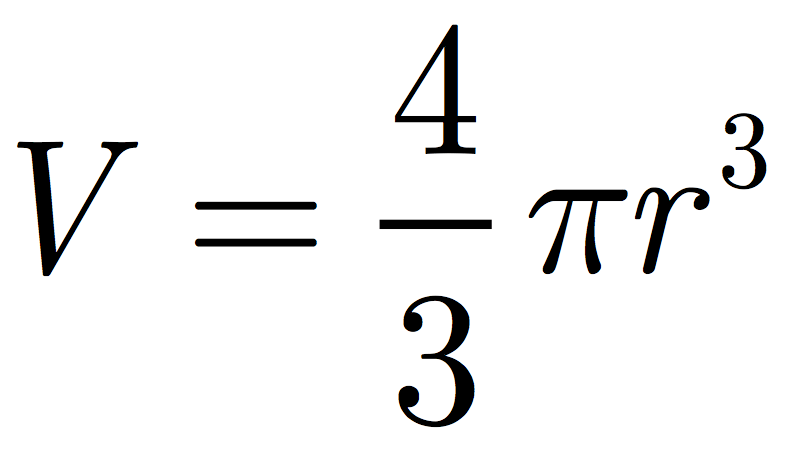
The formula for the Volume of ...
a)
Spheres
b)
Cones
c)
Cylinders
4.
The formula for the Volume of ...
a)
Cylinders
b)
Spheres
c)
Cones
5.
The formula for the Volume of ...
a)
Cylinder
b)
Cone
c)
Sphere
6.
Choir is selling Pringle Chips to raise money for a field trip. The container has a diameter of 9 inches and a height of 32 inches

Which equation can be used to find the volume of the container?
a)
V = π(9)
b)
V = π(4.5)2(32)
c)
V = π(9)2(32)
d)
V = π(4.5)(32)
7.

Which equation can be used to find the volume?

a)

π(4)\pi\left(4\right)  

b)

π(42)7\pi\left(4^2\right)7  

c)

97.5 in3 π(22)7\pi\left(2^2\right)7  

d)

π(72)2\pi\left(7^2\right)\cdot2  

8.

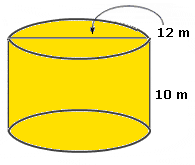
Which equation can be used to find the volume of the cylinder?

a)

π(6)\pi\left(6\right)  

b)

π(62)10\pi\left(6^2\right)\cdot10  

c)

π610\pi\cdot6\cdot10  

d)

π12210\pi\cdot12^2\cdot10  

9.
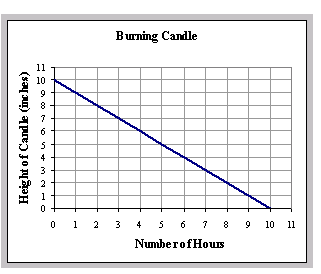
What type of slope does the following graph have?
a)
Postive
b)
Negative
c)
Zero Slope
d)
Undefined
10.
In the equation y=mx+b, what does the m represent?
a)
slope
b)
y-intercept
c)
linear
d)
point-slope
11.
What is the slope in the equation y=2x + 3?
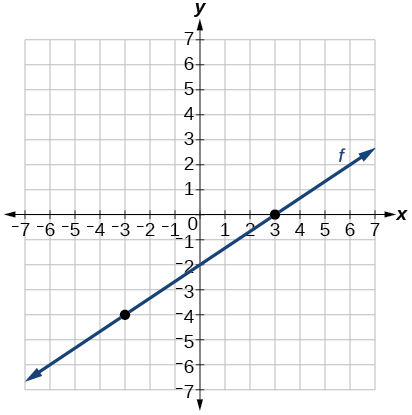
a)
2
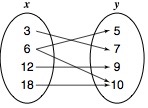
b)
3
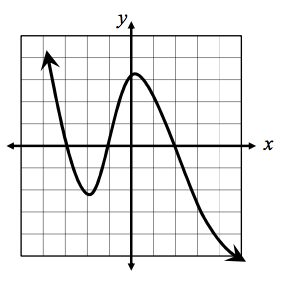
c)
5
d)
Cannot be Determined 
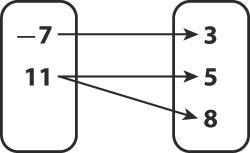
12.

What does 'b" represent in y=mx+b

a)

y-intercept

b)

macaroni

c)

nothing

d)

slope

13.

What is the formula for volume of a cylinder?

a)

V = πr2hV\ =\ \pi r^2h

b)

V = 13πr2hV\ =\ \frac{1}{3}\pi r^2h

c)

V = 2πrh + 2πr2V\ =\ 2\pi rh\ +\ 2\pi r^2

d)

V = 43πr3V\ =\ \frac{4}{3}\pi r^3

14.

What is the formula for volume of a sphere?

a)

V = πr2hV\ =\ \pi r^2h

b)

V = 13πr2hV\ =\ \frac{1}{3}\pi r^2h

c)

V = 2πrh + 2πr2V\ =\ 2\pi rh\ +\ 2\pi r^2

d)

V = 43πr3V\ =\ \frac{4}{3}\pi r^3

15.

What is the formula for volume of a cone?

a)

V = πr2hV\ =\ \pi r^2h

b)

V = 13πr2hV\ =\ \frac{1}{3}\pi r^2h

c)

V = 2πrh + 2πr2V\ =\ 2\pi rh\ +\ 2\pi r^2

d)

V = 43πr3V\ =\ \frac{4}{3}\pi r^3

16.

What is the formula for total surface area of a cylinder?

a)

V = πr2hV\ =\ \pi r^2h

b)

S = 2πrhS\ =\ 2\pi rh

c)

S = 2πrh + 2πr2S\ =\ 2\pi rh\ +\ 2\pi r^2

d)

V = 43πr3V\ =\ \frac{4}{3}\pi r^3

17.

What is slope-intercept form?

a)

y = mx+by\ =\ mx+b

b)

m=y2  y1x2  x1m=\frac{y_{2\ }-\ y_1}{x_{2\ }-\ x_1}

c)

y = kxy\ =\ kx

d)

I = PrtI\ =\ \Pr t

18.

What is the equation to find slope of a line?

a)

y = mx+by\ =\ mx+b

b)

m=y2  y1x2  x1m=\frac{y_{2\ }-\ y_1}{x_{2\ }-\ x_1}

c)

y = kxy\ =\ kx

d)

I = PrtI\ =\ \Pr t

19.

What is the formula for compound interest?

a)

I = Prt I\ =\ \Pr t\

b)

A = P(1+r)tA\ =\ P\left(1+r\right)^t

c)

a2 +b2 = c2a^2\ +b^2\ =\ c^2

d)

y = mx+by\ =\ mx+b

20.

What is the formula for simple interest?

a)

I = Prt I\ =\ \Pr t\

b)

A = P(1+r)tA\ =\ P\left(1+r\right)^t

c)

a2 +b2 = c2a^2\ +b^2\ =\ c^2

d)

y = mx+by\ =\ mx+b

21.

What is the formula for Pythagorean theorem?

a)

I = Prt I\ =\ \Pr t\

b)

A = P(1+r)tA\ =\ P\left(1+r\right)^t

c)

a2 +b2 = c2a^2\ +b^2\ =\ c^2

d)

y = mx+by\ =\ mx+b

22.

What is the formula for lateral surface area of a cylinder?

a)

V = πr2hV\ =\ \pi r^2h

b)

S = 2πrhS\ =\ 2\pi rh

c)

S = 2πrh + 2πr2S\ =\ 2\pi rh\ +\ 2\pi r^2

d)

V = 43πr3V\ =\ \frac{4}{3}\pi r^3

23.

What is the formula you would use to solve for side C?

a)

I = Prt I\ =\ \Pr t\

b)

A = P(1+r)tA\ =\ P\left(1+r\right)^t

c)

a2 +b2 = c2a^2\ +b^2\ =\ c^2

d)

y = mx+by\ =\ mx+b

24.

Place numbers in order from greatest to least.

a)

2.2, √5, 81%, 1/12, -2.02

b)

√5, 2.2, 1/12, 81% -2.02

c)

√5, 2.2, 81%, 1/12, -2.02

d)

2.2, 81%, √5, 1/12, -2.02

25.
a)
Point M
b)
Point N
c)
Point P
d)
Point Q
26.
Between which two whole numbers is the
√5?
a)
1 and 2
b)
2 and 3
c)
3 and 4
d)
4 and 5
27.
Point B could represent which of the following numbers?
a)
√24
b)
√30
c)
√35
d)
√42
28.
The √40 is between which two integers?
a)
7 & 8
b)
6 & 7
c)
5 & 6
d)
4 & 5
29.
Find the length of the missing side. 
a)
17 cm
b)
22 cm
c)
15 cm
d)
13 cm
30.
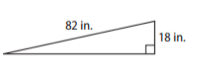
Find the length of the missing side. 
a)
20 in.
b)
68 in.
c)
16 in.
d)
80 in.
31.
What is the longest side of a right triangle called?
a)
Leg A
b)
Leg B
c)
Hypotenuse
d)
Pythagoras' Big Buddy
32.
Find the missing side
a)
36
b)
76.8
c)
12
d)
40
33.
The Pythagorean Theorem ONLY works on which triangle? 
a)
obtuse
b)
scalene
c)
isosceles
d)
right
34.

Sides a and b are called legs.

a)

true

b)

false

35.

Side c on a right triangle is ALWAYS the longest.

a)

true

b)

false

36.
Which of the following sentences would belong in the proof that describes this image?
a)
The sum of the areas of the two smaller squares is equal to the area of the large square.
b)
The sum of the side lengths of the two smaller squares is equal to the side length of the large square.
c)
The difference of the areas of the two smaller squares is equal to the area of the large square.
d)
The differences of the side lengths of the two smaller squares is equal to the side length of the large square.
37.

Hypotenuse

a)

Vertical side in a right triangle

b)

Longest side in a right triangle

c)

Horizontal side in a right triangle

d)

a2 + b2 = c2

38.
A slide is also called a _________.
a)
Translation
b)
Reflection
c)
Rotation
d)
Transformation
39.
A turn is also called a ___________.
a)
Translation
b)
Reflection
c)
Rotation
d)
Transformation
40.
When you translate, (x-4,y) will move _____.
a)
4 units right
b)
4 units left
c)
4 units up
d)
4 units down
41.
When you translate
(x-2 , y + 6) the figure will move _____.
a)
2 units right and 6 units right
b)
2 units left and 6 units down
c)
2 units left and 6 units up
d)
2 units left 6 units right
42.
How do you represent a translation Algebraically? 
a)
(-y, -x)
b)
(x + a, y + b)
c)
(-x , -y)
d)
(ax, by)
43.
What does a translation do to an image?
a)
Turns it 90* clockwise
b)
Mirrors it
c)
Shrinks it
d)
Slides it
44.
When you translate,
(x - 4, y + 3) the figure will move _____.
a)
4 units left and 3 units right
b)
4 units left and 3 units up
c)
4 units down and 3 units up
d)
4 units down and 3 units down
45.
(x, y) -------> (x, -y) is a reflection over the x axis.       
a)
True
b)
False
46.
(x, y) -------> (x - 3, y) is a translation of 3 units to the left.   
a)
True
b)
False
47.
What color is the x-axis?
a)
red
b)
black
c)
green
d)
white
48.
What color is the y-axis?
a)
red
b)
black
c)
green
d)
white
49.
When you translate, (x,y+6) will move _____.
a)
6 units right
b)
6 units left
c)
6 units up
d)
6 units down
50.

(x,y) becomes (-x,y)

a)

Reflections over y-axis

b)

Reflections over x-axis

c)

Rotation of 90 CW

d)

Rotation of 180

51.

(x,y) becomes (-y,-x)

a)

Rotation of 180

b)

Rotation of 90 CCW

c)

Reflection over y=-x

d)

Reflection over x-axis

52.

(x,y) becomes (-x,-y)

a)

Reflection over y=x

b)

Reflection over y=-x

c)

Rotation of 90 CW

d)

Rotation of 180

53.

(x,y) becomes (-y,x)

a)

Rotation of 270 CW

b)

Rotation of 90 CW

c)

Reflection over y=-x

d)

Reflection over y-axis

54.

(x,y) becomes (x+3,y)

a)

Translated up 3

b)

Translated Left 3

c)

Translated Right 3

d)

Dilated by 3

55.

(x,y) becomes (x,y+3)

a)

Translated up 3

b)

Translated Left 3

c)

Translated Right 3

d)

Dilated by 3

56.

(x,y) becomes (3x,3y)

a)

Translated up 3

b)

Translated Left 3

c)

Translated Right 3

d)

Dilated by 3

57.
What transformation is happening?
(x, y) ----> (x + 2, y - 3) 
a)
slide up 2, left 3
b)
slide right 2, up 3
c)
slide right 2, down 3
d)
slide left 3, right 2
58.
When a dilation has a scale factor greater than one, the dilation is an enlargement.
a)
True
b)
False
59.
When the scale factor of a dilation is less than one, the dilation is a reduction.
a)
True
b)
False
60.

A dilation produces a congruent figure

a)

True

b)

False

61.
How do you write the algebraic notation when the scale factor is 3?
a)
(x, y) goes to (1/3x, 1/3y)
b)
(x, y) goes to (-3x, -3y)
c)
(x, y) goes to (x + 3, y + 3)
d)
(x, y) goes to (3x, 3y)
62.
A dilation is which of the following: 
a)
An enlargement
b)
A reduction
c)
Either an enlargement or a reduction
d)
Neither an enlargement or a reduction
63.
If the scale factor is less than one, the new figure will be
a)
an enlargement
b)
a reduction
c)
a scale factor
d)
bigger
64.
If the scale factor is greater than one, the new figure will be
a)
a reduction
b)
an enlargement
c)
a scale
d)
not proportional
65.
Which of the following is the algebraic representation for a dilation?
a)
(x, y) → (x, 3y)
b)
(x, y) → (3x, 3y)
c)
(x, y) → (x, y - 3)
d)
(x, y) → (.5x, .4y)
66.
What is Dilation?
a)
Dilation means to enlarge or reduce
b)
Dilation means to reflect on something
c)
Dilation means to like something
d)
Dilation means to make something different by making it smaller
67.
A scale factor of less than one means
a)
that the image will be larger than the pre-image.
b)
That the image will be the same as the pre-image.
c)
That you need to subtract that amount off  of each side.
d)
That the image will be a reduction of the pre-image.
68.
(x, y) -> (2x, 2y) 
What is the coefficient 2 mean?
a)
plot 2 to the right and 2 up
b)
scale factor is 2 creating a new figure half the size
c)
scale factor is 2 making a figure twice the 
original
d)
I don't understand this question : ( 
69.
In a dilation what mathematical operation is used with the scale factor?
a)
addition 
b)
subtraction 
c)
multiplication 
d)
division 
70.
What is the rule for the dilation pictured below?
a)
(x, y) → (½x, ½y)
b)
(x, y) → (x + 2, y + 2)
c)
(x, y) → (2x , 2y)
d)
(x, y) → (2x, 3y)
71.

Which of the following algebraic rules represents an enlargement? Select all that apply.

a)

(x, y) --> (3x, 3y)

b)

(x, y) --> (0.5x, 0.5y)

c)

(x, y) --> (0.75x, 0.75y)

d)

(x, y) --> (0.999x, 0.999y)

e)

(x, y) --> (5x, 5y)

72.

Which of the following algebraic rules represents a reduction? Select all that apply.

a)

(x, y) --> (3x, 3y)

b)

(x, y) --> (0.5x, 0.5y)

c)

(x, y) --> (0.75x, 0.75y)

d)

(x, y) --> (0.999x, 0.999y)

e)

(x, y) --> (5x, 5y)

73.

Which of the following algebraic rules represents a dilation? Select all that apply.

a)

(x, y) --> (3x, 3y)

b)

(x, y) --> (3x, 2y)

c)

(x, y) --> (x - 3, y + 5)

d)

(x, y) --> (0.5x, 0.5y)

e)

(x, y) --> (3x, 0.5y)

74.

Triangle A’B’C’ is the dilation of triangle ABC.


Which algebraic representation shows this dilation?

a)

(x, y) --> (1/2x, 1/2y)

b)

(x, y) --> (2x, 2y)

c)

(x, y) --> (x + 1/2, y)

d)

(x, y) --> (1/2x, y)

75.

Triangle A’B’C’ is the dilation of triangle ABC.


Which algebraic representation shows this dilation?

a)

(x, y) --> (2x, 2y)

b)

(x, y) --> (1/3x, 1/3y)

c)

(x, y) --> (3x, 3y)

d)

(x, y) --> (x + 3, y - 3)

76.
The only transformation that does NOT keep all the sides and angles the same (congruence) is a ...
a)
Dilation
b)
Reflection
c)
Rotation
d)
Translation
77.
( x , y ) → ( 5x , 5y )
a)
Dilation
b)
Reflection
c)
Rotation
d)
Translation
78.
( x , y ) → ( x - 4 , y + 7 )
a)
Dilation
b)
Reflection
c)
Rotation
d)
Translation
79.
( x , y ) → ( ⅓x , ⅓y )
a)
Dilation
b)
Reflection
c)
Rotation
d)
Translation
80.
Translations move shapes
( x , y ) → ( x + 6 , y )
would move the shape
a)
Right only
b)
Left only
c)
Up only
d)
Down only
81.
Translations move shapes
( x , y ) → ( x , y + 3 )
would move the shape
a)
Right only
b)
Left only
c)
Up only
d)
Down only
82.
Translations move shapes
( x , y ) → ( x + 6 , y - 8 )
would move the shape
a)
Right and Down
b)
Left and Down
c)
Right and Up
d)
Left and Up
83.
Translations move shapes
( x , y ) → ( x - 5 , y - 9 )
would move the shape
a)
Right and Down
b)
Left and Down
c)
Right and Up
d)
Left and Up
84.
Which best describes the equation?
y = 75x
a)
Proportional
b)
Nonproportional
85.
Which best describes this equation?
y= 3.75x + 2
a)
Proportional 
b)
Non-proportional
86.
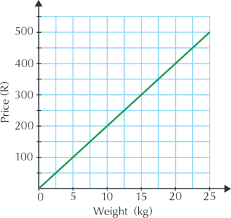
Does this graph represent a proportional relationship?
a)
Yes, because the line is pretty.
b)
No, because the line goes through the origin.
c)
Yes because the line goes through the origin.
d)
No, because the graph is non-proportional.
87.
The graph shows the water level as a bathtub fills.  Select the correct choice that describes this graph.
a)
The graph is linear and proportional.
b)
The graph is linear and non-proportional.
88.
Is the graph proportional or nonproportional?
a)
proportional
b)
non proportional
89.
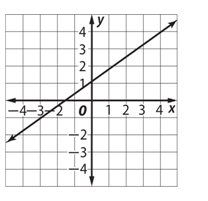
What is the y-intercept for the following graph and is it proportional or non-proportional?
a)
Proportional, b=1
b)
Proportional, b=-2
c)
Non-proportional, m= -1
d)
Non-proportional, b=1
90.

In the equation y= mx+b, what is m and b represents?

a)

m= slope, b = x-intercept

b)

m= slope, b= y-intercept

c)

m= y-intercept, b= slope

d)

m= x-intercept, b= slope

91.
Which equation shows a NON-proportional relationship of x and y?
a)
y = 5x
b)
y = 2.5x
c)
y = x + 3
d)
y = 1/2x
92.
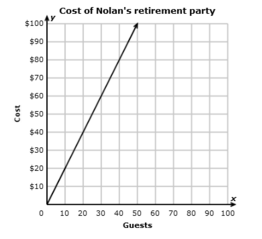
Does the graph show a proportional relationship?
a)
Yes
b)
No
93.
Is the graph proportional or non proportional?
a)
Proportional because it is a straight line and passes through the origin (0,0).
b)
Non-Proportional because it doesn't pass through the origin (0,0).
94.

Does this graph represent a linear relationship?

a)

Yes

b)

No

95.

Does this graph represent a linear or nonlinear relationship?

a)

Linear

b)

Nonlinear

96.

Does the graph pictured represent a linear or nonlinear relationship?

a)

Linear

b)

Nonlinear

97.

Does this graph represent a linear or nonlinear relationship?

a)

Linear

b)

Nonlinear

98.
Which graph is linear?
a)
Graph A
b)
Graph B
c)
Graph C
d)
Graph D
99.
Where do these two lines intersect?
a)
No solution
b)
(-2, 3)
c)
(3, -2)
d)
(2, 3)
100.
These two lines intersect at _____.
a)
(4, -2)
b)
(4, 2)
c)
(-2, 4) 
d)
No solution
101.

Is this graph linear or nonlinear?

a)

Linear

b)

nonlinear

102.

Is this graph linear?

a)

Linear

b)

Nonlinear

103.

What is the y intercept of this graph?

a)

4

b)

-2

104.

Does the graph represent a linear function, a non-linear function, or is it not a function?

a)

Linear Function

b)

Non-Linear Function

c)

Not a Function

105.
Is this mapping a function or not a function? 
a)
Function
b)
Not a Function
106.
Is this set of ordered pairs a function or not a function? 
a)
Function
b)
Not a Function 
107.
Is this graph a function or not a function? 
a)
Function 
b)
Not a Function
108.
Is this mapping a function or not a function? 
a)
Function
b)
Not a Function 
109.
a)
Function
b)
Not a Function
110.
Is this mapping a function or not a function? 
a)
Function
b)
Not a Function
111.
Is the relation a function? Why.
a)
Yes, because the x-value 11 has two y-values pair with it.
b)
Yes, because each x-value has only one y-value paired with it.
c)
No, because the x-value 11 has two y-values pair with it.
d)
No, because each x-value has only one y-value paired with it.
112.
a)
Function
b)
Not a Function
113.
a)
Function
b)
Not a Function
114.
a)
Function
b)
Not a Function
115.
a)
Function
b)
Not a Function
116.
a)
Function
b)
Not a Function
117.

Is it a function?

a)

It IS a function.

b)

It IS NOT a function

118.

Is it a function?

a)

It IS a function.

b)

It IS NOT a function

119.

Is it a function?

a)

It IS a function.

b)

It IS NOT a function

120.
Is this mapping a function and how can you tell?
a)
Yes its a function cause all the numbers have lines
b)
No it's not a function because there a 5 in both ovals
c)
No it's not a function because the x value 5 has y values of  2 & 9
d)
No it's not a function because the y value 5 has x values of  2 & 9
121.

What is the test to determine if a graph represents a function?

a)

Horizontal line test

b)

Vertical line test

c)

Heidelberg Uncertainty Test

d)

Obi Wan Kenobi Test

122.
In order to be a function the following must be true.
a)
each x value has only one y value
b)
each y value has only one x value
c)
each x  has only one y & each y has only one x 
d)
each x and y are equal
123.
Which graph does NOT pass the vertical line test?
a)
Graph 1
b)
Graph 2
c)
Graph 3
d)
Graph 4
124.
a)
It is a function because no vertical lines hit it twice.
b)
It's not a function because a vertical line hits it twice.
c)
It's not a function because no vertical lines hit it twice.
d)
It is a function because a vertical line hits it twice.
125.
Change from standard form to scientific notation: 12,000,000
a)
12.0  x  107
b)
0.12  x  107
c)
1.2  x  106
d)
1.2  x  107
126.
Change from standard form to scientific notation:  450,000
a)
4.5  x  105
b)
45  x  105
c)
4.5  x  104
d)
4.5  x  106
127.
Change from standard form to scientific notation:  0.000398
a)
39.8  x  10-5
b)
3.98  x  10-5
c)
3.98  x  10-4
d)
39.8  x  10-6
128.
Change from standard form to scientific notation: 0.004078
a)
4.078  x  10-3
b)
4.078  x  103
c)
40.78  x  10-4
d)
.4078  x  10-2
129.
Try to change the number back to standard form:  6.79  x  104
a)
679,000
b)
6,790
c)
67,900
d)
6,790,000
130.
Try to change the number back to standard form: 3.97  x  10-2
a)
0.000397
b)
0.0397
c)
0.0000397
d)
0.397
131.
The factor multiplied by a power of 10 in scientific notation needs to be greater than or equal to one but less than ___________?
a)
1
b)
10
c)
100
d)
1,000
132.

When using scientific notation, a negative exponent means ...

a)

the standard number is greater than one

b)

the standard number is less than one

c)

the negative sign doesn't have a meaning

d)

None of the above

133.

When using scientific notation, a positive exponent means ...

a)

the standard number is greater than one

b)

the standard number is less than one

c)

the negative sign doesn't have a meaning

d)

None of the above

134.

Convert this number into scientific notation: 950,000

a)

9.5 x 10⁵

b)

9.5 x 10⁻⁹

c)

9.5 x 10²

d)

None of the above

135.
Write 6,700 in scientific notation.
a)
6.7 x 10³
b)
6.7 x10⁻³
c)
67 x 102
d)
67 x 10-2
136.
The rule of scientific notation is to write all exponents with a base of ____.
a)
50
b)
5
c)
100
d)
10
137.
What is scientific notation?
a)
A long way to write really short  numbers
b)
A short way to write really long numbers
c)
I don't know...
d)
None of the above
138.
7.82 x 10⁻⁶ is an example of scientific notation. The exponent of -6 tells you your number will be very ________.
a)
Large
b)
Small
c)
Basic
139.
Write 0.00000707 in scientific notation.
a)
7.07 x 10⁻⁶
b)
7.07 x 10⁶
c)
707 x 108
d)
707 x 10-8
140.
Write 7.8 x 10⁻³  in standard form.
a)
0.0078
b)
7,800
c)
78
d)
0.078
141.

If the exponent is a negative number the original number was...

a)

a really large number.

b)

a really small number.

142.

If the exponent is a positive number the original number was...

a)

a really big number.

b)

a really small number.

143.
12x = 144
a)
x = 12
b)
x = 4
c)
x = 2
d)
x = 132
144.
52 = -5x - 3
a)
x = 11
b)
x = -11
c)
x = 275
d)
x = -275
145.
4a + 3 = 15
a)
2
b)
4
c)
1
d)
3
146.

Solve 7k - 14 = 42

a)

7

b)

-8

c)

0

d)

8

147.

Solve for x.

3x - 5 = 4

a)

x = 1/3

b)

x = 3

c)

x = -1/3

d)

x = -3

148.

Solve -4x + 1 = 21

a)

x=120

b)

x=5

c)

x=30

d)

x=-5

149.

Solve 8 = 4v + 12

a)

-1

b)

1

c)

0

d)

-10

150.
Solve. Use a T-chart. 
5p + 6= 4p-8
a)
14
b)
14/9
c)
3
d)
-14
151.

Solve. Use a T-chart.

-x-11 = 2x+4

a)

-5

b)

3

c)

All Real Numbers

d)

5

152.
Solve. Use a T-chart. 
-2m+13=2m-3
a)
4
b)
No Solution
c)
-4
d)
2
153.
Solve for x:
5x - 14 = 8x + 4
a)
x = 6
b)
x = -6
c)
x = -18/13
d)
x = 10/3
154.
Solve the equation:
7x - 4 = 3 + 8x
a)
x = 7
b)
x = -7
c)
x = 2/7
d)
x = 11
155.

-5k + 10 = -2k - 14

a)

k = 8

b)

k = -8

c)

k = 2

d)

k = -2

156.

7x = 4x + 33

a)

x = 3

b)

x = 11

c)

x = 21

d)

x = 88

157.

8w - 8 = -4w + 16

a)

w = 8

b)

w = 16

c)

w = 24

d)

w = 2

158.
30 + 6t = 11t
a)
3
b)
5
c)
6
d)
30
159.
2x = x + 3
a)
6
b)
3
c)
2
d)
x
160.

8x - 8 = -4x + 16

a)

8

b)

16

c)

24

d)

2