
 Worksheets
ELECTRCITY
Total questions: 20
Worksheet time: 25mins

Will the balloons ATTRACT or REPEL each other?


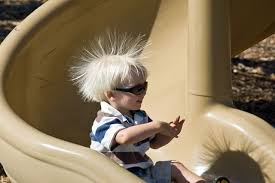
What is an electric current?
a build up of electrons
the difference in charge between 2 points
the flow of electrons over a circuit
the opposition to flow of electrons
Atoms contain ____ types of subatomic particles.
1
2
3
4
What is found in the nucleus of an atom?
protons and electrons
neutrons and electrons
protons and neutrons
The following is the formula for ______________________.
Fe = q x E
Friction
Electric Force
Charge

The Law of Conservation of Energy states:
Energy can created or destroyed but not transformed
Energy cannot be created or destroyed, it can only transformed
Energy can't be created, destroyed or transformed
Energy cannot be created or destroyed.

What force causes a roller coaster cart to slow down the most?
friction
weight
gravity
air resistance

What is happening to the ice skater?
Decreased Angular velocity, decreased rotational inertia
Decreased Angular velocity, increased rotational inertia
Increased Angular velocity, increased rotational inertia
Increased Angular velocity, decreased rotational inertia

Angular Momentum is the product of...
rotational inertia and linear velocity.
linear inertia and angular velocity.
linear momentum and angular velocity
rotational inertia and angular velocity.
Analogue of mass in rotational motion is
moment of inertia
radius of gyration
torque
angular momentum
According to Newton's Laws, for every action there is an ....
equal and opposite reaction.
equal and parallel reaction.
unequal and opposite reaction.
unequal and unrelated reaction.

