
 Worksheets
FINALS - CHEMISTRY 2 NO.2
Total questions: 10
Worksheet time: 5mins
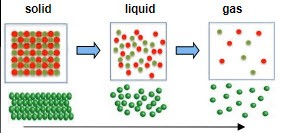
Which of the following situations demonstrates high entropy?
water freezing
water vaporizing
steam condensing to water
What is a spontaneous process ?
process that does not need external intervention to occur
fast process
process that needs an external intervention to occur
Given the change of phase:
CO2(g) —> CO2(s)
As CO2(g) changes to CO2(s), the entropy of the system
remains the same
decreases
increases
Which one is correct example of spontaneous process?
arranging a deck of cards
dropping an egg on the floor
A ball rolling downhill
spraying an air freshener
The first law of Thermodynamics states that
States that energy can neither be created nor destroyed; energy can only be transferred or changed from one form to another.
Says that the entropy of any isolated system always increases. Isolated systems spontaneously evolve towards thermal equilibrium
States that the entropy of a system approaches a constant value as the temperature approaches absolute zero.

