Wayground logo

Free Printable Worksheets

Font size

S
M
L
XL
Worksheets

systems of the body

Total questions: 160

Worksheet time: 1hrs 28mins

Name
Class
Date
1.

The digestive system makes food into _____.

a)

water

b)

energy

c)

intestines

2.
Nutrients from digested food are absorbed in which digestive organ?
a)
Small Intestine
b)
Stomach
c)
Large Intestine
d)
Gallbladder
3.
Nutrients from digested food are absorbed in which digestive organ?
a)
Small Intestine
b)
Stomach
c)
Large Intestine
d)
Gallbladder
4.
Number 3 is pointing to the...
a)
Small intestine
b)
Rectum
c)
Large intestine
d)
Stomach
5.
Number 2 is pointing to the...
a)
Esophagus
b)
Stomach
c)
Small intestine
d)
Anus
6.
Which organ pushes food down to the stomach?
a)
Mouth
b)
Esophagus
c)
Rectum
d)
Large intestine
7.
Which body system gets ride of solid waste?
a)
Excretory (Urinary)
b)
Digestive
c)
Circulatory
d)
Respiratory
8.
As waste moves through the digestive system, the ______ absorbs water before storing waste in the rectum.
a)
Small intestine
b)
Stomach
c)
Esophagus
d)
Large intestine
9.
Which is NOT a function of the Digestive System?
a)
To rid the body of solid waste
b)
Absorb nutrients for energy & growth
c)
Break down nutrients from food
d)
Pump blood around the body
10.
Number 7 is pointing to...
a)
Mouth
b)
Esophagus
c)
Small intestine
d)
rectum
11.
Where does digestion begin?
a)
Mouth
b)
Esophagus
c)
Stomach
d)
Small Intestine
12.

What is the correct order of digestion?

a)

Mouth - stomach - esophagus - Large intestine - Small intestine - anus - rectum

b)

Mouth - esophagus - stomach - gall bladder - small intestine - rectum - anus - large intestine

c)

Mouth - pancreas - stomach - rectum - gall bladder - small intestine - rectum - anus

d)

Mouth - esophagus - stomach - small intestine - large intestine - rectum - anus

13.

Which of the following is NOT part of the digestive system?

a)

liver

b)

gall bladder

c)

kidney

d)

pancreas

14.
The main purpose of the ____________ system is to break food particles into pieces that can be used.
a)
circulatory
b)
respiratory
c)
digestive
d)
skeletal
15.

Which of the following is the best synonym for "digestion"?

a)

breaking down

b)

building up

c)

formation

d)

respiration

16.

The _____________ is a long tube that connects the mouth to the stomach.

a)

Tongue

b)

Rectum

c)

Esophagus

d)

Small Intestine

17.

Which of these digestive system organs does your food NOT travel through?

a)

Stomach

b)

Esophagus

c)

Small Intestine

d)

Liver

18.
Nutrients are absorbed in which digestive organ?
a)
large intestines
b)
mouth
c)
small intestines
d)
stomach
19.
Water is absorbed in which digestive organ?
a)
large intestines
b)
pancreas
c)
small intestines
d)
liver
20.
Feces that contain high water content is a form of diarrhea.  Which digestive organ did not function properly for this to occur?
a)
stomach
b)
small intestines
c)
large intestines
d)
rectum
21.
Which organ connects the mouth to the stomach?
a)
mouth
b)
esophagus
c)
stomach
d)
small intestines
22.
In which digestive organs does both mechanical AND chemical digestions occur?
a)
mouth & stomach
b)
mouth & esophagus
c)
small intestines & large intestines
d)
rectum & anus
23.
In which digestive organs does absorption occur?
a)
mouth & stomach
b)
mouth & esophagus
c)
small intestines & large intestines
d)
rectum & anus
24.
In which digestive organs does elimination occur?
a)
mouth & stomach
b)
mouth & esophagus
c)
small intestines & large intestines
d)
rectum & anus
25.
Which secondary digestive organ handles the liver's "light work" by storing the bile that was produced by the liver?
a)
liver
b)
pancreas
c)
small intestines
d)
gallbladder
26.
Which substance is produced by the liver to break down fats?
a)
bile
b)
bowel
c)
gastric juices
d)
saliva
27.
The digestive system works with which system to distribute nutrients to the cells of your body?
a)
skeletal
b)
circulatory
c)
respiratory
d)
digestive
28.
The teeth are considered to be a part of which two (2) systems?
a)
skeletal & digestive
b)
skeletal & muscular
c)
circulatory & digestive
d)
skeletal & respiratory
29.
Which part of the mouth provides mechanical digestion?
a)
teeth
b)
saliva
c)
smooth muscles
d)
gastric juices (HCl acid)
30.
Which part of the mouth provides chemical digestion?
a)
teeth
b)
saliva
c)
smooth muscles
d)
gastric juices (HCl acid)
31.
Which part of the stomach provides mechanical digestion?
a)
teeth
b)
saliva
c)
smooth muscles
d)
gastric juices (HCl acid)
32.
Which part of the stomach provides chemical digestion?
a)
teeth
b)
saliva
c)
smooth muscles
d)
gastric juices (HCl acid)
33.

body system that breaks down food and absorbs nutrients

a)

digestive system

b)

mouth

c)

mechanical digestion

34.

where digestion begins

a)

chemical digestion

b)

mouth

c)

mechanical digestion

35.

physical breakdown of food

a)

chemical digestion

b)

esophagus

c)

mechanical digestion

36.

breaking down food with enzymes

a)

chemical digestion

b)

esophagus

c)

peristalsis

37.

tube connecting the mouth to the stomach

a)

stomach

b)

esophagus

c)

peristalsis

38.

waves of muscle contractions (squeezing)

a)

stomach

b)

small intestine

c)

peristalsis

39.

large muscular sac that continues the mechanical and chemical digestion of food

a)

stomach

b)

small intestine

c)

liver

40.

Digestive organ where most chemical digestion and absorption of food takes place

a)

pancreas

b)

small intestine

c)

liver

41.

produces bile to break up fat particles

a)

pancreas

b)

large intestine

c)

liver

42.

produces enzymes for the small intestine that help break down starches, proteins, and fats

a)

pancreas

b)

large intestine

c)

liver

43.

absorbs water into bloodstream

a)

gall bladder

b)

large intestine

c)

liver

44.

organ that stores bile

a)

gall bladder

b)

large intestine

c)

liver

45.
What is not a function of the digestive system?
a)
Create new foods
b)
Absorb water
c)
Process waste
46.
What is an example of chemical breakdown?
a)
Chewing
b)
Saliva
c)
Peristalsis
47.
Which of these is a disorder of the Digestive system?
a)
Allergies
b)
Flu
c)
Ulcer
48.
What begins the process of mechanical breakdown?
a)
the mouth
b)
the esophagus
c)
the pancreas
49.
What begins the process of chemical breakdown?
a)
Liver
b)
Salivary glands
c)
Colon
50.
What starts the process of chemical breakdown?
a)
Saliva
b)
Oxygen
c)
Hydrogen
51.
What pushes food from the mouth to the stomach?
a)
Stomach
b)
Gall bladder
c)
Esophagus
52.
What churns food and breaks it down further using strong acids?
a)
Stomach
b)
Salivary glands
c)
Liver
53.
Where does most digestion occur?
a)
Stomach
b)
Salivary gland
c)
Small intestine
54.
What produces chemicals that break down fats, starches and proteins?
a)
Pulmonary artery
b)
Pancreas
c)
Pituitary gland 
55.
What stores bile?
a)
Colon
b)
Gall Bladder
c)
Small Intestine
56.
What produces the bile used to break down fats?
a)
Liver
b)
Large Intestine
c)
Mouth
57.
What absorbs water and minerals and holds waste?
a)
Large Intestine (Colon)
b)
Small Intestine
c)
Gall Bladder
58.
What is the Nephron?
a)
Causes buildup in the stomach acid
b)
Regulates the concentration of water and soluble substances by filtering the blood
c)
Creates muscular contractions to move the food
59.
What is the function of the Ureter?
a)
Carries urine from the kidney to the urinary bladder.
b)
Tiny finger-like projections in the Small Intestine
c)
Absorbs water and minerals and holds waste
60.
What is the function of the bladder?
a)
Push out excess waste
b)
Create and absorb excess waste to be regulated
c)
Collect urine from the kidneys before disposal by urination
61.
What is the urethra?
a)
The tube that allows urine to pass out of the body
b)
Collects urine from the kidneys
c)
Carries urine to the urinary bladder
62.

The large intestine measures about:

a)

5 feet long

b)

10 feet long

c)

3 feet long

63.

Which organs help with the absorption of nutrients?

a)

Pancreas, liver, and gall bladder

b)

Liver, heart, and spleen

c)

Kidneys, liver, and bladder

64.

What tube moves food from the back of your throat to the stomach?

a)

Epiglottis

b)

Pharynx

c)

Esophagus

65.

Your food can spend up to this long in the small intestine:

a)

4 minutes

b)

4 hours

c)

4 months

66.

What does the digestive system do?

a)

Pumps blood throughout the body

b)

Helps you breathe

c)

Breaks down and handles food

67.

The liver’s role is to:

a)

Mash up food

b)

Turn water into food

c)

Remove harmful substances from the blood

68.

The digestive process starts in the:

a)

Mouth

b)

Stomach

c)

Liver

69.

When they reach the stomach, mashed-up food particles mix with:

a)

Mucus

b)

Gastric Juices

c)

Water

70.

You can help your digestive system by:

a)

drinking water and eating healthy food

b)

reading about nutrition

c)

eating less

71.

Why is it important to keep your digestive system healthy?

a)

because it helps you breathe

b)

because it helps your body absorb nutrients

c)

because it helps your blood circulate properly throughout the body.

72.
What bone protects your brain?
a)
Skull
b)
Cerebellum
c)
Cerbrum
d)
Deltoids
73.
What are the main two parts of the central nervous system?
a)
Brain and Skull
b)
Brain and Spinal Cord
c)
Spinal Cord and Nerves
d)
Nerve Cells and Nerve Endings
74.
What sense organ is responsible for our sense of touch?
a)
Ears
b)
Face
c)
Nose 
d)
Skin
75.
Which of the following is NOT a sense organ?
a)
Nose
b)
Eyes
c)
Tongue/Mouth
d)
Hands
76.
What type of cell gathers and carries information?
a)
Nerve Ending
b)
Sense Organ
c)
Sensory Cell
d)
Nerve Cell
77.
A condition caused by sudden movement of the brain, where the brain hits the skull is called
a)
Brain Injury
b)
Concussion
c)
Headache
d)
Nervous System disease
78.
Which of the following are 2 of the types of Nerve Endings
a)
Cold and Pressure
b)
Hot and Taste
c)
Sweet and Sour
d)
Touch and Feel
79.
What part of the eye bends light to focus it on the retina?
a)
Retina
b)
Iris
c)
Optic Nerve
d)
Lens
80.
What are the four types of tastebuds
a)
Sweet, Sour, Salty, Sugary
b)
Sweet, Sour, Bitter, Spicy
c)
Sweet, Bitter, Salty, Sour
d)
Sour, Bitter, Sugary, Spicy
81.
What part of the eye sends messages to the brain from the retina?
a)
Optic Nerve
b)
Iris 
c)
Lens
d)
Cornea
82.

What is the black part of the eye called?

a)

Retina

b)

Nerve

c)

Pupil

d)

Iris

83.

What is the colored part of the eye called?

a)

Iris

b)

Optic Nerve

c)

Cornea

d)

Rods and Cones

84.

Which sense organ helps you hear?

a)

Eyes

b)

Nose

c)

Mouth

d)

Ears

85.
What does the cerebrum control?
a)
controls thoughts and voluntary actions
b)
controls vital and involuntary actions 
c)
controls balance
d)
controls the uvula
86.
The nervous system is composed of the ___, ___, and ___.
a)
heart, brain, kidneys
b)
lungs, liver, stomach
c)
brain, spinal cord, nerves
d)
eyes, pancreas, veins
87.
Which part of the brain controls vital functions such as breathing and heart rate?
a)
Diencephalon
b)
Frontal Lobe
c)
Brain Stem
d)
Cerebellum
88.
What is the part highlighted in red?
a)
Cerebrum
b)
Cerebellum
c)
Brain Stem
d)
Diencephalon
89.
Identify the lobe of the brain that is highlighted.  
a)
frontal
b)
temporal
c)
occipital
d)
parietal
90.
Identify the lobe of the brain
a)
frontal
b)
temporal
c)
occipital
d)
parietal
91.
What is the largest area of the brain that controls everything conscious?
a)
Cerebellum
b)
Cerebrum
c)
Diencephalon
d)
Brain Stem
92.
Wrinkled part of the brain's surface where the body processes information
a)
Brain stem
b)
Cerebral Cortex
c)
Corpus Callosum
d)
Cerebellum
93.
This part is known as the "Little Brain" and is in charge of balance and coordinating movements.  
a)
Thalamus
b)
Reticular Formation
c)
Hypothalamus
d)
Cerebellum
94.
Which part of the brain controls reflexes?
a)
Cerebrum
b)
Cerebellum
c)
Brain stem
d)
Spinal cord
95.
Which systems work together when nutrients are dropped off for the cells in the brain?
a)
Circulatory, Excretory, Respiratory
b)
Circulatory, Digestive, Nervous
c)
Circulatory, Respiratory, Nervous
d)
Circulatory, Skeletal, Nervous
96.

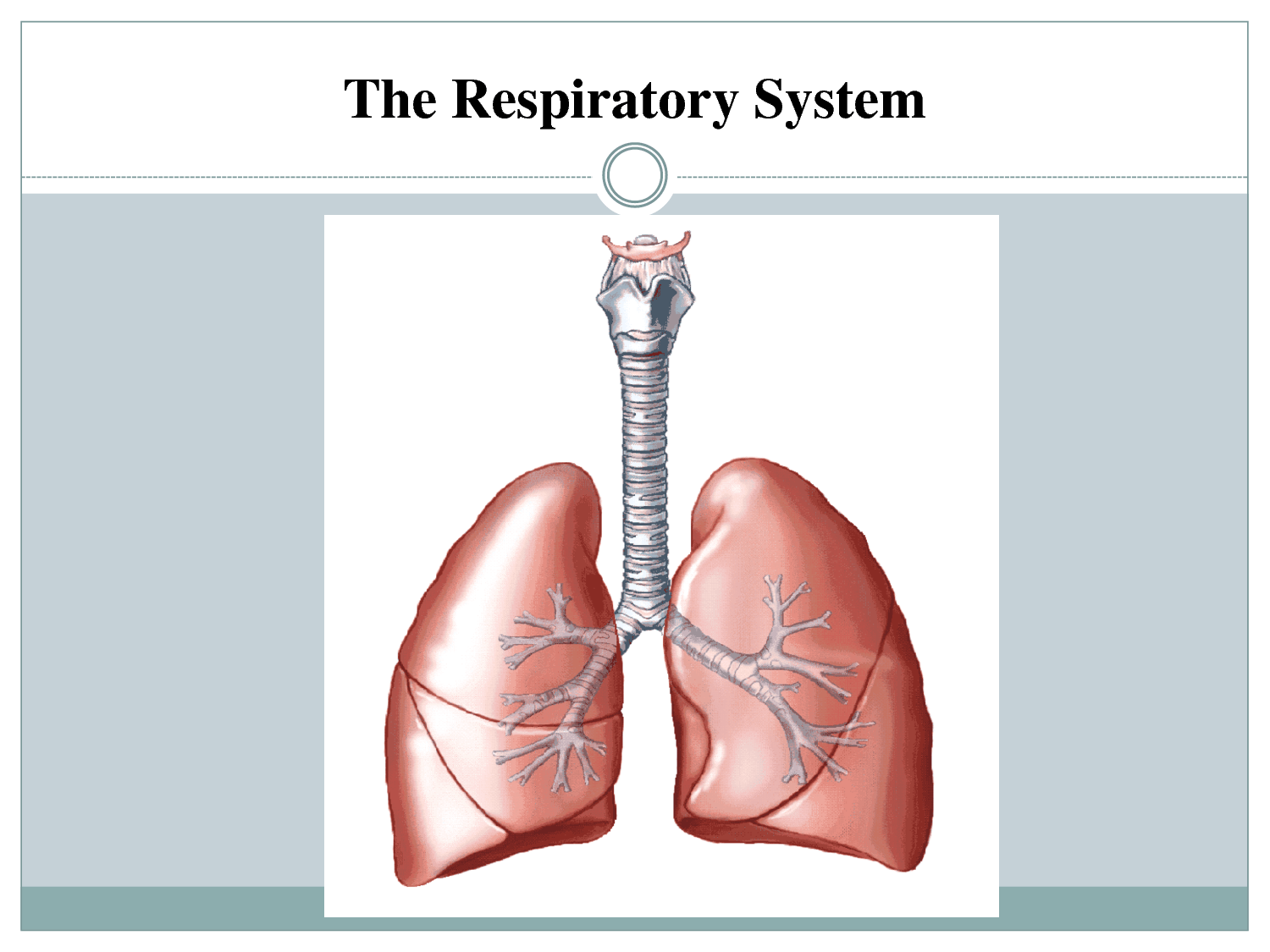
What are the main organs of gas exchange in the respiratory system?

a)

diaphragm

b)

lungs

c)

trachea

d)

bronchi

97.
When you breathe, your lungs take in ___ and remove ___. 
a)
air/oxygen
b)
oxygen/carbon dioxide 
c)
carbon dioxide/waste 
d)
waste/air 
98.
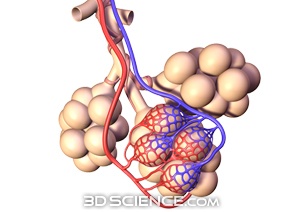
The air sacs that are covered with capillaries where gas exchange takes place
a)
bronchi
b)
lungs
c)
oxygen
d)
alveoli
99.
What is the main function of the respiratory system?
a)
to provide oxygen and remove carbon dioxide from the body
b)
to bring oxygen to the body
c)
to break down food and absorb nutrients
d)
to remove oxygen from the body and deliver carbon dioxide
100.
What is tube that is also known as your wind pipe?
a)
esophogus
b)
bronchi
c)
trachea
d)
alveoli
101.
The larynx is also known as the...
a)
Voice box
b)
Passage to the lungs
c)
Long vein
d)
Airway
102.
What type of cells carries oxygen?
a)
red blood cells
b)
white blood cells
c)
neurons
103.
What organ pumps blood throughout the body?
a)
lung
b)
heart
c)
diaphragm
d)
stomach
104.
The role of the mucus and and cilia in the respiratory system is to....
a)
warm the air. 
b)
clean the air.
c)
humidify the air. 
d)
All of the choices are true. 
105.
Alveoli
a)
tiny, thin walled grape like clusters at the end of each bronchiole
b)
pasta
c)
an allergic reaction
d)
number of protons 
106.
Diaphragm
a)
Muscle beneath the lungs that contacts and relaxes to move gases in and out  of the body
b)
Factor during an experiment
c)
Filters blood
d)
Deoxyribose acid 
107.
Emphysema
a)
specific area that is drained by a stream
b)
negatively charged electrons 
c)
Lung disease in which the aveoli enlarge 
d)
chemical reaction in which heat energy is absorbed 
108.
Asthma
a)
Lung disorder in which bronchial tubes contact quickly causing shortness in breath
b)
allergy 
c)
blood vessel that carries blood away from the heart, has thick elastic walls
d)
building block of protein
109.
Given the following structures:
1. larynx
2. nasal cavity
3. pharynx
4. trachea
Which of the following is the correct order that air would flow during inhalation. 
a)
1,2,3,4
b)
2,3,1,4
c)
2,1,3,4
d)
4,2,3,1 
110.
During inhalation, the diaphragm moves upward decreasing the volume of the thoracic cavity.
a)
True 
b)
False
111.
The role of the mucus and and cilia in the respiratory system is to....
a)
warm the air. 
b)
clean the air.
c)
humidify the air. 
d)
All of the choices are true. 
112.
When the diaphragm contracts...
a)
the volume of the thoracic cavity increases and the pressure decreases, causing air to rush into the lungs.
b)
the volume of the thoracic cavity decreases and the pressure increases causing air to rush out of the lungs. 
113.
Given the following structures:
1. alveoli
2. bronchi
3. bronchioles
Which of the following is the correct order in which air would flow after inhalation? 
a)
1,2,3
b)
2,1,3
c)
2,3,1
d)
3,2,1
114.
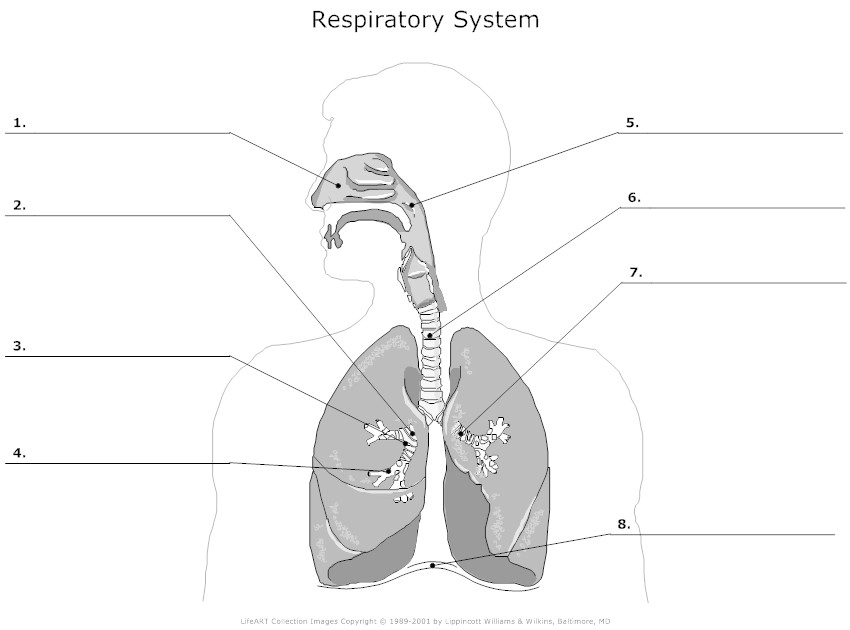
Name the structure labeled 8 
a)
lungs 
b)
trachea 
c)
diaphragm 
d)
alveoli 
115.
What is the small flap of tissue called that covers the air-only passage when we swallow?
a)
Bronchioles
b)
Larynx
c)
Alveoli
d)
Epiglottis
116.
The Larynx serves as a passageway for both food and air.
a)
True
b)
False
117.
The pulmonary capillaries tightly encase the:
a)
bronchioles
b)
main bronchi
c)
apex
d)
alveoli
118.
EXHALE!!!
My lungs are __________________ air. 
a)
taking in
b)
letting out
119.
What are the main organs of gas exchange in the respiratory system?
a)
diapragm
b)
lungs
c)
trachea
d)
bronchi
120.
What is the function of the bronchi?
a)
Transport air from nose to lungs
b)
Transport air from trachea to lungs
c)
Transport air from lungs to alveoli
d)
Transport air from alveoli to blood
121.
When you breathe, your lungs take in ___ and remove ___. 
a)
air/oxygen
b)
oxygen/carbon dioxide 
c)
carbon dioxide/waste 
d)
waste/air 
122.
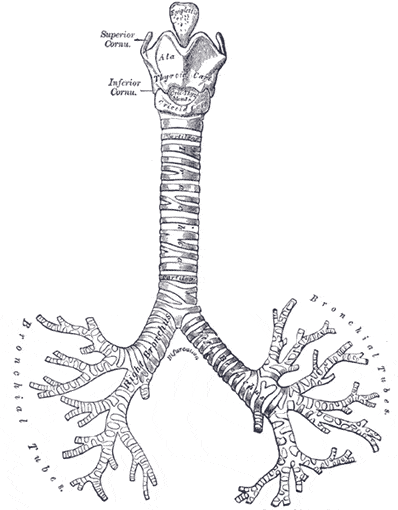
The two main branches from the trachea (one to each lung)
a)
bronchi
b)
alveoli
c)
capillaries
d)
bronchioles
123.
The air sacs that are covered with capillaries where gas exchange takes place
a)
bronchi
b)
lungs
c)
oxygen
d)
alveoli
124.
Name the organ label # 6. 
a)
alveoli 
b)
bronchi 
c)
trachea 
d)
lungs 
125.
Name the structure labeled 8 
a)
lungs 
b)
trachea 
c)
diaphragm 
d)
alveoli 
126.
Pharynx
a)
Outward physical appearance 
b)
Tube-like passage ways for air, food, liquid
c)
Airway to vocal cords 
127.
Bronchi
a)
connects the brain and spinal cord 
b)
number of protons
c)
part of earth and supports life
d)
2 short tubes that branch off of the lower end of the trachea and carry air to the lungs
128.
What is the small flap of tissue called that covers the air-only passage when we swallow?
a)
Bronchioles
b)
Larynx
c)
Alveoli
d)
Epiglottis
129.
True or False
The bronchioles are the smallest branch of the bronchi. 
a)
True
b)
False
130.

What do we take in when we inhale?

a)

carbon dioxide

b)

oxygen

c)

lungs

131.

What do we let out when we exhale?

a)

oxygen

b)

Carbon dioxide

c)

lungs

132.
Inhale!!!!
Your lungs are ___________  air
a)
taking in
b)
letting out
133.
EXHALE!!!
My lungs are __________________ air. 
a)
taking in
b)
letting out
134.
What is the main function of the respiratory system?
a)
to provide oxygen and remove carbon dioxide from the body
b)
to bring oxygen to the body
c)
to break down food and absorb nutrients
d)
to remove oxygen from the body and deliver carbon dioxide
135.
What are the main organs of gas exchange in the respiratory system?
a)
diapragm
b)
lungs
c)
trachea
d)
bronchi
136.
When you breathe, your lungs take in ___ and remove ___. 
a)
air/oxygen
b)
oxygen/carbon dioxide 
c)
carbon dioxide/waste 
d)
waste/air 
137.
The two main branches from the trachea (one to each lung)
a)
bronchi
b)
alveoli
c)
capillaries
d)
bronchioles
138.
Name the organ label # 6. 
a)
alveoli 
b)
bronchi 
c)
trachea 
d)
lungs 
139.

The "windpipe" is also called the...

a)

trachea

b)

bronchi

c)

bronchioles

d)

alveoli

140.

What does your heart do?

a)

pumps blood through your body

b)

protects your body

c)

helps your exercize

141.

Your heart is about the size of your __________.

a)

mouth

b)

fist

c)

show

142.

Blood carries ____________ to the heart.

a)

vitamins

b)

germs

c)

oxygen

143.

Your heart pumps blood throughout your entire body through little tubes called _____________.

a)

veins

b)

arteries

c)

hoses

144.

Blood is carried back to your heart in little tubes called ____________.

a)

veins

b)

arteries

c)

hoses

145.

What does circulate mean?

a)

pump blood

b)

beat quickly

c)

go around and around

146.

You can feel your heart beating when you feel your _____________.

a)

pulse

b)

breathing

c)

stomach growling

147.

Your heart is a _____________.

a)

tube

b)

muscle

c)

vein

148.

Which is NOT a way to exercise your heart?

a)

Running

b)

Sitting on the couch

c)

Swimming

149.

Which is a good way to keep your heart healthy?

a)

Eating healthy foods

b)

Playing video games

c)

Eating greasy foods

150.

Which describes all the parts of the circulatory system?

a)

heart, lungs, stomach, muscles

b)

heart, blood, arteries, and veins

c)

bones, skin, hair

151.

What is the main organ of the circulatory system?

a)

small intestine

b)

bone

c)

lungs

d)

heart

152.
How many types of blood vessels are in our body?
a)
1
b)
2
c)
3
d)
4
153.

Arteries carry oxygen rich blood away from the heart.

a)

True

b)

False

154.

Veins carry oxygen poor blood back to the heart.

a)

False

b)

True

155.

The job of the heart is to . . .

a)

pump blood around the body.

b)

send food to the small intestines.

c)

break down food.

d)

give energy to the body.

156.

The heart is about the size and shape of your . . .

a)

head

b)

fist

c)

hand

d)

foot

157.

How does the heart work?

a)

It pumps blood first to the lungs, back to the heart and then around the rest of the body.

b)

It pumps blood first to the rest of the body, back to the lungs and then to the heart.

c)

It pumps blood around the rest of the body, back to the heart and then to the lungs,

158.
______________ are the smallest blood vessels.
a)
Arteries
b)
Veins
c)
Capillaries
159.
______________ are the second largest blood vessel. 
a)
Arteries
b)
Veins
c)
Capillaries
160.
The circulatory system works with the ___________ system to provide our body with oxygen.
a)
respiratory
b)
digestive
c)
muscular
d)
skeletal