
 Worksheets
Water Cycle
Total questions: 25
Worksheet time: 24mins
Which example is a form of precipitation?
Dew
Fog
Frost
Hail
In which area would the rate of evaporation be the lowest?
Over the ocean
Over the mountains
Over the rainforest
Over the desert
As a part of the water cycle, water from Earth's surface enters the clouds and finally falls back to the ground in the form of rain. What is the correct sequence of processes water undergoes?
Evaporation, Condensation, Precipitation
Precipitation, Condensation, Evaporation
Condensation, Evaporation, Precipitation
Evaporation, Precipitation, Condensation
What would happen if the Sun is removed from the water cycle?
The water cycle would not include precipitation but would continue with groundwater flow.
The water cycle would no longer occur because the Sun provides the energy for evaporation and transpiration.
The water cycle would no longer occur because the Sun provides energy for the formation of clouds.
The water cycle would not include evaporation and transpiration but would continue with condensation.
What is precipitation?
Sweat from our bodies on hot days
Warm rain but not cold snow or sleet
Gas that we use in furnaces or ovens
Any form of water that falls from the sky

Water in its gas form is called water vapor,
water vapor
precipitation
ice
air


What is D?
Precipitation means...
water vapor cooling to form clouds
water running downhill
water falling from the sky
water heating up and rising as gas
Runoff means...
water vapor cooling to form clouds
water running downhill
water falling from the sky
water heating up and rising as gas
Evaporation means...
water vapor cooling to form clouds
water running downhill
water falling from the sky
water heating up and rising as gas
During condensation water changes from ....
solid ice to liquid water
liquid water to water vapor (gas)
water vapor (gas) to liquid water drops
Liquid water turns into gas and rises into the sky in....
precipitation
condensation
evaporation
Which of these changes of state is formed in the process of water cycle?
Melting
Precipitation
Condensation
Boiling


What is the energy source that drives the water cycle?
The moon
The heat from our home in the winter all around the world
The sun
The heat generated solely from the core of the earth

What are formed when water vapor condenses?
Clouds
Mountains
Transpiration
Valleys
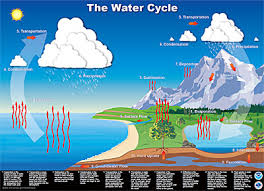
Which stage does ground water try to return to the ocean or soak into the ground?
condensation
evaporation
precipitation
runoff
Which of the following are types of freshwater that can be used by people?
Select all that are true.
groundwater
ice caps and glaciers
oceans
rivers
lakes
People get fresh water from
reservoirs
lakes and rivers
pumping groundwater up from aquifers using wells
all of the above

