
NEW
Font size
 Worksheets
L10 - Polymers
Total questions: 10
Worksheet time: 5mins

When atoms share electrons so that they both get a full outer shell.
Covalent bond
Ionic bond
Compound
Pairing

When electrons are lost by one atom and gained by another, so that they both get full outer shells.
Covalent bond
Ionic bond
Pairing
Compound

Substances where all atoms are linked together in a regular structure, with strong covalent bonds between them (e.g. diamond).
Simple molecular
Giant ionic
Ionic lattice
Giant covalent

Electrons that are not attached to a particular atom.
E.g. in a metal, outer electrons can be free to move through the solid.
Loose
Independent
Delocalised
Disconnected

Different structures of the same element.
Alternatives
Allotropes
Isotopes
Synonyms

The regular arrangement of ions in an ionic substance.
Ionic lattice
Ionic pattern
Ionic bonding
Ionic material

What is an 'ion'?
A particle found in the nucleus of an atom
Something in the periodic table
A tool you use for flattening clothes
An atom that has lost or gained electrons
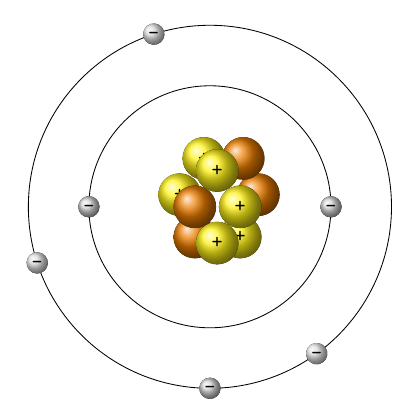
How many electrons does this atom have?
2
4
6
10

What is a 'bond' in chemistry?
A ring around the nucleus which the electrons stay on
A link that holds two atoms together
A type of atom
A particle with no charge

A long chain of smaller, repeating molecules bonded together.
Repeat unit
Polymer
Ion
Monomer

