

wayground logo

Free Printable Worksheets

NEW

Font size

S
M
L
XL
Worksheets

Biology EOC Review

Total questions: 46

Worksheet time: 3hrs 1mins

Name
Class
Date
1.
What is the female part of the plant called?
a)
Stigma
b)
Pistil
c)
Stamen
d)
Style
2.
nitrogen base that pairs with guanine
a)
adenine
b)
cytosine
c)
nucloetide
d)
deoxyribose
3.
What are the products of photosynthesis?
a)
water and carbon dioxide
b)
oxygen and glucose
c)
oxygen and carbon dioxide
d)
oxygen and water
4.
Nitrogen base that pairs with adenine
a)
cytosine
b)
DNA polymerase
c)
deoxyribose
d)
thymine
5.
What are the reactants of photosynthesis?
a)
carbon dioxide and oxygen
b)
water and oxygen
c)
carbon dioxide and water
d)
water and glucose
6.
Which organelle performs PHOTOSYNTHESIS?
a)
Chloroplast
b)
Mitochondria
7.
Which of the following is the correct equation for PHOTOSYNTHESIS?
a)
CO+ light + H2O --> O+ Sugar
b)
CO+ sugar + H2O --> O+ light
c)
O2 + light + H2O --> CO+ Sugar
d)
CO+ O2 + H2O --> Light+ Sugar
8.
If we think of DNA as a ladder, which parts are the steps of the ladder?
a)
the nitrogenous base pairs
b)
the phosphate-sugar backbone
c)
the genes
d)
the phospholipid bilayer
9.

If a DNA sequence it GAATGCCT, what are the matching base pairs?

a)

ACGTACCTG

b)

AEIOU and sometimes Y

c)

CTTACGGA

d)

GCCTATGC

10.

If a DNA sequence is CATCAT, what are the matching base pairs?

a)

ACGTAC

b)

MEOW

c)

GTAGTA

d)

GCCTAT

11.

Why is DNA replication and example of semi-conservative replication?

a)

Each new stand of DNA has all new material.

b)

The DNA happens to just duplicate each base pair.

c)

Part of the original DNA is used to create each of the new DNA strands.

d)

The phosphate groups are no longer attached to the 5 carbon sugar or the leg bone.
12.
Which transports water from the roots to the rest of the plant?
a)
xylem
b)
phloem
13.
What is the female organ of a flower where eggs are produced?
a)
stamen
b)
pistil
14.
The study of the similarity and differences in body structures between species.
a)
comparative anatomy
b)
embryology
c)
molecular biology
d)
archaeology
15.
Body parts of organisms that are the same in structure and position but different in function.
a)
embryos
b)
homologous structures
c)
analogous structures
d)
vestigial structures
16.
Body parts that function like each other, but are different in structure.
a)
embryos
b)
homologous structures
c)
analogous structures
d)
vestigial structures
17.
Body parts that have lost their original function.
a)
embryos
b)
homologous structures
c)
analogous structures
d)
vestigial structures
18.
When an organism of a species has an adaptation, it will compete for resources better, survive longer and pass that adaptation on to it's offspring. This process is called
a)
evolution by natural selection
b)
artificial selection
c)
inbreeding
d)
outbreeding
19.

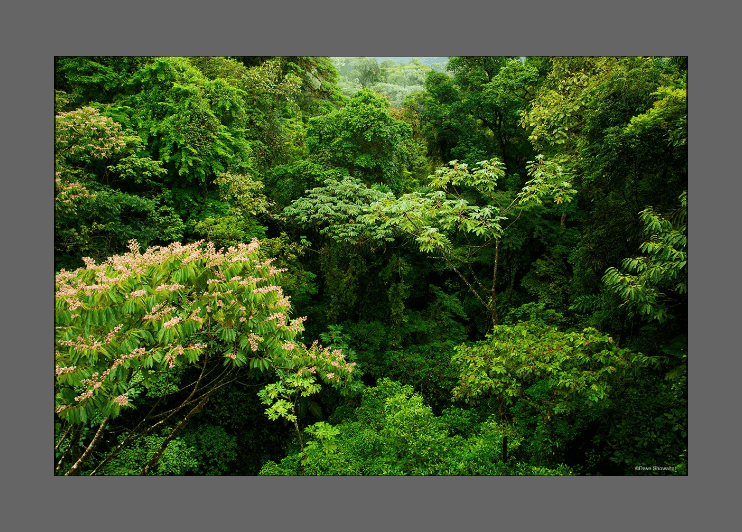
A yellow morph and green morph of an insect lives in the rainforest canopy. You would expect:

a)

the green population to increase and the yellow to decrease

b)

both populations should stay the same

c)

both populations will increase

d)

the green population to decrease and the yellow to increaseThis is a wrong answer

20.
When every organism of a species has died.
a)
Evolution
b)
Natural Selection
c)
Extinction
d)
Artificial Selection
21.
Change over time
a)
Natural Selection
b)
Selective Breeding
c)
Homeostasis
d)
Evolution
22.
What is it called when better adapted organisms survive to pass traits along to their offspring.
a)
Evolution
b)
Natural Selection
c)
Extinction
d)
Artifical Selection
23.
Why are advantageous traits more likely to be passed onto offspring?
a)
Because they are more likely to survive and reproduce.
b)
Because they come from dominant alleles.
c)
Because they come from recessive alleles.
d)
Because the trait is an acquired phenotype.
24.

Select the best answer based on the image.

a)

Gene Flow

b)

Genetic Drift

25.

Genetic diversity is decreased through this process.

a)

Gene Flow

b)

Genetic Drift

26.

Genetic Diversity is increased through this process.

a)

Gene Flow

b)

Genetic Drift

27.

Select the best answer based on the image.

a)

Gene Flow

b)

Genetic Drift

28.

A population of flowers on one side of a river transports pollen to flowers on the other side of the river

a)

Gene Flow

b)

Genetic Drift

29.
Male reproductive parts of a plant....
a)
Petals and ovary
b)
Ovary and ovule
c)
Anther and filament
d)
Stigma and style
30.
In which part of the flower is pollen found?
a)
Filament
b)
Anther
c)
Ovary
d)
Xylem
31.
What is #1 pointing to?
a)
ovary
b)
petal
c)
stigma
d)
stamen
32.
What is the sticky part of the flower that catches pollen?
a)
style
b)
stigma
c)
ovary
d)
petal
33.
Small grains that contain a plant's male reproductive cells.
a)
stamen
b)
pollen
c)
anther
d)
stigma
34.
Which organisms perform Photosynthesis?
a)
Only Autotrophs
b)
Only Heterotrophs
c)
Autotrophs and Heterotrophs
35.
Which transports food from the leaves to the rest of the plant?
a)
xylem
b)
phloem
36.

Which organelle makes proteins?

a)

ribosome

b)

nucleus

c)

mitochondria

d)

chloroplast

37.

Which type of RNA is the message of the decoded gene from DNA?

a)

mRNA

b)

rRNA

c)

tRNA

d)

rDNA

38.

Which type of RNA is the carrier of amino acids?

a)

mRNA

b)

rRNA

c)

tRNA

d)

DNA

39.

What are the building blocks of proteins called?

a)

Nucleic Acids

b)

Glucose

c)

Amino Acids

d)

Phosphate Groups

40.

In RNA _______ matches with Adenine

a)

Uracil

b)

Guanine

c)

Cytosine

d)

Thymine

41.

Which amino acid matches with the following codon:

GAU

a)

GLU

b)

SER

c)

ASP

d)

ILE

42.
Nucleotides are monomers of
a)
Carbohydrates
b)
Lipids
c)
Proteins
d)
Nucleic Acids
43.
Is found in the cell membrane as a bilayer. 
a)
lipids
b)
protein
c)
nucleic acid
d)
carbohydrate
44.
Enzymes are..
a)
nucleic acids 
b)
carbohydrates 
c)
lipids 
d)
proteins 
45.

Glucose is an example of a

a)

Carbohydrate

b)

Lipid

c)

Protein

d)

Nucleic Acid

46.
Glycerol and fatty acids combine to form...?
a)
Carbohydrates
b)
Lipids
c)
Proteins
d)
Nucleic Acids
