wayground logo

Free Printable Worksheets

Font size

S
M
L
XL
Worksheets

Evolution

Total questions: 24

Worksheet time: 24mins

Name
Class
Date
1.
Why do peppered moths tend to be the same color as the trees on which they live?
a)
The coloring goes along with tasting like the tree. 
b)
It keeps the moth the same temperature as the tree. 
c)
It makes the moths faster than the birds
d)
It makes the moths harder to see.
2.
Which of these is an example of natural selection?
a)
The largest animal in a population will have more opportunities for reproduction.
b)
Several species of organisms work together so that they all succeed.
c)
One species takes all the resources in an environment leaving none for others.
d)
Organism that are best suited to an environment tend to survive and reproduce more often.
3.
Humans have been a very successful species on earth.  They have very large, very diverse populations spread all around the world. As a result,
a)
Human have very limited ability to adapt to changes in the environment.
b)
Young humans have lower survival rates as compared to other species.
c)
Humans have a potential to adapt to various environmental changes.
d)
All humans are more disease resistant.
4.
Breed an organism for a desired trait is the definition of
a)

selective breeding (artificial selection)
b)
natural selection
c)
natural breeding
d)
biological evolution
5.
When an environment changes faster that an species can adapt, the most likely outcome is...
a)
...biological evolution.
b)
...voluntary mutation
c)
...species extinction
d)
...selective breeding
6.
Evolution works by 
a)
individuals changing to suit their environment
b)
Individuals learned new traits and pass them on
c)
sudden change in the environment cause a species change 
d)
small changes pass down through many generations
7.
Some people use similarities in embryos to support the the theory that 
a)
The organisms have the same ancestors 
b)
The organisms have similar numbers of offspring
c)
Cells naturally develop along similar line 
d)
There are no connections 
8.
Define homologous structures.
a)
Structures that appear the same, but have different ancestral origins.
b)
Structures that appear the different, but have the same ancestral origins.
c)
Any two body parts from the same organism
d)
Parts that no longer appear to have a function
9.
Define analogous structures.
a)
Structures that appear the same, but have different ancestral origins.
b)
Structures that appear the different, but have the same ancestral origins.
c)
Any two body parts from the same organism
d)
Parts that no longer appear to have a function
10.
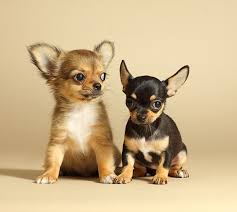
Dogs such as Chihuahuas are examples of....
a)
Artificial Selection 
b)
Natural Selection 
c)
Mutations 
11.

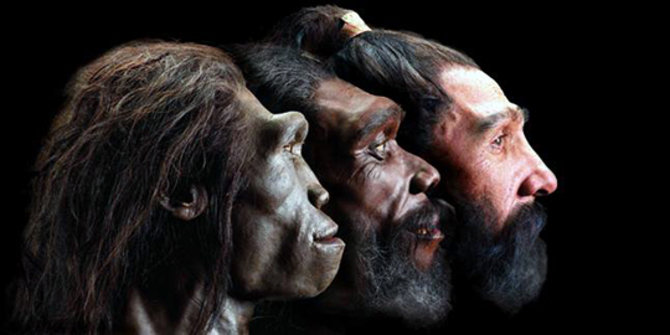
Modern humans and their closest relatives belong to the same family. Members of this family are called:

a)

hominids

b)

primates

c)

homo sapiens

d)

Lucy

12.

What continent did humans evolve from?

a)

the Americas

b)

Asia

c)

Africa

d)

many places all at once

13.

Who are the closest living relatives to humans?

a)

chimpanzees

b)

gorillas

c)

lemurs

d)

kangaroos

14.

What is the scientific name for modern day humans?

a)

Homo Habilis

b)

Homo Sapiens

c)

Homo Erectus

d)

Neanderthal

15.

Which of the following is the correct order of human evolution?

a)

walking upright, using tools, controlling fire, larger brains, language

b)

language, larger brains, controlling fire, using tools, walking upright

c)

larger brains, language, using tools, controlling fire, walking upright

d)

larger brains, walking upright, using tools, controlling fire, language
16.
The environment around Manchester, England, changed during the Industrial Revolution.  How did this change affect peppered moths living in the area?
a)
Natural selection favored moths with dark wings because predators could not see them on the soot-colored trees.
b)
Natural selection favored moths with white wings that were easy for predators to see.
c)
Natural selection favored moths with white wings because predators could not see them on the soot-colored trees.
d)
Natural selection caused moths with white wings to become extinct.
17.
When an organism completely dies out, it is called.....
a)
Adaption
b)
Extinction
c)
Fossilization
d)
Mutation
18.
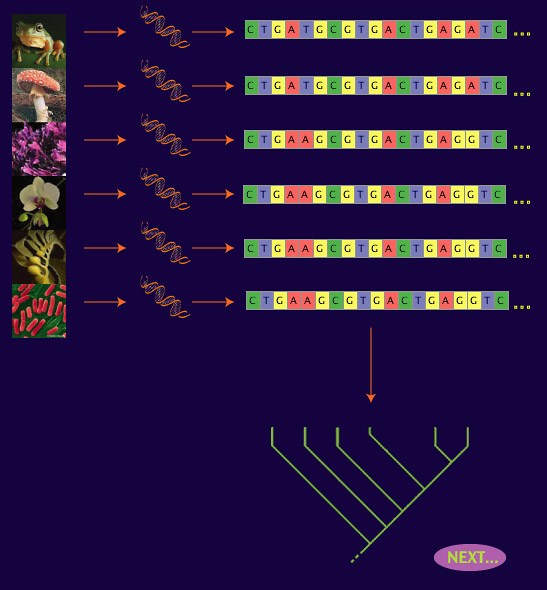
Two organisms that are closely related would have
a)
very similar DNA sequence
b)
exactly the same DNA sequences
c)
no proteins in common
d)
completely different DNA sequence
19.
Comparing human hemoglobin of chimpanzees, horses, kangaroos, and chickens, reveal that humans have the fewest amino acid differences with 
a)
Kangaroos
b)
Horses
c)
chickens
d)
chimpanzees
20.
Study of embryos of various organisms to show a common ancestor because of similarities in development
a)
natural selection
b)
embryology
c)
speciation
d)
evolution
21.
In the Hardy-Weinberg Equation, q2 is the frequency of what?
a)
The recessive allele 
b)
the dominant allele
c)
the recessive genotype
d)
the dominant genotype
22.
What is the purpose of PCR?
a)
To produce millions of copies of DNA.
b)
To produce millions of copies of a specific region of DNA
c)
To add nucleotides to a DNA sequence
d)
To watch polymerase work.
23.

This laboratory procedure is known as

a)

Cloning

b)

gel electrophoresis

c)

chromatography

d)

use of a dichotomous key

24.

Which chemicals are used to cut DNA into fragments for a gel electrophoresis procedure?

a)

enzymes (example: CRISPR)

b)

molecular bases

c)

hormones

(Example: insulin)

d)

ATP molecules